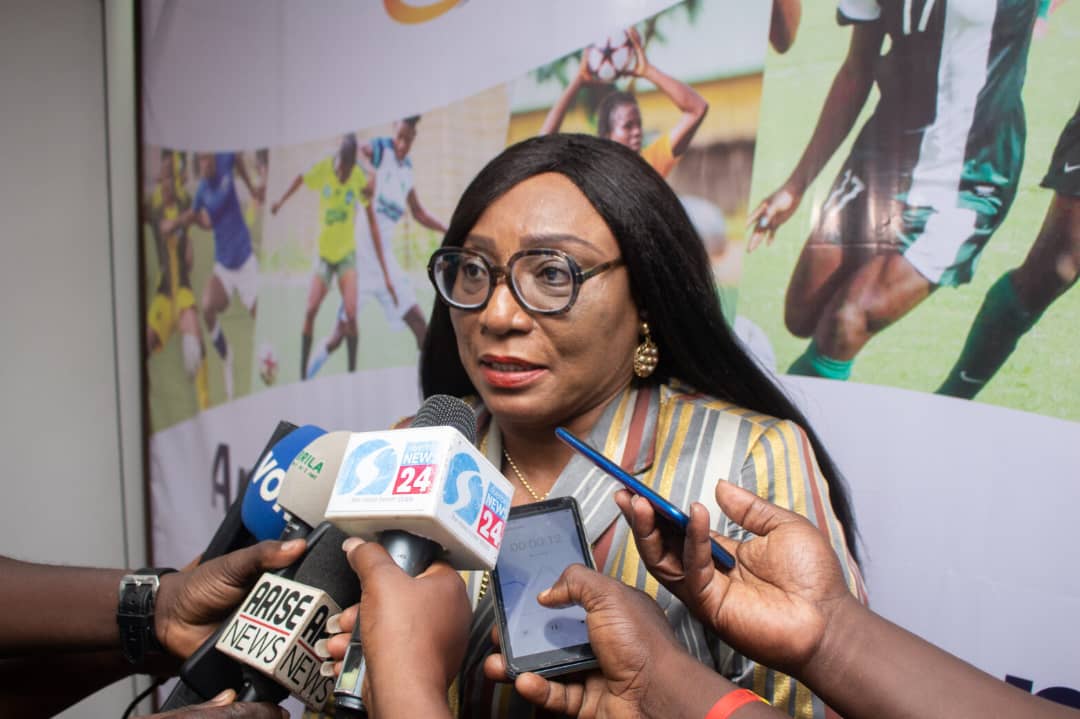
As a fact-finding panel commences inquiries into reasons behind recent setbacks hitting all levels and gender of Nigerian football, one of the country’s former officials, Nkechi Obi has declared that talent is not a major problem affecting the nation.
Sports247 reports that Obi, who is an erstwhile head of Nigeria Women Football League (NWFL), noted that the country has an abundance of talent but administrators keep on placing priority on hunting for what they already have, instead of providing platforms for those natural resources to be fully utilised.
Read Also: ‘A Welcome Development’ — Elumelu Backs NFF Fact-Finding Committee
Obi forwarded a deep insight into her viewpoint and made suggestions on the way forward while speaking during ‘Hot Seat’ segment of Sports247’s television programme, Inside Naija Sports, which streams online via YouTube and airs on NTA News 24 at 10am every Saturday.
She added, “We need a pipeline that converts raw talents to finished products seamlessly. The back-end support for this comes in terms of infrastructure that ensure everyone at the grassroots can participate in sports.
“Unfortunately, the conversation in Nigeria has always been about discovery of talents, but that should not be our focus. Talent is the least of our problems.
“Nigeria is like fertile soil where talents spring up naturally. However, the problem we have is how to channel our raw talents into finished products.”
The erudite and highly articulate sports guru, who is also a marketing expert, went on to profer steps that can take Nigeria out of the woods and put the country’s football teams firmly back on track.
Obi added, “We can put things right by creating a vibrant ecosystem on which sporting activities are built. For that to happen, we need adequate infrastructure; so that the whole community can get involved in sports.
“That means, first and foremost, we need to encourage mass participation in sports and put in place a market development strategy. This means we need a community driven participatory strategy that involves everybody who has an interest in sports.
“If you gather as many people as possible together at the community, the ones who are talented will naturally emerge and stand out. That would make it easier to start building your teams on a regular basis.”
She concluded by reeling out the merits of a mass-participation strategy and various benefits that would fall into place for the country, especially in terms of a steady reservoir of raw talents waiting to be harnessed in a gradual progression over time.
“This strategy will help us build a healthier citizenry, develop a vibrant market for goods and improve our service delivery efforts. This will also give us adequate feedback on the financial implications of our sports activities.
“We will be able to judge whether our sports sector is worth billions or not. We will see it by watching data and statistics that flow with the number of people involved in our sports and what they gain from it.
“Many people in Nigeria don’t like looking at data, but I follow it a lot. We have to start looking at figures to know if we are improving or not and what to do next.
“For instance, Little Baseball in America has 80 million children playing every weekend and they can gauge what economic gains can come out of it – if every child buys a bat, gloves, boots and a ball. That’s how you calculate economic development in sports, and you can make projections about dividends it will bring the country as a whole.”