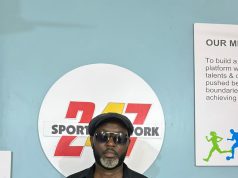
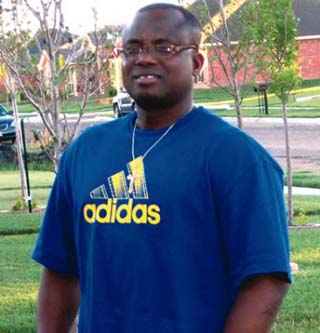
An outspoken and articulate ex-international, Paul Lucky Okoku has raised questions over what he referred to as a history of unpaid salaries for head coaches of the Nigerian national team, Super Eagles.
Sports247 reports that Okoku, who shot to limelight as a member of Nigeria’s historic Flying Eagles’ squad at the 1983 World Youth Championship (WYC) in Mexico, opined that better attention should be given the issue of salaries for national team coaches.
Read Also: Eric Chelle Is The Right Man For Super Eagles, Insists Former Nigeria Star Paul Okoku
He stated this as part of his reactions to recent comments attributed to former Super Eagles’ captain, John Mikel Obi that he cannot work with officials of Nigeria Football Federation (NFF) because they are corrupt, an allegation which Okoku declared should not be waved aside lamely.
The member of Nigeria’s silver-winning squad to the 1984 Africa Cup of Nations in Cote d’Ivoire pointed out that Mikel’s many years with the Eagles put him in a good position to speak authoritatively on sensitive matters concerning the national team.
Okoku then took the focus beyond alleged corruption among the country’s football officials and, while pointing out that even the international media has reported instances of unpaid salaries for Eagles’ coaches, he inferred that lack of sympathy is also part of the laxities that need to be addressed.
The ex-international posted in part on his highly illuminative social media channel, “Sunday Oliseh resigned as Super Eagles coach in 2016 citing contract violations, unpaid wages and lack of support.
“BBC reported that he had initially been owed five months’ salary, while assistants and players also had outstanding payments. In 2025, Oliseh said the NFF still owed him two months’ salary, which he valued at $26,000.
“BBC documented the wider pattern: Augustine Eguavoen, Samson Siasia, Florence Omagbemi, Sunday Oliseh, Gernot Rohr and the late Stephen Keshi were among coaches who experienced salary delays.
“When Shaibu Amodu died in 2016, the NFF publicly acknowledged owing him two months’ salary. These were people who worked for Nigeria. They should not have had to chase money already earned.
“Salary is not an abstraction. It pays rent. It supports families. It buys medicine. It pays hospital bills. It preserves dignity after service. So, why do players and coaches so often appear to be the easiest people to owe? That deserves an answer.”
The erudite former midfield dazzler concluded by linking the recurring saga with ongoing reforms for Nigerian football initiated by the National Sports Commission (NSC) and stressed that only the emergence of new faces and fresh ideas in the NFF will turn things around for the best.
Okoku submitted, “A case is announced. An investigation begins. Officials are invited. Headlines appear. Then the public waits. Months pass. Years pass. Another administration arrives. Another controversy begins.
“Yet unpaid obligations, financial controversies and unfinished accountability – questions keep returning. That is why reform cannot mean recycling familiar faces around a newly polished table.”