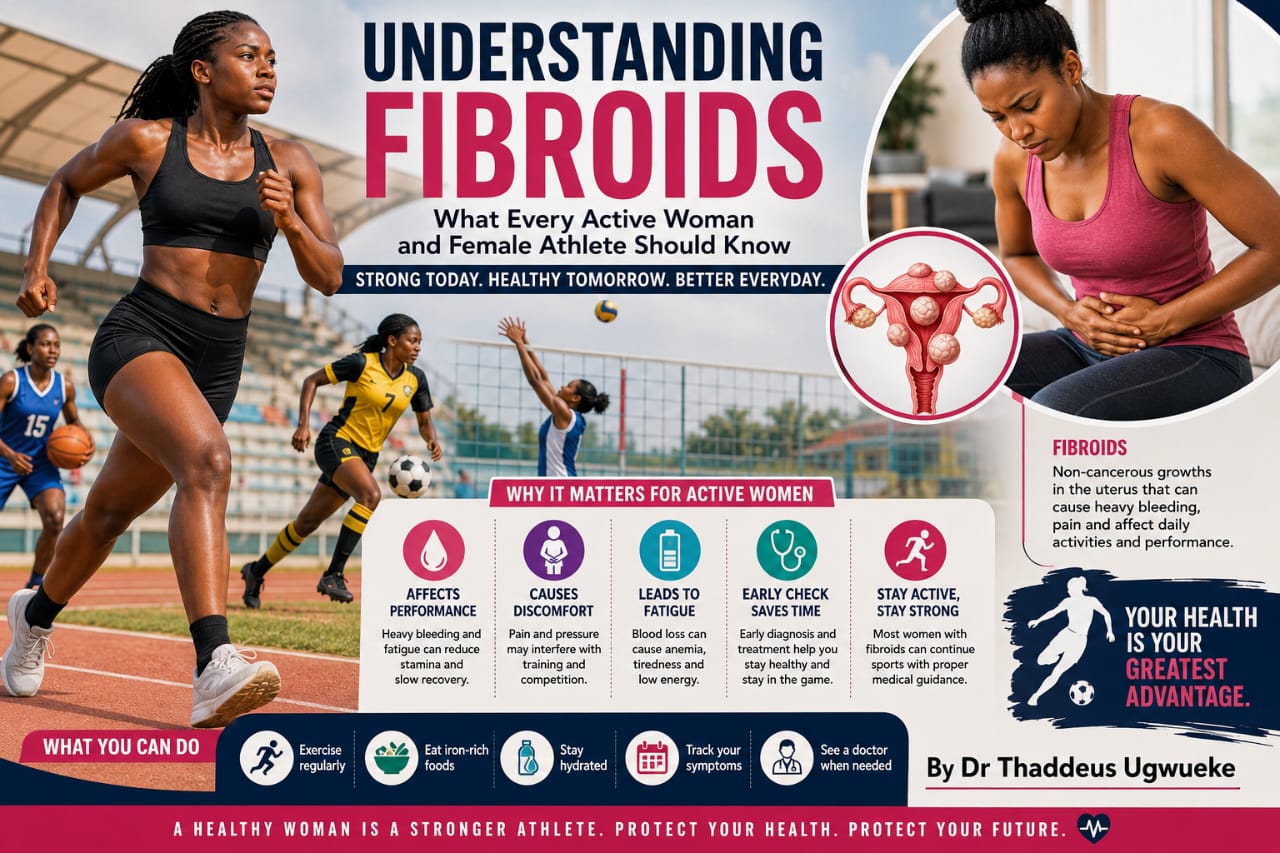
One condition that deserves more attention among women in sports is uterine fibroids. While fibroids are not cancer, they can affect energy levels, menstrual health, training consistency, and overall athletic performance if left unmanaged.
Whether you’re a footballer, runner, volleyball player, basketball player, gymnast, or simply enjoy an active lifestyle, your body is your greatest asset. Speed, endurance, strength, and recovery all depend on good health.
Read Also: Encouraging Sports Participation Among Young Girls for Future Maternal Health By Dr Ugwueke
Just as athletes never ignore a muscle injury or knee pain, women should never ignore persistent menstrual symptoms. Understanding fibroids allows female athletes to protect both their sporting careers and their long-term reproductive health.
What Are Fibroids?
Fibroids are non-cancerous growths that develop in the muscular wall of the uterus. They vary greatly in size—some are as small as a seed, while others may become large enough to enlarge the abdomen.
Many women never know they have fibroids because they experience no symptoms. Others develop symptoms that interfere with daily activities, work, education, and sporting performance.
Fibroids are most common during the reproductive years and are influenced by female hormones such as estrogen and progesterone.
For female athletes, understanding this condition means recognizing that poor performance may sometimes be due to an underlying medical issue rather than inadequate training.
How Fibroids Can Affect Sports Performance
Athletes depend on oxygen delivery, muscle endurance, flexibility, and consistent training.
Fibroids may interfere with all of these.
Heavy menstrual bleeding can lead to iron-deficiency anemia, reducing the amount of oxygen delivered to muscles. The result is fatigue, shortness of breath, dizziness, and slower recovery after exercise.
Pelvic pain or pressure may limit running, jumping, stretching, cycling, or weightlifting.
Large fibroids can also increase abdominal discomfort, making certain movements uncomfortable during training or competition.
For competitive athletes, repeated interruptions in training can reduce overall performance and fitness progression.
Symptoms Female Athletes Should Never Ignore
Every athlete learns to listen to her body.
The following symptoms deserve medical evaluation:
Heavy menstrual bleeding
Menstrual periods lasting longer than seven days
Pelvic pain or pressure
Frequent urination
Lower back pain
Pain during exercise
Unexplained fatigue
Reduced stamina despite good training
Difficulty recovering after workouts
Ignoring these symptoms may delay diagnosis and affect both athletic performance and quality of life.
Can Exercise Prevent Fibroids?
This is one of the most common questions.
Current medical evidence suggests that exercise does not completely prevent fibroids, but regular physical activity contributes to better overall health and may reduce certain risk factors associated with fibroid development.
Women who exercise regularly often maintain healthier body weight, improved metabolism, better cardiovascular fitness, and lower levels of chronic inflammation.
These benefits support reproductive health and improve the body’s ability to cope with medical conditions.
Sports remain one of the most valuable lifelong investments in women’s health.
Can Women With Fibroids Continue Playing Sports?
In many cases, yes.
Most women with fibroids can continue participating in sports after proper medical assessment.
The type of activity may need temporary modification depending on symptoms.
Some athletes perform at very high levels despite having fibroids.
The important message is to work closely with healthcare professionals rather than withdrawing from physical activity unnecessarily.
Treatment should be individualized according to symptoms, age, reproductive plans, and athletic goals.
Nutrition: Fueling Performance and Supporting Women’s Health
Sports nutrition becomes even more important when fibroids cause heavy menstrual bleeding.
Women should consume foods rich in iron, including:
Lean meat
Fish
Beans
Spinach
Pumpkin seeds
Green leafy vegetables
Vitamin C-rich fruits improve iron absorption and support recovery.
Adequate hydration and balanced meals also help maintain energy during training and competition.
Good nutrition cannot eliminate fibroids, but it helps athletes perform at their best.
When Should an Athlete See a Doctor?
Many women assume heavy menstrual bleeding is normal simply because it has been present for years.
It is not always normal.
Female athletes should seek medical attention if they experience:
Extremely heavy periods
Severe menstrual pain
Persistent pelvic pressure
Rapid abdominal enlargement
Difficulty participating in sports because of menstrual symptoms
Fatigue that affects training
Early diagnosis often allows more treatment options and better outcomes.
Protecting Both Performance and Fertility
Many young women worry that a diagnosis of fibroids means they will never have children.
This is not true.
Many women with fibroids have successful pregnancies, especially when the condition is identified and managed appropriately.
Seeking medical care early helps preserve reproductive health while allowing women to continue pursuing their sporting ambitions.
Health and performance should always go hand in hand.
The Coach, Parents, and Sports Community Have a Role
Creating a supportive sporting environment means recognizing that menstrual health is part of athlete health.
Coaches should encourage open communication without stigma.
Parents should take menstrual complaints seriously instead of dismissing them.
Sports organizations should include reproductive health education as part of athlete wellness programs.
Healthy female athletes become stronger competitors and healthier future mothers.
Final Whistle
Champions train hard—but they also protect their health.
Fibroids should never be a source of fear or embarrassment. With early diagnosis, appropriate medical care, regular physical activity, and good nutrition, most women can continue living active, productive, and successful lives.
On this platform, we celebrate strength, resilience, endurance, and determination. Looking after women’s reproductive health is just as important as building speed, power, and skill.
Remember: A healthy woman is a stronger athlete, and a stronger athlete inspires a healthier generation.