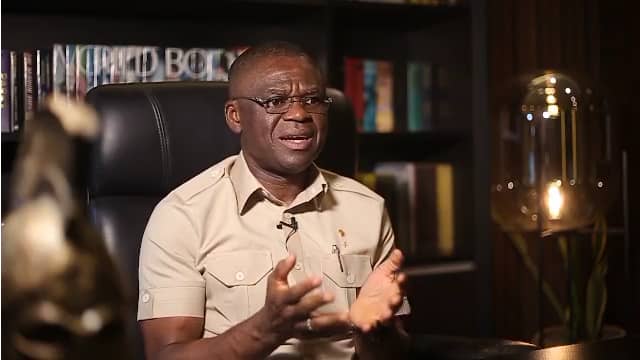
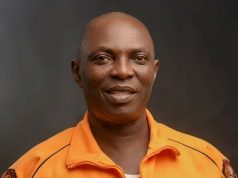
Director-General of the National Institute for Sports (NIS), Philip Shaibu, has blamed the absence of a properly constituted National Sports Commission board for allowing Nigeria’s football leadership crisis to escalate to the point of requiring direct intervention from FIFA and CAF.
Shaibu confirmed that representatives of the world and African football governing bodies arrived in Nigeria on Sunday ahead of crucial meetings with selected football stakeholders on Monday and Tuesday, with the future structure and leadership of the Nigeria Football Federation expected to dominate discussions.
The visit follows FIFA and CAF’s decision to undertake a joint assessment mission in Abuja to gain a clearer understanding of the circumstances surrounding the recent shake-up at the NFF.
For Shaibu, however, the situation should never have deteriorated this far.
He believes the absence of a substantive NSC board since the commission was inaugurated has created a governance gap that contributed to the present difficulties.
“If there was an NSC board, I don’t think these issues would have gotten out of hand to the extent that FIFA now has to come in,” Shaibu said.
While critical of the situation that produced the crisis, the former Edo State deputy governor remains adamant that reform of Nigerian football must happen.
The NFF has been operating under interim arrangements since the resignation of former president Ibrahim Gusau, General Secretary Mohammed Sanusi and members of the federation’s Executive Committee.
Emmanuel Ikpeme, previously the NFF Deputy General Secretary, has been overseeing the secretariat on an interim basis, while the electoral process that was expected to culminate in a congress on September 27 has been suspended.
FIFA initially accepted the resignations and held talks with a Nigerian delegation led by NSC Chairman Shehu Dikko in Zurich, where both sides agreed to continue discussions towards a comprehensive reform roadmap.
The situation subsequently took another turn when FIFA and CAF requested that the electoral process remain suspended while they conduct their assessment.
Importantly, FIFA said it had “not reached any conclusions” on the issues being examined and that no determination had been made regarding possible next steps.
That makes the Abuja meetings potentially decisive.
Reports indicate that the NFF selected nine state Football Association chairmen and 18 other representatives for engagement with the FIFA and CAF officials during the September 14 visit.
President Bola Ahmed Tinubu had earlier ordered a comprehensive overhaul of Nigerian football following a series of disappointing results, directing that reforms address governance, administration, stakeholder representation, development pathways, domestic competitions and accountability.
Shaibu agrees with the need for change but believes Nigeria must also examine how its domestic sports governance structures allowed the situation to deteriorate.
The FIFA-CAF delegation’s meetings will therefore be watched closely, with stakeholders waiting to discover whether the process will produce a reform committee, another transitional arrangement or a roadmap towards fresh NFF elections.
For Shaibu, reform is unavoidable — but the bigger concern is that a crisis Nigeria should have resolved internally has now reached the point where FIFA and CAF are sitting at the table to help determine what happens next.



, Philip Shaibu, has blamed the absence of a properly constituted National Sports)