
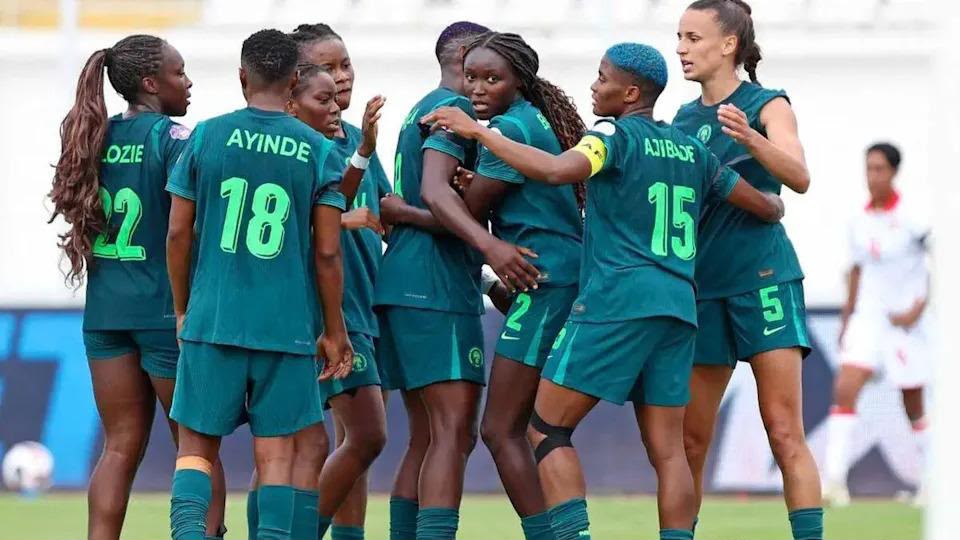
Nigeria’s emphatic 7-0 aggregate victory over Comoros has raised fresh questions about the Super Falcons’ readiness for a tougher Olympic qualifying challenge against Morocco, with concerns emerging over squad transition, tactical understanding and limited preparation time.
READ ALSO: Super Falcons’ Morocco Test Puts Squad Depth Under Scrutiny | Sports247 Nigeria
Speaking in an interview with Sports247, a football analyst acknowledged Nigeria’s improved performance in the second leg but warned that the convincing scoreline should not overshadow the challenges facing the team.
The Super Falcons defeated Comoros 5-0 in Ikenne on Tuesday after winning the opening leg 2-0, securing progression to the third round of qualification for the 2028 Olympic Games.
Toni Payne and Uchenna Kanu scored twice each, while Christy Ucheibe completed the victory from the penalty spot.
However, the analyst highlighted the difference between Nigeria’s performances across both matches, particularly the team’s stronger attacking execution after the interval in the return leg.
Four of Nigeria’s five goals came in the second half, reflecting an improvement in attacking coordination as the match progressed.
The analyst also pointed to the ongoing changes within the Super Falcons squad, explaining that retirements, injuries and player availability issues have affected continuity.
According to the interviewee, these circumstances have created opportunities for younger players to assume greater responsibilities while adapting to a different tactical approach.
Although the developing understanding among the players was evident against Comoros, the analyst suggested that Morocco would present a significantly more demanding examination.
The Atlas Lionesses have continued to strengthen their women’s football programme and possess the quality to challenge Nigeria over two legs.
Preparation was another major concern raised during the interview.
With the next qualifying round scheduled for February and March 2027, the analyst questioned whether Nigeria would face sufficiently strong opposition during the available international windows.
The interviewee identified the quality of friendly matches as an important factor in preparing the squad for Morocco’s competitive intensity.
Despite these concerns, the analyst acknowledged that Nigeria’s seven-goal aggregate victory was a positive outcome for a team undergoing changes.
The challenge now is to convert that progress into greater consistency, cohesion and tactical discipline.
For the Super Falcons, the Comoros victory secured qualification for the next round.
But the Morocco encounter will offer a clearer indication of how far the rebuilding team has progressed.