
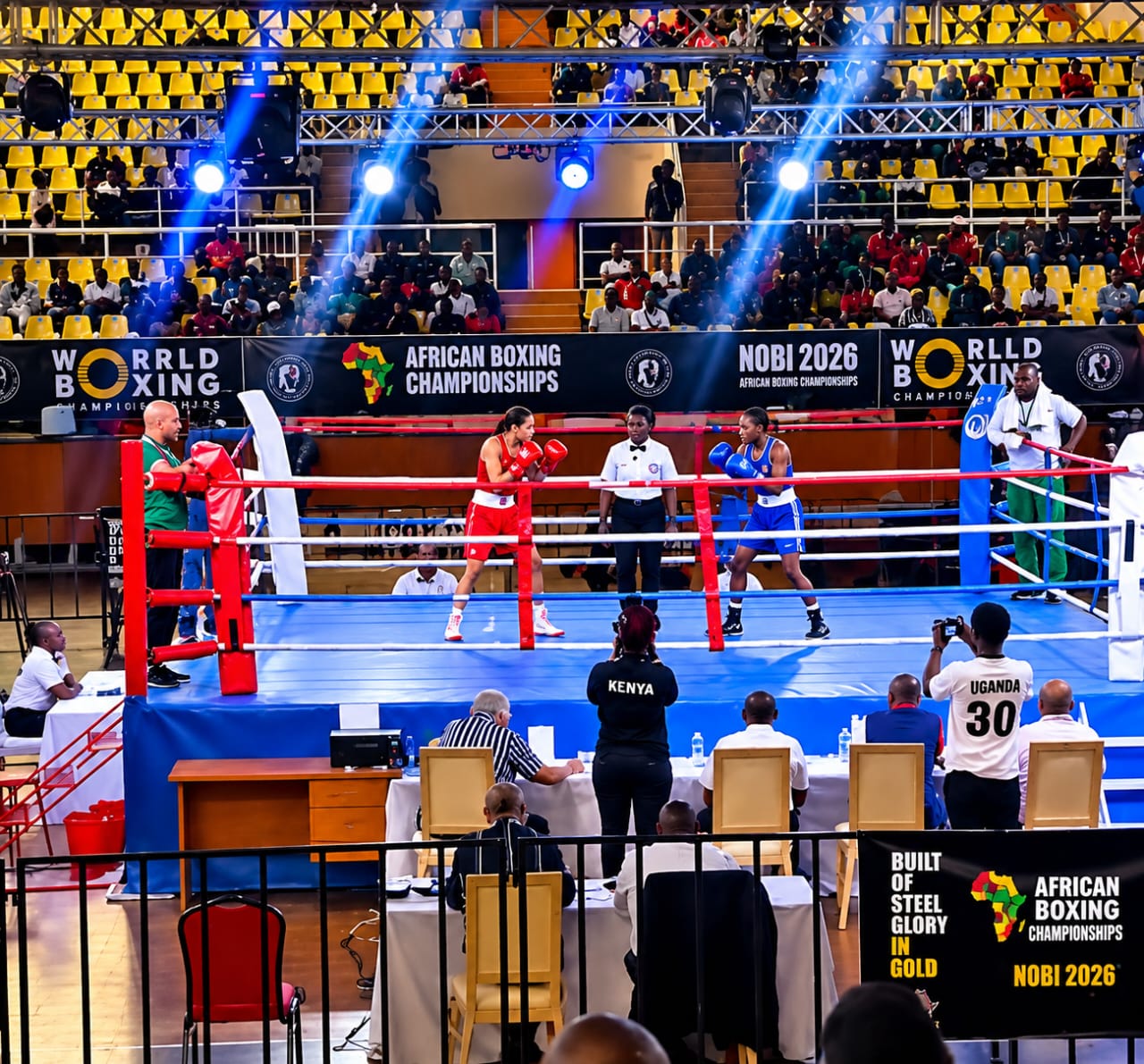
NAIROBI, KENYA — Concerns over officiating have emerged at the African Boxing Elite Championships 2026 in Nairobi after Nigerian female boxer Aishat Gbadamosi suffered a controversial 3–1 defeat to Algeria’s Douaa Rouaz in a women’s featherweight (54–57kg) contest on Sunday.
The result has sparked questions among some boxing stakeholders and spectators, who believe the judges’ decision did not reflect what they witnessed inside the ring.
What should have been another exciting encounter between two African boxing nations instead became a talking point over judging standards, transparency and the credibility of officiating at the continental championship.
Gbadamosi, representing Nigeria from the blue corner, faced Algeria’s Rouaz in the red corner in Bout 9 of the afternoon session.
However, it was the announcement of the judges’ decision that generated the biggest reaction, with the Nigerian boxer losing by a reported 3–1 margin despite spectators expressing a different assessment of the contest.
Some stakeholders present in Nairobi raised concerns about the outcome, questioning whether the scoring accurately reflected the performances of both fighters.
The atmosphere surrounding the decision was particularly striking, with even the Algerian camp reportedly falling silent before appearing surprised when their boxer was declared the winner.
That reaction, as described by observers, added to the debate surrounding the verdict, although it does not establish that the judges scored the contest incorrectly.
For Nigerian boxing followers, the defeat raises questions beyond the immediate result, particularly about the consistency and transparency of judging in major African boxing competitions.
Boxing remains a sport in which judges assess performances using established scoring criteria, meaning spectators and officials can sometimes arrive at different conclusions about the same contest.
Nevertheless, stakeholders argue that when a decision generates significant disagreement among ringside observers, competition organisers must be prepared to explain the scoring process and reinforce confidence in the officiating system.
The controversy also highlights the importance of protecting athletes who spend months preparing for major championships, often making considerable sacrifices to represent their countries.
For Gbadamosi, the defeat represents a disappointing outcome in a continental competition where every victory carries enormous significance for individual careers and national pride.
While the official verdict awarded victory to Algeria’s Rouaz, the reported reaction among spectators suggests the result may remain a subject of discussion within the boxing community.
The development places renewed attention on the championship’s officiating standards and the need for clear, accountable judging procedures that protect the integrity of the sport.
As the African Boxing Elite Championships continue in Nairobi, the central question among concerned observers is whether the judging panel’s scoring accurately captured the contest witnessed by spectators.
For now, the official result stands: Algeria’s Douaa Rouaz defeated Nigeria’s Aishat Gbadamosi 3–1. But for those questioning the verdict, the bigger fight is about ensuring that every boxer receives a fair and transparent assessment inside the ring.






 contest on Sunday.)