
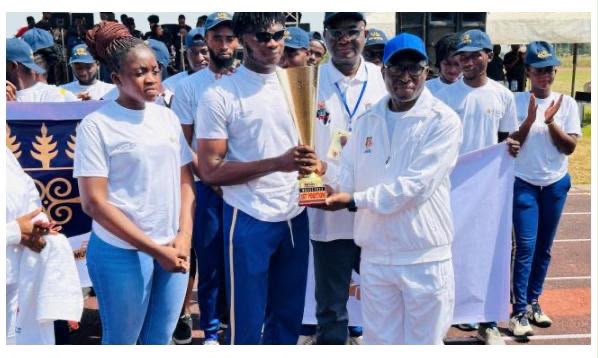
The final standings of the 2026 West African University Games have revealed an interesting contrast between medal accumulation and championship success, with some universities finishing below institutions that won fewer medals.
Although Obafemi Awolowo University dominated the competition with 122 medals, the battle behind the hosts exposed how gold-medal victories ultimately determined positions on the table.
OAU secured 33 gold, 50 silver and 39 bronze medals to emerge overall champions on home soil in Ile-Ife.
The University of Ghana followed with 26 gold medals and 59 medals overall, while Benson Idahosa University claimed third position with 21 gold, 10 silver and seven bronze medals.
However, the University of Ibadan finished fourth despite winning 42 medals, four more than Benson Idahosa’s 38.
The difference was in the gold-medal count.
Benson Idahosa secured 21 titles compared with Ibadan’s 17, demonstrating how finishing first in individual events can outweigh a larger overall medal collection.
A similar pattern emerged further down the standings.
Lagos State University finished fifth with 17 medals, including 10 gold, while Afe Babalola University occupied sixth position despite winning 42 medals.
ABUAD collected nine gold, 14 silver and 19 bronze medals, but its higher overall total could not overcome LASU’s one-gold advantage.
The results highlight the importance of converting podium appearances into victories at multi-sport competitions.
While silver and bronze medals reflect competitive consistency, gold medals carry greater weight in determining the final rankings.
For universities preparing for future competitions, the standings offer an opportunity to examine not only how frequently their athletes reach the podium but also how often they secure first place.
Elsewhere, Delta State University, Abraka finished seventh with seven gold medals, while the University of Ilorin placed eighth with six.
Nile University also secured six gold medals, finishing tenth overall.
The Games, held from October 2 to 12, brought together university athletes from across West Africa.
For OAU, the championship represented a dominant home performance.
But beyond the hosts’ success, the final standings delivered another lesson.
In university sports, winning more medals does not always mean finishing higher.
The final standings of the 2026 West African University Games have revealed an interesting contrast between medal accumulation and championship success, with some universities finishing below institutions that won fewer medals.
Although Obafemi Awolowo University dominated the competition with 122 medals, the battle behind the hosts exposed how gold-medal victories ultimately determined positions on the table.
OAU secured 33 gold, 50 silver and 39 bronze medals to emerge overall champions on home soil in Ile-Ife.
The University of Ghana followed with 26 gold medals and 59 medals overall, while Benson Idahosa University claimed third position with 21 gold, 10 silver and seven bronze medals.
However, the University of Ibadan finished fourth despite winning 42 medals, four more than Benson Idahosa’s 38.
The difference was in the gold-medal count.
Benson Idahosa secured 21 titles compared with Ibadan’s 17, demonstrating how finishing first in individual events can outweigh a larger overall medal collection.
A similar pattern emerged further down the standings.
Lagos State University finished fifth with 17 medals, including 10 gold, while Afe Babalola University occupied sixth position despite winning 42 medals.
ABUAD collected nine gold, 14 silver and 19 bronze medals, but its higher overall total could not overcome LASU’s one-gold advantage.
The results highlight the importance of converting podium appearances into victories at multi-sport competitions.
While silver and bronze medals reflect competitive consistency, gold medals carry greater weight in determining the final rankings.
For universities preparing for future competitions, the standings offer an opportunity to examine not only how frequently their athletes reach the podium but also how often they secure first place.
Elsewhere, Delta State University, Abraka finished seventh with seven gold medals, while the University of Ilorin placed eighth with six.
Nile University also secured six gold medals, finishing tenth overall.
The Games, held from October 2 to 12, brought together university athletes from across West Africa.
For OAU, the championship represented a dominant home performance.
But beyond the hosts’ success, the final standings delivered another lesson.
In university sports, winning more medals does not always mean finishing higher.