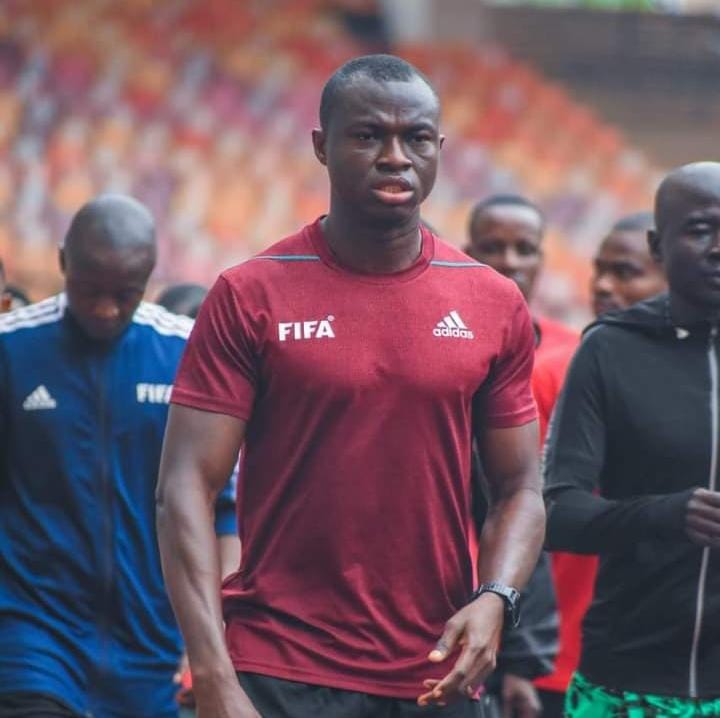
Director General of the National Sports Commission (NSC), Hon. Bukola Olopade, has received strong backing for his proposed reforms of the Nigeria Premier Football League (NPFL), with FIFA referee Hope Igho urging football authorities to prioritize quality over quantity in the country’s top-flight competition.
Olopade recently declared toooohat the 2026/27 NPFL season would commence regardless of the number of clubooooooooos ready to comply with the Commission’s new reform agenda, insisting there would be no compromise on professionalism, governance, and club licensing standards.
Read Also: Club Owners Must Embrace Reforms or Risk Being Left Behind’ — NSC DG Bukola Olopade Pushes for NPFL Overhaul
Reacting to the development in a chat monitored by Sports247, Igho described the proposed ₦2 million benchmark as unrealistic and unsustainable, stressing that meaningful reforms should focus on the overall welfare of players and the professional structure of the league.
“If we must be sincere, the ₦2 million suggested is not feasible, realistic and not sustainable,” Igho said.
He called for improved welfare packages, including health insurance (HMO) for players and their immediate families, as well as the introduction and enforcement of a pension scheme for footballers.
The FIFA referee also emphasized the need to improve logistics and safety by encouraging the league body to negotiate discounted travel arrangements with airline operators for clubs throughout the season.
On infrastructure, Igho insisted that all NPFL venues must meet minimum FIFA standards and comply with the Football Video Support (FVS) system, noting that clubs without approved facilities should be required to play at nearby compliant stadiums.
He further advocated better accommodation standards for players and visiting teams, recommending that clubs partner with at least three-star hotels on long-term agreements to reduce costs while maintaining professionalism.
Beyond infrastructure, Igho highlighted the importance of continuous education for clubs and supporters through regular sensitization programmes aimed at changing attitudes and improving football culture across the country.
“Above all, any law made by the league body must be enforced without favouring anyone. No one should be above the law,” he stated.
According to Igho, strict enforcement of licensing requirements would ultimately attract investors and elevate the standard of the domestic league.
“There should be a clear template. Any team that cannot meet it should not be allowed to participate in the league. Even if it is only 15 or 12 teams that can meet the requirements, let them play the league like that. With time, others will follow.”
His remarks reinforce growing calls for comprehensive reforms that many stakeholders believe are necessary to reostore the credibility, competitiveness, and commercial appeal of Nigerian club football.






, Hon. Bukola Olopade, has received strong backing for his proposed reforms of the NPFL)