
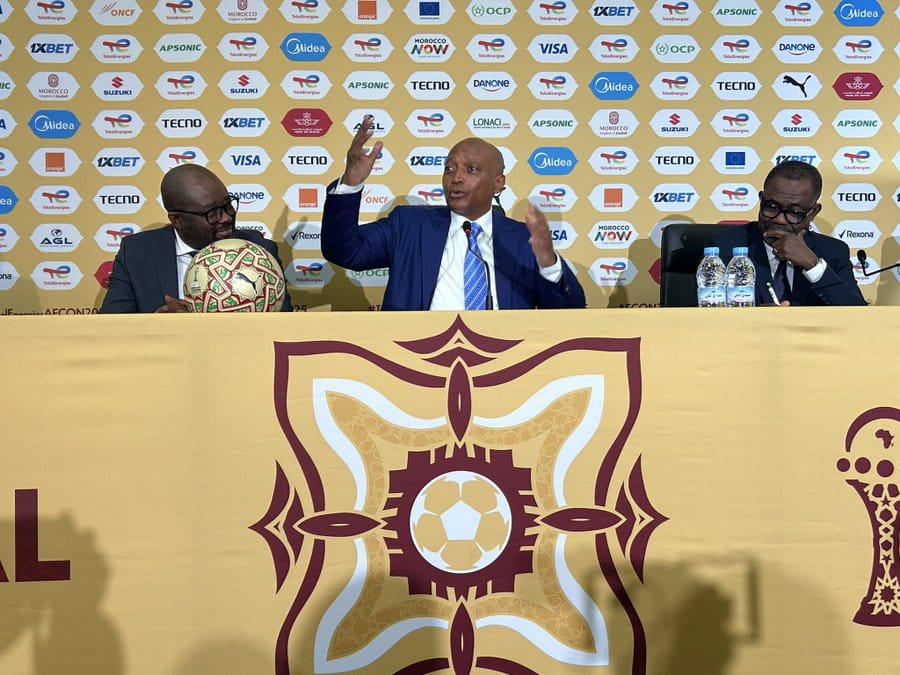
The President of the Confederation of African Football (CAF), Patrice Motsepe, has dismissed claims that the decision to move the Africa Cup of Nations to a four-year cycle was influenced by pressure from Europe, insisting that the continent remains fully in control of its football calendar.
READ ALSO: CAF Inspection Team Heads to East Africa as AFCON 2027 Preparations Enter Crucial Phase
CAF announced shortly before the start of the 2025 Africa Cup of Nations in Morocco that the tournament would transition from a biennial to a quadrennial format beginning in 2028.
The announcement immediately triggered speculation across global football circles, with some commentators suggesting that European leagues and football authorities played a role in the decision.
Speaking during a press conference on Saturday, Motsepe firmly rejected those claims, describing them as unfounded and reflective of what he called an unnecessary inferiority complex.
“We have to stop the inferiority complex. We must move away from the idea that FIFA controls Africa,” Motsepe said. “Do you mean Africa doesn’t have the capacity to speak for itself?”
The CAF president went further, categorically dismissing suggestions that Europe dictated the change in AFCON’s scheduling.
“People say AFCON was changed to four years because of Europe. That is absolute nonsense. Rubbish,” he added.
Motsepe stressed that CAF’s engagement with FIFA and other global football stakeholders is based on mutual respect rather than subordination, noting that dialogue and compromise are a normal part of football governance worldwide.
“FIFA respects us. Let’s stop the inferiority complex. Sometimes we both compromise to accommodate the interests of football,” he said.
His remarks are expected to cool the debate surrounding the calendar reform, which has remained a major talking point since CAF’s announcement.
Supporters of the new format argue that a four-year cycle will enhance the tournament’s prestige and competitiveness, while critics continue to question its broader implications.
For CAF, however, Motsepe’s stance sends a clear message: the decision was made in Africa’s interest, by African football leadership, without external coercion.







, Patrice Motsepe, has dismissed claims that the decision)