
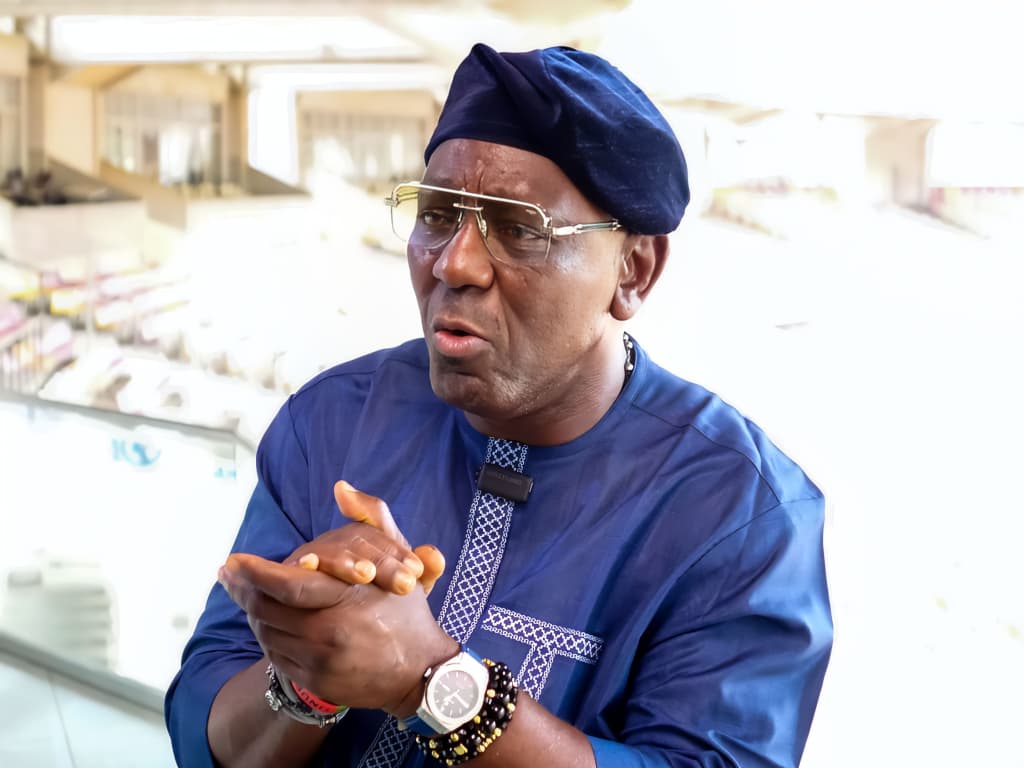
The Senior Special Assistant to the President on Grassroots Sports Development, Hon. Adeyinka Anthony Adeboye, has described the emerging Bariga football development project as the kind of private and community-driven investment Nigeria needs to strengthen the pathway from grassroots football to the national and international stage.
Adeboye spoke during a courtesy visit to the facilities of Bariga Stars Football Club, a grassroots football initiative founded by Hon. Alabi Kolade David (AKD), the immediate past Executive Chairman of Bariga Local Council Development Area and the All-Progressives Congress candidate for Somolu Federal Constituency. Alabi emerged as the APC candidate following the party’s May 2026 primary.
Read Also: SSA Adeboye Appoints Veteran Sports Journalist George Aluo as Media Consultant | Sports247 Nigeria
The visit allowed the Presidential aide to inspect the work already carried out at the facility, as well as equipment being assembled for what is envisioned as a development camp for promising young footballers.
Upon completion, the project is expected to provide a structured environment for the identification, camping and development of U-15 and U-16 male and female football talents drawn from different parts of Nigeria.
Adeboye, who inspected different sections of the facility, expressed satisfaction with the level of work and investment already committed to the project, describing it as an encouraging example of what can happen when individuals and communities deliberately invest in young people through sport.
“What I have seen here is impressive because this is not just about putting up a football facility. It is about creating a home where young talents can be identified, brought together, properly trained and given an opportunity to develop.”
The SSA said the proposed focus on U-15 and U-16 players aligns strongly with his Office’s grassroots development mandate, particularly the drive to establish clearer pathways through which talented youngsters can progress from communities and schools into organised competitive football.
Adeboye was particularly encouraged by the decision to make the project available to both boys and girls, stressing that Nigeria’s grassroots football development must deliberately create equal opportunities for talented young female footballers.
“I am happy that the vision here includes both male and female players. If we are serious about the future of Nigerian football, we cannot leave anyone behind. Somewhere in our communities today are the boys and girls who can become the next generation of Super Eagles and Super Falcons players. Our responsibility is to find them early and give them the right environment to grow.”
The Bariga project is not Alabi’s first intervention in grassroots sports. While serving as Executive Chairman of Bariga LCDA, he publicly identified inadequate sports infrastructure as one of the obstacles facing talented youngsters in the community and initiated sports-facility projects to address the problem. In June 2025, his administration commenced work on the CMS Primary School Sports Complex, planned with a football field, track, tennis, volleyball and basketball courts, gym, changing rooms and other facilities.
Bariga Stars FC was subsequently publicly presented as a grassroots initiative established by Alabi to discover, nurture and promote football talents. Its 2025 trials attracted aspiring footballers and sports stakeholders, further demonstrating the project’s focus on talent identification.
Adeboye said such continuity was important because sustainable grassroots development cannot depend solely on occasional competitions or talent hunts.
According to him, identifying a gifted 15-year-old is only the beginning; the bigger responsibility is creating the coaching, facilities, education, competition, welfare and progression pathway required to ensure that the talent does not disappear.
“Nigeria has never lacked football talent. Our challenge has always been what happens after we discover them. Who trains them? Where do they stay? What competitions do they play? How are they monitored? How do they move to the next level? These are the questions a serious grassroots development system must answer.”
During the visit, Alabi indicated his desire to establish a working partnership between the Bariga football project and the Office of the Senior Special Assistant to the President on Grassroots Sports Development, with the objective of identifying and producing young talents capable of representing Nigeria in the future.
Adeboye welcomed the proposed collaboration, saying partnerships between government, communities, private investors, clubs and development academies would be critical to building a sustainable national talent pipeline.
“The Office of the SSA cannot develop grassroots sports alone, and government cannot do it alone. We need people who are prepared to invest in facilities, coaching and young athletes. When we find genuine projects that share this vision, there is room to explore how we can work together within the appropriate framework.”
He added that the ultimate measure of projects such as Bariga Stars should not simply be the beauty of their facilities, but the number of young lives they are able to transform.
“I want to return here in the years ahead and see young players who passed through this facility wearing the colours of Nigeria. That should be the dream. When a boy or girl enters here at 15 or 16, there must be a pathway that can take that child as far as his or her talent and hard work will allow.”
Adeboye said the initiative reflects the broader grassroots philosophy being promoted under the sports agenda of President Bola Ahmed Tinubu, where sports development is increasingly viewed not only through medals and national teams but also through youth empowerment, talent development and sustainable opportunities.
For the Presidential aide, the Bariga visit ultimately reinforced a message he has consistently carried across the country: Nigeria’s next generation of champions already exists at the grassroots; what they need is the structure, facilities and opportunity to be discovered.
“The talent is already there. What we must build is the pathway. If projects like this are properly developed and connected to a wider national talent-development system, then we will not have to keep asking where the next generation of Nigerian footballers will come from.”