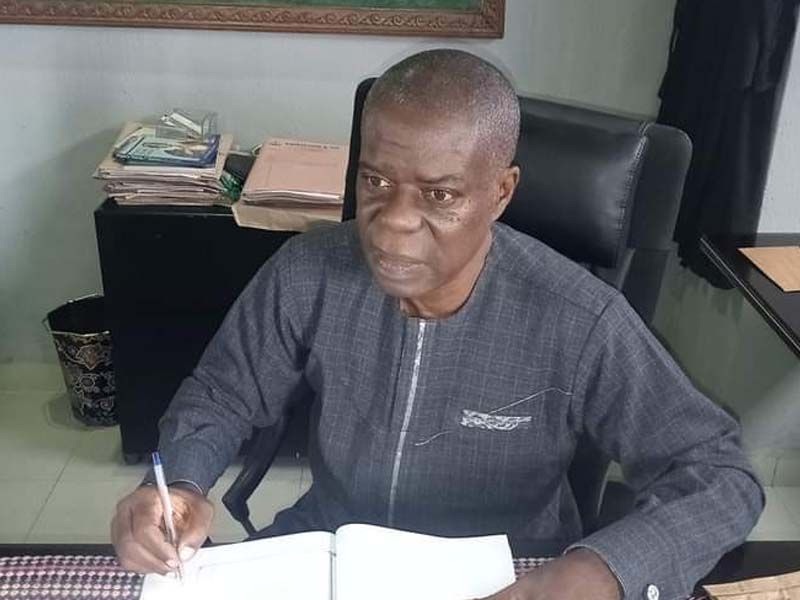
Former Nigeria international and football reform advocate Harrison Jalla has dismissed fears that the involvement of the National Sports Commission in the ongoing Nigeria Football Federation crisis could trigger a FIFA ban, insisting that the NSC is a legitimate stakeholder in Nigerian football and not an outsider interfering in the game.
Jalla said the argument that government involvement could attract FIFA sanctions was misplaced, stressing that stakeholders within Nigerian football, rather than the government alone, are demanding changes to the way the game is administered.
“There is no government interference anywhere,” Jalla said.
“The NSC is a stakeholder in the country’s football. It is not an outsider to the sport.”
His comments come amid growing uncertainty over the NFF’s planned September 27, 2026 elective congress, with stakeholders calling for reforms to the federation’s electoral and governance structure. The Super Eagles’ failure to qualify for the 2026 FIFA World Cup and the Super Falcons’ failure to qualify for the 2027 Women’s World Cup have further intensified the pressure on the NFF leadership.
Jalla believes the latest setback suffered by the Super Falcons provides another clear indication that the current system requires urgent attention.
“The recent failure of the Super Falcons to make it to the World Cup further affirms why there needs to be a change in the current set-up,” he said.
The reform advocate stressed that the calls for change should not be portrayed as an attempt by the government to take control of Nigerian football.
According to him, football stakeholders themselves have become increasingly dissatisfied with the way the sport is being administered and are the ones pushing for a new direction.
“It is the stakeholders in the sport who are calling for a change, not the government,” Jalla stressed.
Jalla has been one of the most vocal advocates for restructuring the NFF, previously calling for equal representation and voting rights for the federation’s five recognised federating units. He has argued that the present system gives disproportionate influence to state football associations and needs to be redesigned to create a more balanced administration.
The former international has also backed the possibility of a Normalisation Committee to oversee reforms, arguing that such a body should be made up of people with genuine football knowledge and administrative expertise.
His position comes against the backdrop of increasing controversy surrounding the NFF electoral process, with legal challenges and calls for reform adding to the uncertainty surrounding the September election.
Jalla has previously warned that the continued concentration of power within the existing structure has held Nigerian football back, particularly at a time when the country is struggling to maintain its traditional position among Africa’s leading football nations.
For him, the issue is therefore not about government taking over football but about ensuring that the institutions responsible for supervising the sport fulfil their responsibilities.
Jalla believes Nigeria cannot continue with the same structure while expecting different results, particularly after the recent World Cup setbacks involving both the Super Eagles and Super Falcons.
And with the NFF facing growing pressure for reforms, he insists that the current debate should be viewed as a fight to rescue Nigerian football — not an attempt to invite FIFA punishment.