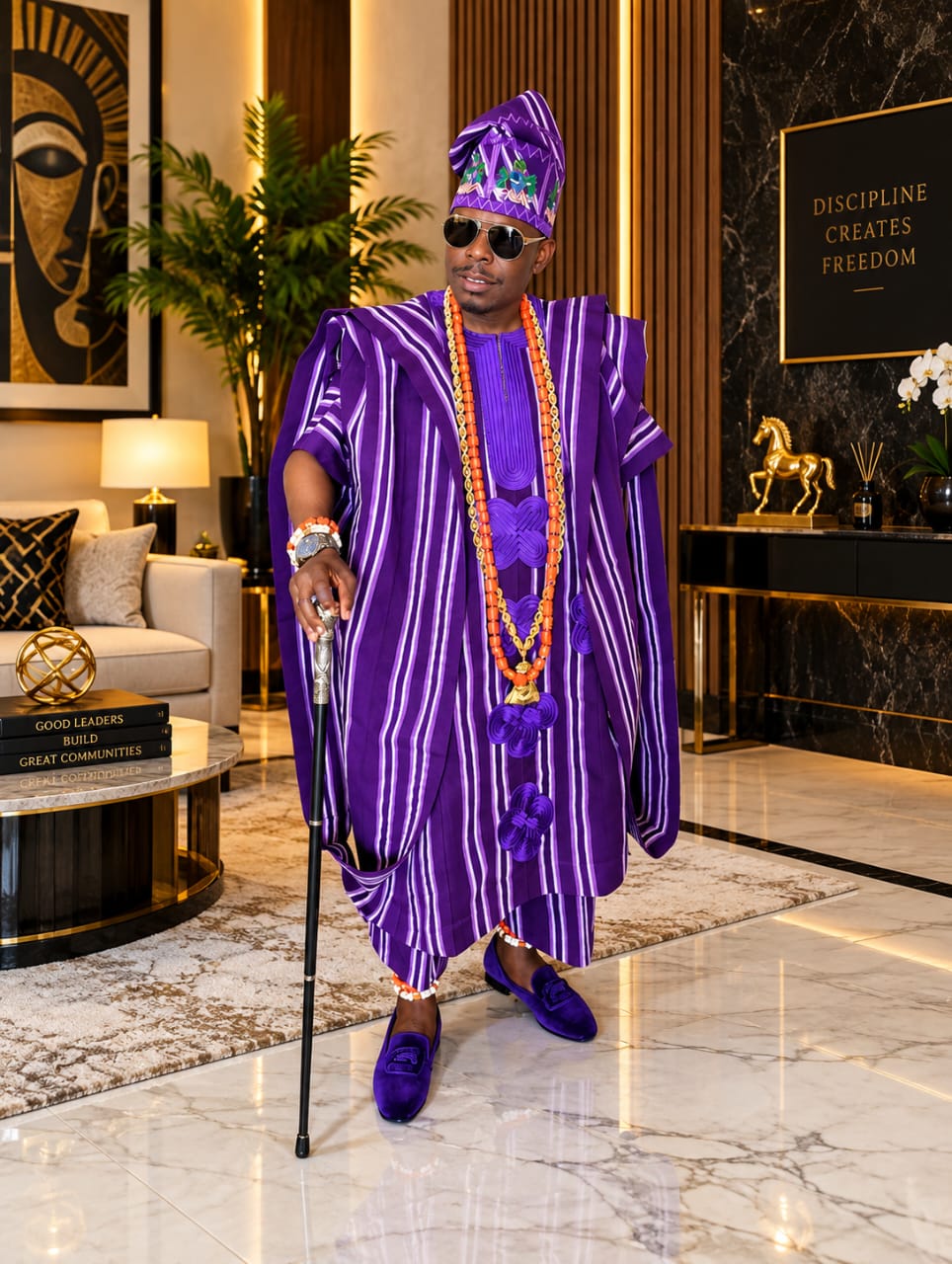
Long before the title “King of Small Chops” became synonymous with Prince Saheed Kekere-Ekun, there was a young man working as a waiter at parties and hospitality establishments in Lagos, learning the business from the ground up and quietly imagining a future few around him could probably have predicted.
Decades later, that young waiter has become one of the most recognisable personalities associated with Nigeria’s small-chops industry.
Today, as Prince Saheed Akorede Kekere-Ekun, popularly known as Saheeto, celebrates his birthday, his story is not simply that of a successful caterer.
It is the story of an entrepreneur who helped turn an often-overlooked part of the Nigerian party menu into a thriving commercial enterprise and, in the process, built a brand that has survived for more than three decades.
It is also a story with a delicious irony.
The man who made his name selling “small chops” ended up building something very big.
Kekere-Ekun’s journey dates back to his early years working as a waiter at Lagos social functions. Published accounts of his career trace the formal establishment of Saheeto International Limited to 1994, although his involvement in hospitality began earlier.
From those beginnings emerged a business dedicated to finger foods and event catering at a time when the category had nowhere near the commercial profile it enjoys today.
Kekere-Ekun saw possibilities where others saw party snacks.
He understood that spring rolls, samosas, puff-puff and other bite-sized foods could be more than an accompaniment served while guests waited for the main meal. With the right presentation, quality control, consistency and service, they could become a business in their own right.
That insight would help shape the Saheeto story.
Over time, weddings, birthdays and private celebrations gave way to increasingly large assignments, corporate functions and high-profile events. Saheeto became a familiar name within Lagos social circles and eventually beyond Nigeria.
Kekere-Ekun has credited much of that expansion not to flashy advertising but to referrals, repeat customers and maintaining standards.
His longevity is perhaps one of the most striking aspects of the story.
In a business where tastes change quickly and competitors emerge constantly, Kekere-Ekun has spent more than three decades associated with essentially the same proposition: take something seemingly ordinary and deliver it extraordinarily well.
And his influence has not been limited to what Saheeto sells.
Kekere-Ekun has spoken proudly over the years about training people who subsequently established themselves in the catering industry and, in turn, trained others. He has described that multiplier effect as one of the most satisfying parts of his entrepreneurial journey.
That may ultimately prove to be one of the more important chapters of the Saheeto story.
Businesses can be counted in outlets and revenues. Industries are built when knowledge is transferred and other entrepreneurs emerge.
The journey, however, has not been without bruises.
Kekere-Ekun has publicly recalled major business setbacks, including an early catering disaster in which food prepared for roughly 2,000 guests was spoiled, forcing his team to start again under enormous pressure. He has also spoken about suffering a much larger financial loss after operational problems affected a major catering contract.
He survived both.
Those episodes offer another explanation for the longevity of the man behind Saheeto: an ability to absorb setbacks, reassess and keep moving.
His interests would eventually stretch beyond catering. Published profiles have linked him with hospitality and real estate, including Saheeto’s Place on Lagos Island.
His entrepreneurial work also earned formal recognition. FATE Foundation’s anniversary records list Saheed Kekere Ekun as its 2012 FATE Alumni Model Entrepreneur, while he has received other recognition for his contributions to food and hospitality.
Then there is another side to Kekere-Ekun: politics.
Years before his more recent appearances on the political circuit, he publicly discussed his political ambitions and sought to represent Lagos Island Constituency II in the House of Representatives on the platform of the All Progressives Congress.
More recently, he was visible in Ekiti during the campaign for Governor Biodun Oyebanji, appearing alongside leading political figures and supporters during the election period.
It paints the portrait of a man whose network and interests have expanded considerably from the Lagos hospitality scene where his journey began.
But food remains at the heart of his identity.
That story is now moving into another generation through Saheeto Signature.
In August, the company opened its Saheeto Signature Grill Hub in Wuse 2, Abuja, extending a hospitality journey that has lasted more than three decades into a concept where customers do not have to wait for a wedding or major party to experience the brand.
It is a significant evolution.
The waiter became an entrepreneur.
The entrepreneur became an employer and trainer.
The small-chops business became a hospitality brand.
And the brand is now being positioned for another chapter.
For the many younger entrepreneurs who today make a living from small chops, finger foods and event catering, Kekere-Ekun’s journey is also a reminder that an industry does not always begin with a grand idea.
Sometimes it begins with recognising the enormous potential hidden inside something everyone else considers small.
That is what makes his birthday today more than a celebration of another year.
It is an opportunity to celebrate Prince Saheed Kekere-Ekun — the man behind Saheeto, the entrepreneur who helped give small chops a bigger place in Nigerian hospitality, and the businessman whose journey from waiting tables to building a recognised brand has become a story of persistence, reinvention and enterprise.
After more than three decades, people still call him “The King of Small Chops.”
Perhaps the greatest tribute to his journey is that nobody considers the business small anymore.
Happy birthday, Prince Saheed Kekere-Ekun.