

Sometimes the biggest moments in football history are not caused by the people who eventually receive the credit. They’re caused by people who had no idea what their actions would eventually set in motion.
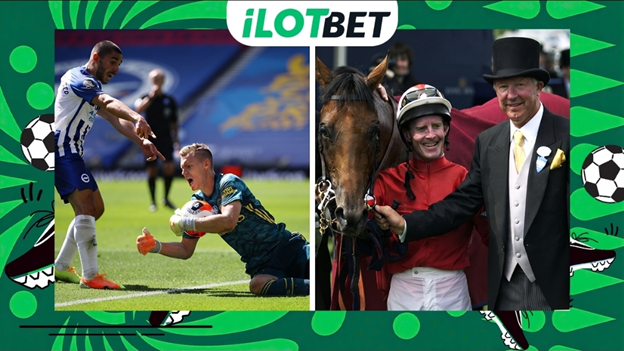
Neal Maupay wasn’t thinking about Argentina’s World Cup ambitions when he challenged Leno. Ferguson certainly wasn’t thinking about the Glazers when his dispute over a horse began.
Read Also: Arsène Who? Why Football Keeps Doubting Visionaries Until It’s Too Late
These moments can have consequences that extend far beyond the immediate incident, sometimes influencing the fortunes of clubs, players and entire national teams.
The phenomenon is commonly known as the butterfly effect: the idea that a small event can trigger a chain of consequences with enormous implications.
While it is impossible to establish exactly what would have happened had these incidents not occurred, their influence on football history makes them fascinating to revisit.
Here are 10 football moments that illustrate the butterfly effect.
1. Neal Maupay’s collision with Bernd Leno and Emiliano Martinez’s rise to Argentina’s World Cup hero
One of the most remarkable examples of football’s butterfly effect involves Brighton forward Neal Maupay, former Arsenal goalkeeper Bernd Leno and Argentina’s World Cup-winning goalkeeper Emiliano Martinez.
On 20 June 2020, Arsenal travelled to Brighton for a Premier League fixture following the competition’s return from its coronavirus suspension.
During the first half, Leno suffered a knee injury after an aerial challenge involving Maupay. The German goalkeeper was subsequently carried off on a stretcher, forcing Arsenal manager Mikel Arteta to introduce Martinez.
At the time, Martinez had spent almost a decade at Arsenal but had struggled to establish himself as the club’s first-choice goalkeeper.
Leno’s injury provided him with an extended opportunity in the first team. Martinez started Arsenal’s remaining 11 matches of the 2019-20 campaign, including their FA Cup final victory over Chelsea.
He subsequently joined Aston Villa in September 2020, seeking regular first-team football.
His performances in England earned him an Argentina debut in June 2021. He then became instrumental in Argentina’s Copa América triumph that year, saving three penalties against Colombia in the semi-final shootout.
Martinez was equally influential at the 2022 World Cup, producing a crucial late save against Randal Kolo Muani before helping Argentina defeat France in the final penalty shootout.
Lionel Messi finally lifted the World Cup, completing his collection of major international honours.
It is difficult to imagine a more extraordinary chain of events beginning with a collision in a Premier League match.
Had Leno remained fit, Martinez might not have received that particular opportunity at Arsenal. Whether his subsequent career would have followed the same trajectory remains impossible to know.
2. Sir Alex Ferguson’s dispute over a racehorse and the Glazer takeover of Manchester United
Manchester United supporters have spent years expressing their dissatisfaction with the Glazer family’s ownership of the club. However, one of the events that helped create the circumstances for their takeover had little to do with football.
It involved a racehorse called Rock of Gibraltar.
Sir Alex Ferguson had a dispute with Irish businessmen John Magnier and JP McManus over the ownership and stud rights of the successful racehorse.
Ferguson believed he was entitled to a share of the horse’s stud earnings, but his name was removed from the ownership records when the horse retired to stud.
The disagreement escalated into a bitter dispute, eventually spilling into Manchester United’s boardroom. Magnier and McManus, who were substantial shareholders in the club, also questioned aspects of Ferguson’s transfer dealings and management.
The relationship deteriorated, and the businessmen eventually sold their substantial Manchester United shareholding.
That decision presented American businessman Malcolm Glazer with an opportunity to increase his ownership stake. In May 2005, Glazer acquired their 28.7% stake, taking his holding to approximately 57%.
He subsequently secured control of the club in a takeover valued at about £790m.
The consequences remain a major part of Manchester United’s modern history.
It is not certain that the Glazers would never have taken over without the dispute, as they had already been buying shares. However, the horse disagreement significantly influenced the circumstances surrounding their acquisition.
A dispute over a racehorse had helped set in motion a chain of events that changed the ownership of one of football’s biggest clubs.
3. Cristiano Ronaldo’s performance against Manchester United
Cristiano Ronaldo’s rise to global superstardom might never have followed the same path had Manchester United not travelled to Portugal for a pre-season friendly in August 2003.
United faced Sporting Lisbon in the opening of the Portuguese club’s new stadium, the Estádio José Alvalade.
The hosts won 3-1, but the player who attracted the greatest attention was an 18-year-old Ronaldo.
His performance was so impressive that several Manchester United players reportedly urged Ferguson to sign him.
Ferguson later explained that the players discussed Ronaldo throughout the journey home and encouraged him to complete the transfer.
United subsequently signed the Portuguese forward for £12.24m, with Ronaldo making his competitive debut against Bolton Wanderers.
He went on to win three Premier League titles, the Champions League and his first Ballon d’Or during his six years at Old Trafford.
Ronaldo later established himself as one of the greatest footballers in history, winning five Ballon d’Or awards and five Champions League titles.
The interesting part is that the friendly was not initially arranged as an audition for Ronaldo. It was simply a pre-season fixture.
Had he delivered an ordinary performance, or had United’s players not been so impressed, his career might have taken a completely different direction.
3. Lionel Messi’s Barcelona opportunity and the famous napkin agreement
Today, Lionel Messi is regarded as one of the greatest footballers ever to play the game. However, his journey to Barcelona almost never happened.
In 2000, a 13-year-old Messi travelled from Argentina to Spain with his family after Barcelona showed interest in signing him.
The young forward’s situation was complicated by his need for growth-hormone treatment, which was expensive and had become a financial concern for his family.
Barcelona’s sporting director, Carles Rexach, was impressed by the teenager but there were concerns within the club about committing to the proposed arrangement.
During a meeting in December 2000, Rexach famously put the agreement to sign Messi in writing on a paper napkin.
The document became one of the most famous pieces of memorabilia in football history.
Barcelona subsequently brought Messi into their youth system, where he developed through the academy before making his first-team debut in 2004.
The Argentine went on to win 10 La Liga titles, four Champions League trophies and eight Ballon d’Or awards during his Barcelona career.
He also became the club’s all-time leading goalscorer.
Imagine if Rexach had walked away from that meeting without putting pen to paper. Or if Barcelona had decided against taking a chance on the teenager.
The football world might have missed out on one of its greatest talents.
5. Mark Robins’ goal that potentially saved Sir Alex Ferguson’s Manchester United career
In January 1990, Ferguson was under enormous pressure at Manchester United. There were reports that defeat against Nottingham Forest in the FA Cup could cost him his job.
Mark Robins scored the only goal of the match, sending United through.
United eventually won the FA Cup, and Ferguson remained in charge for another 23 years, winning 13 Premier League titles and two Champions League trophies.
Imagine if Robins had missed that opportunity.
Would United have appointed another manager? Would Ferguson have built the dynasty that dominated English football? Would the 1999 treble have happened?
6.The failed transfer that changed football’s transfer market forever
In 1990, Belgian footballer Jean-Marc Bosman wanted to leave RFC Liège for French club Dunkerque after his contract expired.
Liège demanded a transfer fee that Dunkerque was unwilling to pay. The transfer certificate was withheld, and Bosman was suspended.
He subsequently challenged the system through the courts.
Five years later, the European Court of Justice ruled in his favour, fundamentally changing football transfers.
The Bosman ruling allowed out-of-contract players to move without their former clubs receiving a transfer fee. It also removed restrictions on the number of EU players clubs could field.
Without that failed transfer, the legal battle might never have happened in the same way.
The entire modern transfer market could look different
7. Leeds United’s phone call about Denis Irwin that delivered Eric Cantona to Manchester United
In November 1992, Leeds United managing director Bill Fotherby contacted Manchester United chairman Martin Edwards to enquire about signing defender Denis Irwin.
United rejected the approach.
However, Ferguson used the conversation to enquire about Eric Cantona, who was struggling to settle at Leeds.
Leeds manager Howard Wilkinson was prepared to let the Frenchman leave, and United completed his signing for around £1m.
Cantona became a defining figure in Ferguson’s Manchester United revolution, helping the club win four league titles in five seasons.
Think about that.
If Leeds had not contacted United about Denis Irwin, would Ferguson have made that particular enquiry about Cantona? Would the Frenchman have joined another club? Would Manchester United’s early Premier League dominance have unfolded differently?
The original phone call was about a defender. It ended with the arrival of a player who changed English football.
8. A chance dinner invitation that eventually transformed Arsenal
In 1989, Arsenal vice-chairman David Dein met Arsène Wenger at Highbury.
Wenger was visiting England and Dein’s wife encountered him in the stadium’s cocktail lounge. Dein subsequently invited him to dinner.
During the evening, they played charades, and Dein became convinced that Wenger was someone he wanted at Arsenal.
Interestingly, Dein initially wanted to appoint Wenger after George Graham’s departure in 1995, but the Arsenal board preferred Bruce Rioch.
When Rioch’s tenure ended, Dein renewed his push, and Wenger was appointed in September 1996.
The Frenchman subsequently transformed Arsenal’s training methods, nutrition, playing philosophy and recruitment.
He won three Premier League titles and seven FA Cups, including the famous unbeaten 2003-04 campaign.
9. Barcelona appoint Pep Guardiola instead of going for an established superstar manager
In 2008, Barcelona were coming out of a difficult period under Frank Rijkaard.
The club needed a new manager and faced an important decision about its future direction.
Instead of appointing an established senior manager, Barcelona promoted Pep Guardiola from the reserve team, despite his limited experience managing at the highest level.
On 8 May 2008, the club officially announced his appointment.
What followed was extraordinary.
Guardiola led Barcelona to the treble in his first season, winning La Liga, the Copa del Rey and the Champions League.
The team subsequently won six trophies in 2009, establishing a historic standard of success.
His Barcelona side also helped popularise a style of football built around possession, positional play and intense pressing.
10. Alan Shearer nearly joins Manchester United
In 1996, Manchester United were looking to strengthen their attack and Sir Alex Ferguson identified Alan Shearer as a major target.
Shearer had just won the Premier League with Blackburn Rovers and was one of the most sought-after strikers in England.
The forward later revealed to BBC Sport that he was approximately 90% certain he would join Manchester United.
However, Newcastle United manager Kevin Keegan made another approach.
Shearer ultimately chose his hometown club, returning to Newcastle in a then-world-record £15m transfer.
He became Newcastle’s all-time leading goalscorer and the Premier League’s record scorer, with 260 goals.
Had Shearer joined Manchester United, the club’s attacking history could have looked very different. Newcastle, meanwhile, would have lost the player who became the defining figure of their modern era.