

South Africa has formally entered the race to host the 2028 Africa Cup of Nations, signalling a strategic push to reclaim continental football’s biggest stage while leveraging sport as an economic growth engine.
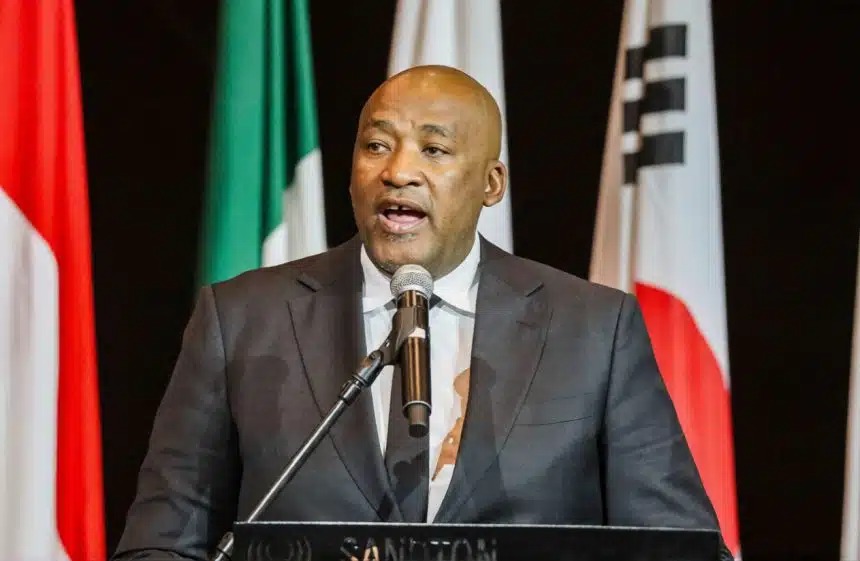
Sports Minister Gayton McKenzie confirmed the country’s intention during an interview with the South African Broadcasting Corporation in Rabat, Morocco, revealing that the bid could be structured as a joint hosting arrangement with neighbouring Namibia and Botswana.
The proposed tri-nation model mirrors a growing CAF preference for shared tournaments that spread costs, expand reach and accelerate regional integration.
According to McKenzie, the bid aligns squarely with the Government of National Unity’s broader agenda to attract high-impact international sporting events capable of stimulating tourism, creating jobs and unlocking long-term infrastructure investment. In plain terms: AFCON isn’t just football—it’s economic policy with boots on.
“Hosting AFCON presents a massive opportunity for infrastructure upgrades, employment and global exposure,” McKenzie said, stressing that South Africa remains well-positioned to deliver a world-class tournament, supported by its proven event-hosting pedigree.
The timing is significant. The 2028 edition will be the first Africa Cup of Nations staged under CAF’s newly adopted quadrennial format, a structural shift announced in December 2025 that is designed to enhance the tournament’s prestige, competitiveness and commercial value. With fewer editions and higher stakes, hosting rights are expected to become more fiercely contested.
Before that transition, AFCON 2027 will be held in Kenya, Uganda and Tanzania from June to July. That tournament will be historic in its own right—the first to be hosted by three countries, the final biennial edition, and the first AFCON staged in the CECAFA region in more than five decades, following Ethiopia’s hosting in 1976.
South Africa’s AFCON pedigree strengthens its case. The country previously hosted the tournament in 1996 and 2013, with the 1996 edition etched permanently into national sporting folklore.
That year, Bafana Bafana lifted the trophy on home soil just two years after South Africa’s return to international football—a moment that transcended sport and became a symbol of national rebirth.
A 2028 hosting role would offer a chance to recapture that legacy while adapting it to modern realities. A joint bid with Namibia and Botswana could reduce financial strain, broaden fan access and position southern Africa as a unified sporting destination—an increasingly attractive proposition for CAF and commercial partners alike.
While CAF has yet to open the formal bidding process for AFCON 2028, South Africa’s early declaration sends a clear message: the country is back at the table, thinking regionally, and aiming to convert football ambition into measurable economic and reputational returns.
In corporate terms, it’s a calculated play—high visibility, shared risk, and potentially outsized upside.