
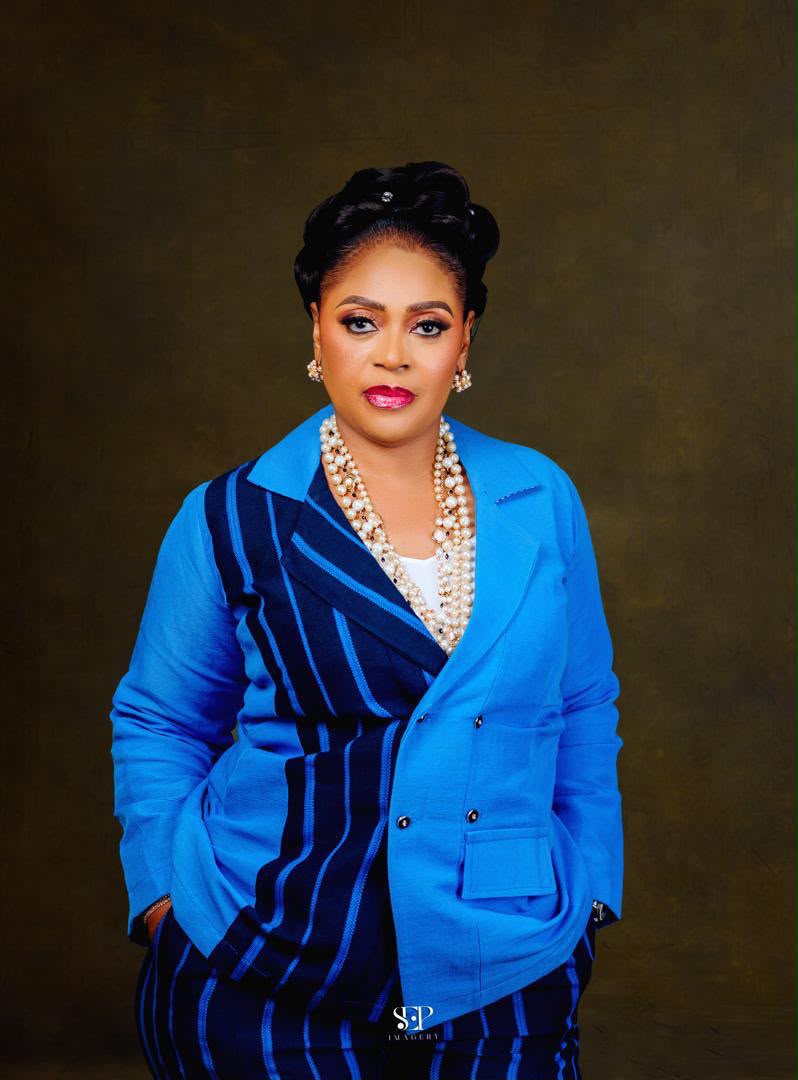
At a time when Nigerian football continues to search for stronger grassroots structures and sustainable pathways for young talents, Chief Mrs. Raliat Anako Abdulsalam has emerged as one of the women quietly pushing the conversation forward through practical action.
With more than two decades of professional experience cutting across sports administration, business, finance, marketing and community development, Abdulsalam has increasingly become a prominent figure in the development of female football in Lagos, combining administration with direct investment in young players.
Her philosophy is clear: football development must go beyond organising competitions. It must create opportunities, provide education and mentorship, and give young players the environment they need to build sustainable careers.
That philosophy was evident when she chaired the Lagos State Football Association Female Football Development Committee, where she championed programmes designed to expose young girls to football, mentorship, financial literacy and sports management.
“This programme is more than merely coming out to play football,” Abdulsalam said during one of the committee’s girl-child development initiatives. “It is also planned to give our young girls several life-impacting programmes, including financial literacy and sports management.”
That statement perhaps best captures the thinking behind her approach to sports administration.
For Abdulsalam, developing female footballers is not simply about getting girls onto a football pitch. It is about equipping them with knowledge and opportunities that can remain valuable long after their playing careers.
From grassroots football to building her own platform
Her commitment to grassroots development also extends beyond administrative responsibilities.
Abdulsalam has been associated with Lekki Junior Strikers Academy, an initiative established to provide young footballers with an opportunity to develop their talents.
In an earlier interview, she explained that her motivation came from a desire to contribute to community development and give children opportunities through football.
That direct involvement gives her a perspective that goes beyond the boardroom.
It places her in a position where she can see first-hand the challenges confronting young players — from access to proper coaching and competition to education, exposure and the financial realities surrounding grassroots football.
Putting girls at the centre
One of the most visible expressions of her commitment to women’s football is the Raliat Anako Abdulsalam Foundation (RAAF) Lagos Female Unity Cup, which provides female players with an organised competitive platform.
The tournament has also attracted partnerships aimed at strengthening its impact, including collaboration with WHITEROSE Group, while the Lagos State Sports Commission and Lagos State Football Association have been involved in supporting the initiative.
Abdulsalam has consistently positioned such programmes as more than sporting events. They are opportunities for young women to compete, gain exposure, build networks and demonstrate their abilities.
Her approach is also reflected in the wider work of RAAF, whose activities have extended into community welfare, healthcare, education and support for vulnerable Nigerians. In 2021, the foundation provided food items and free medical services to more than 500 residents in Lagos. Abdulsalam described the initiative as part of her philosophy of making the world a better place by helping those in need.
A broader vision for women in sports
Abdulsalam’s work also speaks to a wider question confronting Nigerian sport: how can more women be positioned not only as athletes, but also as administrators, investors, organisers and decision-makers?
Her work in Lagos has provided one answer — create opportunities and build structures around the athletes.
The success of the Lagos female football development programmes has attracted positive reactions from football stakeholders. Lagos FA chairman Gafar Liameed previously commended Abdulsalam’s leadership of the female football development initiative, describing the programme as an important step toward improving opportunities for young girls.
The programmes have also sought to bring football together with areas such as education, mentorship, financial literacy and personal development, reflecting an increasingly modern understanding of what grassroots sports development should represent.
More than a football administrator
Away from football, Abdulsalam’s professional background spans business analysis, accounting, marketing, oil and gas, information technology, logistics and public-sector engagement.
That breadth of experience has shaped her approach to sports administration, particularly at a time when Nigerian sport requires administrators who can combine sporting knowledge with management, finance, organisation and long-term planning.
Her work with RAAF and other women-focused initiatives has further strengthened her profile as a social entrepreneur whose interest in sport is closely connected to community development.
The significance of her contribution, therefore, may not simply be measured by the number of competitions organised or young players reached.
It lies in the pathways being created.
For a young girl in Lagos who wants to play football, the presence of structured competitions, mentorship programmes, development initiatives and administrators willing to invest in her future can make the difference between talent remaining unnoticed and talent progressing to the next level.
And that is where Abdulsalam’s work continues to stand out.
At a time when Nigerian football is demanding better grassroots structures and greater investment in women’s football, Chief Mrs. Raliat Anako Abdulsalam is building her legacy around one simple principle: give girls an opportunity, give them the right environment, and give their talent a chance to grow.
Her own words remain particularly telling:
“We’re committed to creating opportunities for women and girls to succeed in football. This program is just the beginning of our efforts to foster a supportive community and promote female participation in the sport.”
For Nigerian women’s football, that beginning could become part of something much bigger.