
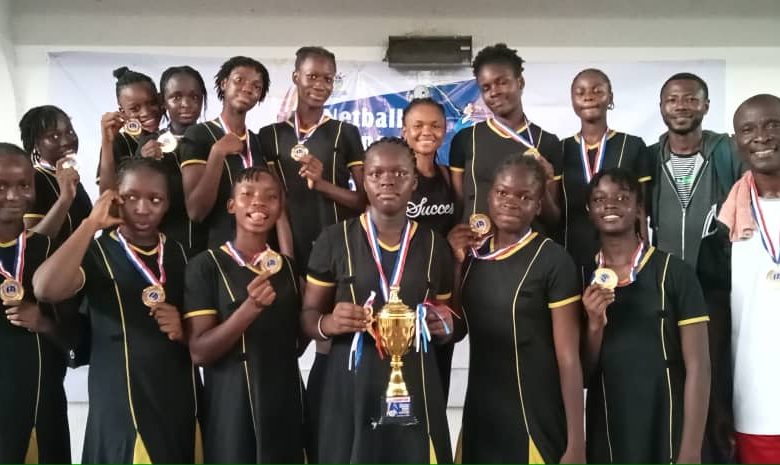

Organisers of “Project 2027” have announced an ambitious plan to train and equip 300 teachers and community youths in netball across Nigeria in 2026, as part of a broader mission to introduce the sport to one million Nigerian schoolchildren.
The initiative, driven by the Community Sports and Educational Development (CSED) Initiative and its partners, is positioning grassroots development as the engine for reviving netball in Nigeria, with a strong emphasis on reaching the girl child, the sport’s traditional foundation.
Read Also: AFCON 2025: Bassey Credits Defensive Discipline as Super Eagles Eye Algeria Showdown
Despite signs of growing inclusivity at the continental level—highlighted by the recent Africa Netball Cup in Malawi—Project 2027 says its core focus remains providing girls with safe, structured environments to engage in a sport they can enjoy beyond their teenage years.
Momentum for the programme continues to build. At its most recent training event in Udu Local Government Area of Delta State in October 2025, 58 teachers were trained, bringing the total number of trained teachers and community youths under the project to 511.
So far, Project 2027 netball training programmes—offered free of charge—have been held in nine states: Edo, Delta, Akwa Ibom, Bayelsa, Ondo, Cross River, Enugu, Taraba, and Rivers. The initiative has been supported by partners including the Francis and Fidelia Ibhawoh Foundation, state Sports Commissions, and Ministries of Education.
The Bayelsa State Government has been singled out as a trailblazer, having fully sponsored the netball training event held in Otuoke in September 2025, a move organisers say signals the state’s ambition to become Nigeria’s leading netball hub.
Beyond training, Project 2027 has also expanded into innovative sport-for-development programming. In 2024, Tare Pet Montessori Group of Schools, in partnership with CSED Initiative, piloted the “Sporting Coders” programme and currently stands as one of only two schools in Nigeria with a functioning male netball team, underscoring the sport’s growing reach.
For Cornelius Ehimiaghe, a sport-for-change advocate and key voice within the Naija Netball Stakeholders (NNS), the grassroots push for netball is a matter of national responsibility.
“We cannot wait,” Ehimiaghe said. “It is a tough task, made tougher by challenges at the national administrative level, but we will keep pushing boundaries to protect the rights of Nigerian children to play netball on their own terms.”
He disclosed that although Lord’s Taverners, the project’s major kits and equipment supporter, has wound down operations, the organisation made a final donation of 2,200kg of sports kits and equipment, ensuring Project 2027 was not left stranded.
Looking ahead, NNS has begun discussions with state sporting and educational authorities, as well as NGOs and corporate organisations, to co-host future training events. While funding remains the biggest challenge, organisers say a revised co-sponsorship model with NGOs and Sports Commissions will help maintain training standards.
Under the new framework, participants will take responsibility for producing netball bibs for their students, except in displaced and vulnerable communities, including Ogoja, where Project 2027 will fully cover training costs. Notably, four Cameroonian refugees previously trained as netball coaches are expected to play a key role in training 30 teachers in Ogoja and surrounding communities in March.
Beyond coaching, the Naija Netball Stakeholders aim to stimulate more state-level competitions, encourage the formation of additional state netball associations, and support Netball Africa–certified coaches to deliver refresher courses for teachers and new school clusters.
In a forward-looking move, NNS is also rallying the Nigerian netball community to support the online bid for netball’s inclusion in the 2032 Olympic Games in Brisbane, Australia—a goal that would mark a major milestone for the sport’s global and local growth.