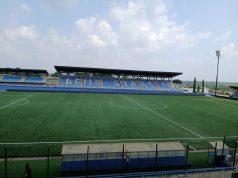


Olympic Eagles assistant coach Bright Osehai Ozebagbe has praised the impact of substitutes Muiz Adeleke and Lucky following Nigeria’s emphatic 4-0 victory over DR Congo in the second leg of their 2027 U-23 Africa Cup of Nations qualifying tie.
The Nigerian side produced a remarkable turnaround at the Remo Stars Stadium, Ikenne, overturning a 2-0 first-leg deficit to secure a 4-2 aggregate victory and progress to the next stage of the qualifiers.
Speaking during the post-match press conference, Ozebagbe explained the thinking behind the substitutions, revealing that both players were familiar with the venue and had an advantage from their previous training experience in the area.
Sports247 reports that, according to the assistant coach, Muiz Adeleke and Lucky understood the importance of the occasion and were determined to make meaningful contributions after coming off the bench.
“The substitutes played a great role in today’s game. The two players who came on, Muiz and Lucky, are from this area. This is their home ground; they train here, and we had been here for two weeks before travelling to Congo,” he said.
He added that their familiarity with the environment and desire to prove themselves contributed to their impressive performances.
“They knew they had a point to prove, and we are grateful that their contributions paid off,” Ozebagbe added.
The assistant coach also addressed questions surrounding the playing conditions, particularly the impact of the intense heat and humidity on the players during the encounter.
Ozebagbe emphasised the importance of a quality playing surface, contrasting Nigeria’s comfortable conditions in Ikenne with the difficulties the team experienced during the first leg in DR Congo.
He disclosed that the condition of the pitch in Congo affected several Nigerian players, with many developing blisters under their feet, making the player-friendly turf in Ikenne a significant advantage for the Olympic Eagles.
“The playing surface is very important. We experienced difficulties with the pitch in Congo, and most of our players developed blisters under their feet. So, we knew we would be more comfortable playing here because the turf is player-friendly,” he explained.
On the weather conditions, Ozebagbe noted that the intensity of the game naturally dropped after the opening 10 to 15 minutes, a development the technical crew had anticipated.
He explained that the coaching staff made adjustments to manage the physical demands of the encounter and maintain the team’s competitiveness.
“As for the weather, you could see that after about 10 to 15 minutes, there was a drop in intensity. We anticipated that this would happen, which was why we had to make changes in the first half to try to address the situation,” he stated.
Nigeria’s victory highlighted the importance of effective substitutions, tactical adjustments and familiarity with playing conditions as the Olympic Eagles now turn their attention to their next challenge against Zambia.