
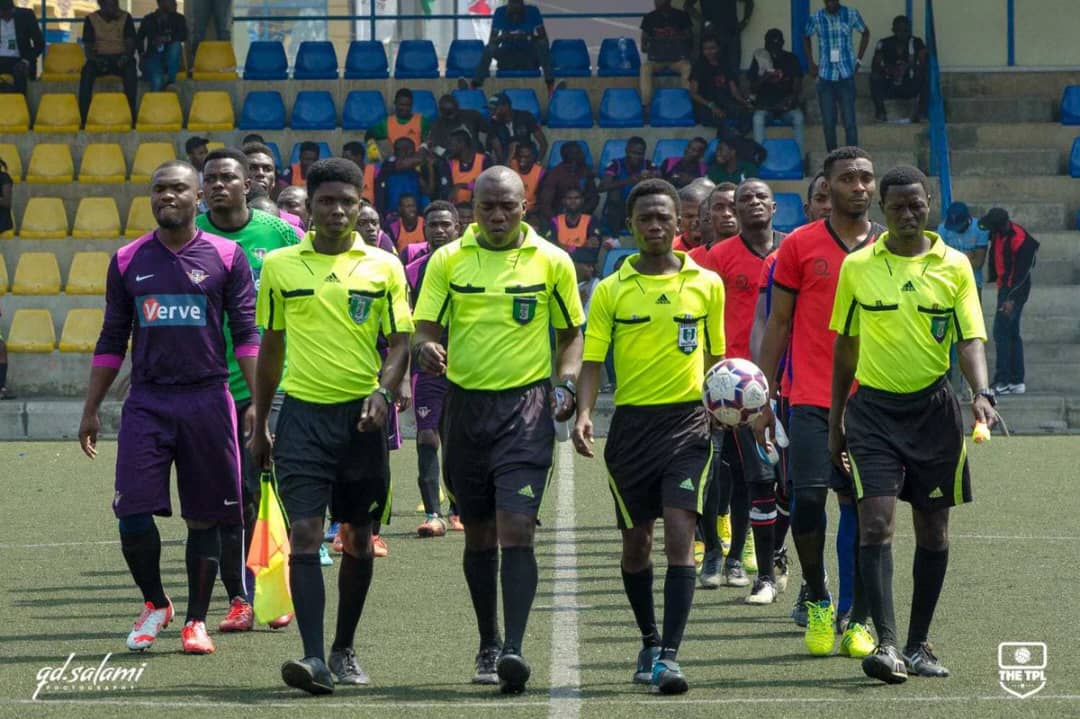
An active Nigerian referee has called for comprehensive reforms within the country’s refereeing structure, arguing that the death of Plateau State referee Aweng Solomon Maram should prompt stakeholders to look beyond fitness-test requirements and examine the broader welfare, career development and working conditions of match officials.
Maram reportedly collapsed and died during a Nigeria Referees Association (NRA) pre-season fitness assessment at the MKO Abiola National Stadium, Abuja, on August 18, 2026. His death has renewed concerns about the physical demands placed on referees and the systems governing their development and welfare.
Speaking to Sports247 on condition of anonymity, the active referee said the incident should become a catalyst for meaningful reforms rather than a debate centred exclusively on the number of laps or fitness-test standards.
The official urged State Referees Council chairmen, training officers and secretaries to examine the challenges confronting referees and raise them constructively within the NRA.
“The NRA is a body under the NFF, yet sometimes we make it appear as though we are a hidden body that exists only to serve the interests of those in positions of authority, rather than the referees we represent,” he said.
He argued that refereeing should be recognised as a profession rather than treated largely as a hobby, stressing the need for stronger welfare packages, career planning and post-retirement support.
According to him, Nigeria has produced FIFA-badged referees who have represented the country internationally and served domestic football diligently, yet many officials face uncertainty once their active careers end.
The referee also proposed a clearer and more competitive pathway through the various refereeing cadres. He suggested that state associations should introduce structured mock fitness assessments from the Grade One level, enabling officials to understand the required standards early in their careers.
He said referees who consistently meet fitness, examination and performance requirements should have clearly defined opportunities for promotion, while those unable to meet established standards should be encouraged to improve before progressing.
Such a system, he argued, could help reduce congestion at the NLO level and create a stronger merit-based pathway towards the NNL and higher competitions.
The official also raised concerns about perceptions that personal connections sometimes influence referee progression. He stressed that transparent promotion criteria based on fitness, knowledge, consistency, examination results and on-field performance would strengthen confidence in the system.
He further called for deliberate mentorship and succession planning, saying younger referees should be given opportunities to learn from experienced officials and eventually assume leadership responsibilities.
Beyond discipline, he advocated a developmental approach to refereeing, where mistakes are used as opportunities for education and improvement rather than punishment alone.
The referee also called for a safe channel through which officials can express genuine concerns without fear of victimisation.
He stressed that his comments were not intended as an attack on individuals but as a call to strengthen Nigerian refereeing.
“We owe it to the young referees coming behind us to build a system where refereeing is respected as a profession, where welfare is taken seriously, and where progression is based on merit, fitness, knowledge and performance—not connections,” he said.