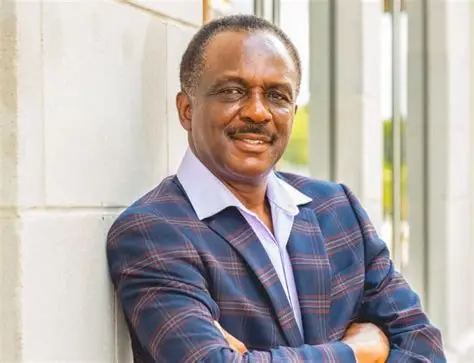
Former Nigerian international Nathaniel Ogedegbe has written an open letter to President Bola Ahmed Tinubu, calling for a comprehensive rebuilding of Nigerian football from the school level upward.
Ogedegbe’s intervention comes against the backdrop of the recent crisis in Nigerian football following the resignation of the Nigeria Football Federation (NFF) president, general secretary and executive committee on August 27, 2026, after the Super Eagles missed the 2026 FIFA World Cup and the Super Falcons failed to qualify for the 2027 Women’s World Cup.
In the letter, Ogedegbe argues that filling the vacancies created by the resignations would not, on its own, amount to meaningful reform. He instead calls for a restructuring of the entire football ecosystem, including grassroots development, school football, club administration, governance, elections, funding, player welfare and technical development.
He also proposes a time-bound national football reform programme, with measurable targets covering school participation, player registration, coaching, club licensing, financial transparency and national-team performance.
Below is the open letter in full:
What Now, Mr. President Tinubu?
Rebuilding Nigerian Football from the Schoolyard Up is essential to inspire hope and confidence in the future of our national sport.
An appeal to President Tinubu and Nigerians worldwide
Mr. President,
On August 27, 2026, the NFF president, general secretary, and executive committee resigned after the Super Eagles missed the 2026 World Cup and the Super Falcons failed to qualify for the 2027 Women’s World Cup. Their resignations created vacancies, but vacancies alone do not amount to reform.
President Tinubu, your reform directive correctly identifies weak governance, narrow representation, broken pathways, struggling leagues, and poor accountability. And yet, as Segun Odegbami warns, replacing leaders without rebuilding the system repeats the cycle of hope, controversy, failure, and resignation.
Meaningful reform must rebuild the entire football system, not merely replacing its leaders. Nigeria should recover the successful pathway that once connected schools, domestic clubs, youth teams, and the national team, while adapting lessons from Spain, France, and Morocco. ;
Competitive football must return to schools, clubs must accept responsibility for player development and welfare, and NFF power and elections must become fairer and more representative. Football funding must also be transparent and publicly accountable.
Each reform commitment should include clear metrics, time-bound milestones, and regular public progress reports so Nigerians can see what is working, what is delayed, and who is accountable.
Success should be measured through active school teams, registered boys and girls, licensed coaches, paid players, compliant clubs, safe pitches, published accounts, youth playing time, and consistent qualification for major tournaments.
Settle the Legal Question
Nigeria’s law establishes the Nigerian Football Association, which adopted the NFF name in 2008 and is recognized by FIFA and CAF. A Federal High Court reportedly rejected the name’s legal recognition in 2012, but the status of the announced appeal remains unclear.
The Attorney-General should publish a legal opinion, and the National Assembly should pass a modern law developed in consultation with the government, football bodies, clubs, players, coaches, referees, women’s football, and school sports. It must protect technical autonomy while enforcing audits, lawful procurement, and public accountability. Autonomy cannot mean immunity.
We Have Built a Successful Pathway Before
Domestic clubs helped produce the 1980 AFCON champions, while Lagos schools supplied the 1985 U-16 world champions. Stephen Keshi rose from the St. Finnbarr’s Principals Cup team to captain the 1994 AFCON champions at Nigeria’s first World Cup, then coached the 2013 champions. That generation also helped form the team that defeated Brazil and Argentina for the 1996 Olympic gold.
I know the value of this system because it shaped my own journey. While I was playing in the Lagos State Principals’ Cup, St. Finbarr’s College produced six players who were invited to the Flying Eagles. Henry Nwosu and I were among them.
We were later invited to the senior national team during an Africa Cup of Nations campaign. I did not make an appearance and chose to pursue my studies abroad, while Henry remained in football and became a senior-team sensation.
Players such as Godwin Odiye, Adokiye Amiesimaka, and Segun Odegbami, Godwin Iwelumo followed similar paths through school competitions and the domestic league, demonstrating the strength of our national development system and inspiring pride in our collective progress.
Our stories and achievements demonstrate Nigeria’s potential to reconnect talent, education, and opportunity through targeted reform, leading to sustainable success on the global stage.
Learn from Spain, France, and Morocco
Spain won the 2026 World Cup under Luis de la Fuente, who had coached its U-19, U-21, and Olympic teams. France links local scouting, regional centers, club academies, and nearly 1,000 school sports sections while protecting education and personal development for those who do not become professionals. Morocco’s 2022 World Cup semifinal reflected investment in facilities, talent, and qualified personnel.
Nigeria needs a continuous national development system led by a protected technical director and guided by one coaching framework from U-13 through the senior teams for boys and girls.
Six properly staffed zonal centers should connect schools, universities, clubs, and accredited academies, with Abuja coordinating rather than controlling the network.
An academic-year National School Football League should provide U-13, U-15, and U-17 competition at local, state, and zonal levels. Every player should have a digital identity linked to school and birth records.
Education and sports authorities, state governments, and the NFF should follow one national calendar supported by qualified coaches, teachers, transparent scouting, scholarships, and flexible schedules that protect each player’s education.
Make Clubs Responsible
Clubs must become the main employers and developers. Licenses should require audited accounts, enforceable contracts, guaranteed wages, youth and women’s teams, medical support, and safe grounds.
Persistent wage defaulters should lose licenses. Government-owned clubs should publish budgets and pursue credible community, supporter, or private ownership.
Domestic leagues need fixed calendars, dependable officiating, broadcasting, match data, and enforceable commercial rules to attract supporters, sponsors, and valuable players.
Reform Power and Elections
Under the 2026 statutes, state and FCT associations control 37 of 54 Congress votes. Representation should be rebalanced among associations, clubs, women’s football, players, coaches, referees, schools, supporters, and people with disabilities.
Candidates need independent integrity and conflict checks. Voter lists, nominations, campaign finance, decisions, results, and term limits should be public. Reform committee members should not contest elections they design.
Put Football Money in Daylight
The NFF should report quarterly on government, FIFA, CAF, sponsorship, broadcasting, ticketing, and major spending to build trust and accountability among stakeholders.
Adopt a National Football Clock
Within 100 days, publish the legal opinion, transition agreement, and finances; within 12 months, establish school competitions and digital registration; within two years, enforce licensing, wage protections, and youth leagues; within four years, track growth metrics; and within eight years, achieve regular tournament qualification. Clear milestones will reassure stakeholders of actionable progress.
A Responsibility for Nigerians Everywhere
Nigerians must stop seeking a savior promising instant trophies. Former internationals should gain coaching and management qualifications; diaspora professionals should strengthen domestic development; parents, schools, and clubs must reject age fraud; supporters and responsible businesses should rebuild local competition.
Mr. President, Nigeria needs a national football compact with legal authority, deadlines, and consequences. Judge it by settled law, balanced representation, published accounts, paid players, trained coaches, active schools, competitive clubs, regional centers, and equal opportunity for girls.
I am ready to join Nigerians at home and abroad in offering knowledge, experience, and service. Place people of integrity and vision where they can succeed.
Return Football to schools, clubs, and communities. Put qualified people in technical positions, public money in daylight, and the federation on firm legal ground.
Do not merely fill the vacant offices. Rebuild the system.
Nathaniel Ogedegbe
Ex-International
Hall of Fame, 2013
Director Flawless Soccer Academy
President, Nathaniel Ogedegbe Soccer Foundation (NSOF)
Owner, Ominira LLC