As Nigerian football approaches another defining leadership transition, the conversation should move beyond endorsements, political blocs and familiar names. Perhaps the simplest question is also the most important: who has the experience to do the job?
Nigeria’s football administration is entering a consequential period. The Nigeria Football Federation had published an electoral roadmap for an elective congress in September 2026, following amendments to the NFF Statutes and Electoral Code earlier in the year.
The process has since been thrown into uncertainty amid reports of a proposed normalisation arrangement and, more significantly, the resignation of NFF President Ibrahim Musa Gusau and other senior officials in late August.
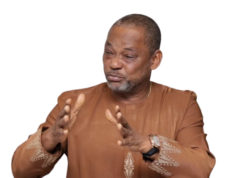
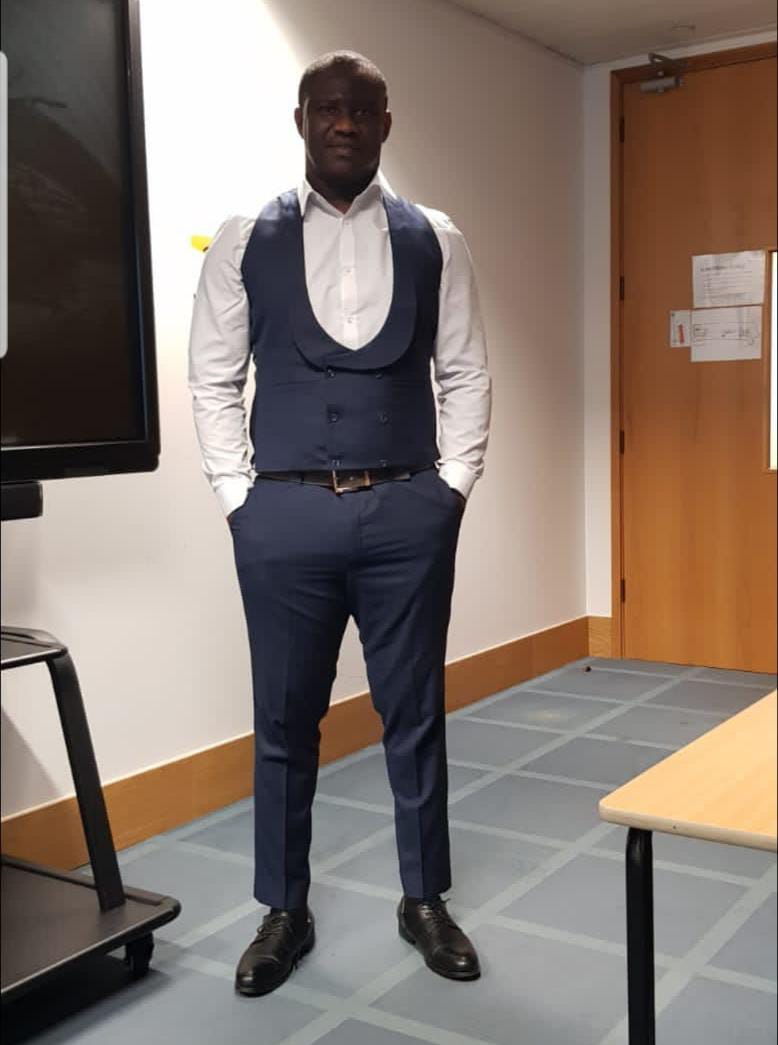
Against that backdrop, former Super Eagles striker Benedict Akwuegbu has declared his interest in leading the NFF. His entry presents Nigerian football with an opportunity to conduct the coming leadership debate differently.
Not by asking who knows whom — but by asking who has done what.
SportsDay reported this week that Akwuegbu formally declared his intention to contest for the NFF presidency during a Professional Footballers Association of Nigeria event in Lagos. PFAN General Secretary and former international Edema Fuludu has also publicly welcomed his ambition and the broader involvement of qualified former players in football administration.
A Candidate Who Can Put His Career on the Table
Akwuegbu does not need Nigerian football stakeholders to judge him merely by speeches.
His CV can be examined.
It presents a football journey beginning in Nigeria before taking him through France, Belgium, Austria, China, Greece and England.
It records his years with the Super Eagles, including being part of the Nigerian setup during an era in which the country finished runner-up at the 2000 Africa Cup of Nations.
His club career is particularly associated with Grazer AK in Austria, where his CV records Austrian Cup and Supercup successes and a strong European football pedigree.
But perhaps the more relevant question for an NFF presidency is what happened after playing football.
According to the CV provided for this report, Akwuegbu subsequently moved into football ownership, management and technical administration.
It lists him as manager of Gratkorn FC in Austria from 2014 to 2016, Technical Director of Mighty Jets between 2016 and 2018, and a consultant to Plateau United for 2025–2026.
The document also records earlier administrative experience with Heartland FC and ownership/chairmanship roles involving football clubs, while listing him as chairman and owner of Ben Akwuegbu FC and its development structures from 2022.
His CV further lists academic qualifications in Sports Management, Health & Social Studies and Nursing.
That combination creates an interesting profile: player, international footballer, European professional, coach/manager, technical administrator, club executive and owner.
And that is precisely why Akwuegbu’s candidacy could provoke a more useful national conversation.
The Challenge: Every Aspirant Should Publish a CV
The debate should not become “Benedict Akwuegbu versus everybody else.”
It should become CV versus CV.
Every Nigerian who wants to become the next NFF president should be encouraged to publish a detailed professional and football résumé for public examination.
Put the documents side by side.
Let Nigerians see the playing experience, if any.
Let them see football-administration experience.
Let them see management experience.
Let them see qualifications, achievements, failures, reforms delivered, institutions built and years actually spent working inside football.
Then let stakeholders decide.
Nigeria should be able to ask every aspirant the same question:
“Before we listen to what you promise to do with Nigerian football, show us what you have already done in football.”
That standard is bigger than Akwuegbu.
Indeed, it is the standard by which Akwuegbu himself should be judged.
Nigeria Doesn’t Need Another Popularity Contest
The timing makes that discussion particularly important.
The recent leadership upheaval followed intense criticism after disappointing national-team results, including the Super Eagles’ failure to qualify for the 2026 World Cup and the Super Falcons’ failure to reach the 2027 Women’s World Cup. Reuters and AP reported that Gusau resigned amid that pressure in late August.
Meanwhile, debate over the structure of NFF elections has intensified. One analysis of the electoral system noted the considerable influence of the State/FCT football associations within the NFF Congress and argued for greater transparency around delegates, endorsements and the electoral architecture.
That makes the next leadership choice about more than personalities.
Nigeria has an opportunity to establish a different culture: competence before connections, evidence before endorsements and track record before rhetoric.
A presidential aspirant should not become the strongest candidate merely because powerful people say so.
Neither should being a famous former footballer automatically qualify anyone to run the federation.
The test must be deeper.
What have you managed? What have you built? What have you won? What football structures have you administered? What is your education? What is your international exposure? What evidence exists that you understand development from grassroots football to the professional game and national teams?
Those questions should apply equally to everyone.
Akwuegbu Has Put a CV on the Table. Who Else Will?
That may ultimately be the most compelling aspect of Benedict Akwuegbu’s emergence.
His argument does not have to be “make me NFF president.”
It can be something considerably more powerful:
“Here is my record. Bring yours.”
Let every person interested in governing Nigerian football present a verifiable CV.
Let former internationals present theirs.
Let State FA administrators present theirs.
Let club owners, coaches, business executives and established football administrators who believe they possess the qualifications to lead the federation present theirs.
Then let journalists investigate those records, let stakeholders scrutinise them and let the Nigerian football public compare them.
If another candidate possesses a stronger combination of football knowledge, education, international exposure, management, administration and institution-building, let that record speak too.
That is what a serious contest should look like.
Because the NFF presidency should never be an honorary reward.
It is effectively the chief leadership position of the administration responsible for the fortunes of the most passionately followed sport in Africa’s most populous nation.
Nigeria therefore deserves more than campaign slogans and telephone endorsements.
It deserves evidence of competence.
And as Benedict Akwuegbu enters the conversation with a career stretching from the football pitch to the technical area, boardroom and club ownership, perhaps his biggest contribution to the race can begin even before a single vote is cast:
Put every CV on the table. Let experience speak. Let competence compete. And let Nigerian football stakeholders decide who is prepared to lead.