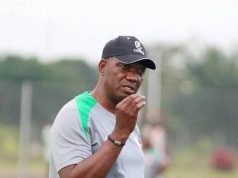
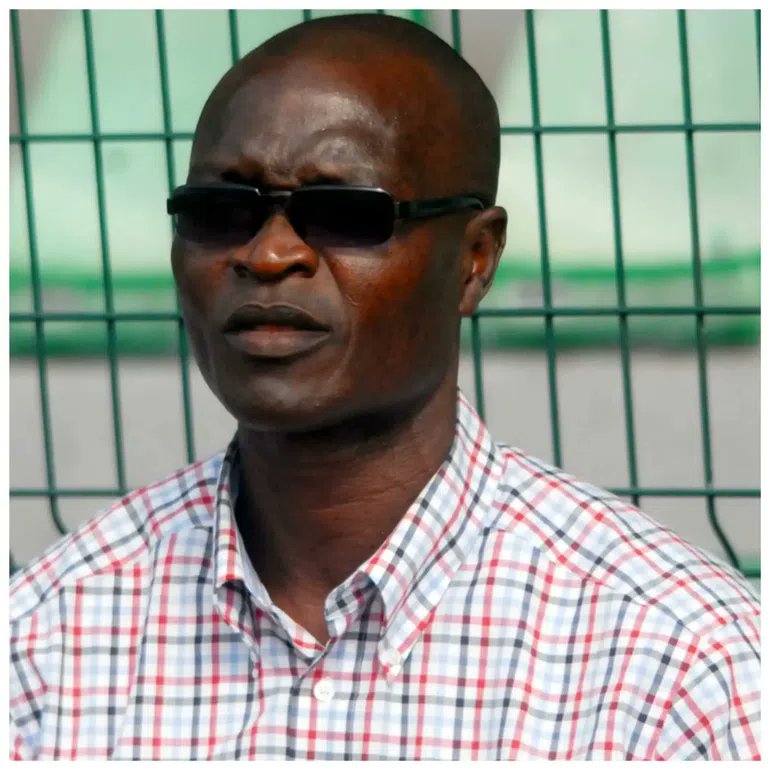
Former Nigeria international Duke Udi has called for the resignation of the Ibrahim Gusau-led Nigeria Football Federation to become the starting point for a much wider reform of Nigerian sports, insisting that the country cannot restore its competitiveness by changing football administrators alone.
Udi said Nigerians are desperate to see meaningful change across the country’s sporting system and urged the authorities to use the current crisis as an opportunity to examine not only football administration but also the condition of sports facilities and the institutions responsible for developing athletes.
“The resignation should lead to wider reforms across Nigerian sports,” Udi said.
“Nigerians are desperate for positive change.”
His comments come after Gusau resigned as NFF president on Thursday, alongside General Secretary Mohammed Sanusi and members of the federation’s Executive Committee, following growing pressure over the disappointing performances of Nigeria’s national teams.
The Super Eagles failed to qualify for the 2026 FIFA World Cup, while the Super Falcons suffered the historic setback of missing the 2027 Women’s World Cup for the first time since the competition began in 1991.
For Udi, however, the crisis goes deeper than the NFF.
The former international believes Nigeria must examine the entire sporting ecosystem, including the National Sports Commission, sporting facilities and the institutions responsible for identifying and nurturing athletes.
“Reform must go beyond football administration,” he said.
“It must include sports facilities and the institutions under the National Sports Commission.”
Udi’s call comes as President Bola Tinubu has already directed a comprehensive reform of Nigerian football following Gusau’s resignation.
The President said the process should address governance, administration, stakeholder representation, development pathways, domestic competitions and accountability, while also requiring engagement with FIFA and CAF.
The National Sports Commission has subsequently endorsed Emmanuel Ikpeme to oversee the NFF Secretariat as interim General Secretary, while the federation’s planned September 27 elective congress has been suspended pending the reform process.
Udi believes the opportunity should not be restricted to the NFF.
According to the former Nigeria international, Nigeria’s inability to consistently compete at the highest level is partly connected to weaknesses in the wider sporting infrastructure.
He wants the authorities to look at the condition of facilities, the development of athletes and the effectiveness of the institutions responsible for Nigerian sport.
“Meaningful change must happen across the entire sports system,” Udi said.
“We need to restore Nigeria’s competitiveness at major international tournaments.”
Udi’s position is particularly significant because he was part of a generation of Nigerian footballers that competed successfully at the highest level. The former midfielder represented Nigeria internationally and enjoyed a long club career in Europe and Africa.
He believes the country still possesses enormous sporting talent but is failing to create the environment required for that talent to consistently produce international success.
The current football crisis, he argues, should therefore be viewed as a warning that the problems cannot be solved simply by replacing one set of administrators with another.
The resignation of the Gusau-led NFF leadership has already opened the door to a potentially major restructuring of Nigerian football, with government and football stakeholders now expected to develop a roadmap for the next phase.
For Udi, that roadmap must be ambitious enough to address the entire sporting system.
The objective, he believes, should be to create a structure capable of producing better athletes, maintaining world-class facilities and ensuring that Nigeria once again becomes a serious force at major international competitions.
And as the country begins its latest attempt to reform football, Udi’s warning is clear: changing the people running the NFF is only the beginning — Nigeria must change the wider sporting system if it truly wants to return to the top.