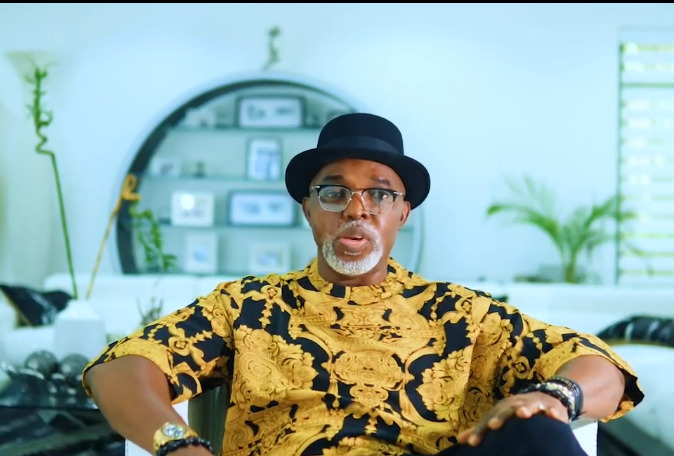
Former Nigeria Football Federation president Amaju Pinnick has admitted that, with the benefit of hindsight, he would approach the administration of Nigerian football differently if given another opportunity, while insisting that he has no intention of returning to the NFF presidency.
Pinnick’s comments come at a turbulent moment for Nigerian football following the resignation of Ibrahim Musa Gusau as NFF president, alongside General Secretary Mohammed Sanusi and members of the federation’s Executive Committee.
The former NFF boss, who led the federation from 2014 to 2022, said his experience in office had given him a clearer understanding of the areas that require urgent attention if Nigeria is to build a sustainable football industry.
“With the benefit of hindsight, I would approach Nigerian football differently,” Pinnick said.
One of the major areas he identified was the relationship between professional football clubs and state governments.
Pinnick believes Nigerian clubs need greater independence if they are to develop into commercially sustainable businesses capable of generating their own revenue rather than depending heavily on government funding.
“We need greater independence for our clubs from state governments,” he said.
According to the former NFF president, government support remains important, but the ultimate objective should be to create an environment where private investors can take ownership of clubs, inject capital and build long-term football businesses.
Pinnick also identified infrastructure as another major area requiring attention, arguing that Nigeria cannot expect its football industry to compete with the best without investing in modern facilities.
“Improved infrastructure and stronger grassroots development are key,” he said.
For Pinnick, the development of young players must become a central component of the country’s football strategy.
He believes Nigeria has no shortage of football talent but needs a properly structured pathway capable of taking young players from grassroots football into professional clubs and ultimately the national teams.
The former NFF president also called for greater private-sector involvement, arguing that wealthy Nigerian investors should be encouraged to own clubs and build sustainable commercial models around them.
“We need to create an environment where wealthy private investors can take ownership of clubs and build sustainable football businesses,” Pinnick said.
His comments come as Nigerian football enters a reform process following the mass resignation of the NFF leadership.
Gusau, who had served for three years and eleven months, said he resigned to create room for a “comprehensive and orderly reform process” aimed at addressing the institutional, governance and developmental challenges confronting Nigerian football.
The leadership crisis followed a difficult period for Nigeria’s national teams, most notably the Super Eagles’ failure to qualify for the 2026 FIFA World Cup and the Super Falcons’ historic failure to reach the 2027 Women’s World Cup.
Pinnick believes the current crisis should therefore be used to address problems that go beyond the personalities occupying positions within the federation.
His proposed solution places greater emphasis on professionalising clubs, improving facilities, developing talent and attracting serious private investment into the domestic game.
The former NFF president, however, was unequivocal about one issue: despite his renewed assessment of what Nigerian football needs, he does not want to return to the position he once held.
“I have no plans to return as NFF president,” Pinnick said.
That declaration is significant given that Pinnick remains one of the most influential Nigerian football administrators of the modern era.
During his tenure, Nigeria qualified for the 2018 FIFA World Cup and won bronze at the 2019 Africa Cup of Nations, while Pinnick also rose to become a member of the FIFA Council and served in senior CAF positions.
But his administration was also marked by controversies surrounding football governance, funding, elections and relations between the federation and government.
Now, as Nigeria prepares to rethink the way its football is administered, Pinnick says his experience has taught him valuable lessons about what needs to change.
For the former NFF president, the answer is not simply another election or another administrator.
Nigeria needs stronger clubs, better infrastructure, serious grassroots development and private investors prepared to treat football as a business.
And despite offering his own blueprint for the future, Pinnick has made one thing clear: he believes Nigerian football needs a new direction, but he does not intend to be the man leading it