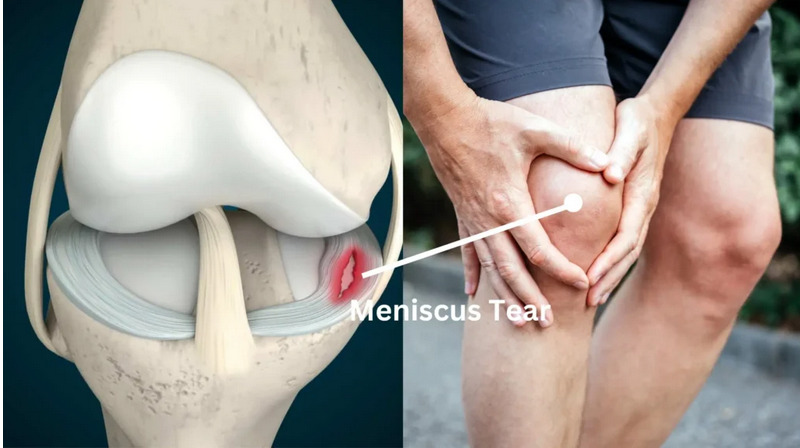

For many athletes, it starts with a sharp twist on the court or a wrong landing on the field. Suddenly, the knee locks, swells, and refuses to straighten. Doctors call it a torn meniscus – a cartilage injury that sidelines thousands of players every year.
“The meniscus is like a cushion in the knee,” sports physicians often explain. “When it tears, athletes not only lose mobility but also face long-term risks like arthritis if not treated properly.”
Common in basketball, football, and tennis, the injury often goes unnoticed at first. Players may attempt to “shake it off,” only to find the pain and stiffness worsening. Early diagnosis and rest can prevent permanent damage, but ignoring the symptoms may push athletes toward surgery.
Coaches are now being urged to monitor athletes for warning signs – swelling, difficulty bending the knee, or repeated complaints of locking. Proper warm-ups, muscle strengthening, and technique correction can significantly lower the risk.
What is a Torn Meniscus?
The meniscus is a C-shaped piece of cartilage in the knee that acts as a cushion between your thighbone and shinbone. A torn meniscus is one of the most common knee injuries, often occurring during sports or sudden twisting movements.
Causes
Sudden twisting or pivoting of the knee
Heavy lifting or deep squatting
Sports such as football, basketball, or tennis
Natural wear and tear with aging (degenerative tears)
Symptoms
Sharp pain in the knee joint
Swelling and stiffness
Difficulty straightening the knee fully
A “locking” or “catching” sensation in the knee
Limited range of motion
Diagnosis
Physical examination (special knee tests)
Imaging tests like MRI to confirm the tear
Treatment Options
Conservative care: Rest, Ice, Compression, Elevation (RICE), anti-inflammatory medications, and physical therapy
Injections: Corticosteroids for pain relief
Surgery: Arthroscopic meniscus repair or partial removal, if conservative measures fail
Recovery & Prevention
Rehabilitation and strengthening exercises are key
Returning to sports may take weeks to months, depending on severity
Preventive strategies: warm-up properly, strengthen thigh muscles, and avoid sudden twisting movements
ACL Injuries: A Game-Changer
If a meniscus tear is a setback, a torn anterior cruciate ligament (ACL) is often a season-ending blow. The ACL, one of the knee’s key stabilizers, frequently ruptures during abrupt pivots, sudden stops, or awkward landings.
Athletes often recall hearing a “pop” before collapsing. Within hours, the knee swells dramatically. For competitive players, surgery is usually the only option, followed by up to a year of rehabilitation.
“ACL injuries don’t just take players out of the game; they can affect entire careers,” says many sports trainers. The mental toll – fear of re-injury – is just as significant as the physical recovery.
Preventive programs focusing on balance, landing mechanics, and muscle strengthening are proving effective. Many teams now integrate neuromuscular training into regular practice to cut ACL risks by nearly half.
What is an ACL Injury?
The anterior cruciate ligament (ACL) is one of the major stabilizing ligaments in the knee. An ACL injury, often a tear, is a serious condition that usually occurs during sports involving sudden stops, pivots, or jumps.
Causes
Sudden changes in direction (pivoting)
Improper landings after a jump
Direct blows to the knee (e.g., during contact sports)
Overstretching beyond the ligament’s capacity
Symptoms
A loud “pop” sound at the moment of injury
Severe pain and inability to continue activity
Rapid swelling within hours
Knee instability or “giving way” sensation
Loss of full range of motion
Diagnosis
Physical exam: Lachman test, pivot shift test
MRI: Confirms ACL tears and associated injuries (like meniscus damage)
Treatment Options
Non-surgical: Physical therapy and bracing (sometimes suitable for less active patients)
Surgical: ACL reconstruction using tendon grafts, especially for athletes or active individuals
Recovery & Prevention
Full recovery after surgery can take 6–12 months
Structured rehabilitation programs restore strength and stability
Preventive strategies: neuromuscular training, proper landing techniques, and strengthening of leg/core muscles
The Takeaway for Athletes and Coaches
Both torn meniscus and ACL injuries highlight one truth: protecting the knee is non-negotiable in sports. Athletes should never ignore early signs of pain or instability, while coaches play a critical role in enforcing preventive training and ensuring proper recovery before return to play.
As competition intensifies, education is the best defense. Knowing the risks, spotting symptoms early, and investing in prevention could mean the difference between a full season and a career cut short.
For enquires/Consultation
Call- Dr kolade kolapo
+234-7032088130