This is a factual story that spells out in clear terms the scary and sordid pits into which health care services in Lagos State have dropped – as hospitals have become hurdles to jump over, instead of abodes that provide relief from ailments.
READ ALSO: 2026 FIFA World Cup: Tani Oluwaseyi Carries Nigerian Presence as Canada Thrash Qatar 6-0
It’s about the personal experience I am going through, regarding my biological son’s football dream that is currently being confronted by hurdles set along his path in three hospitals whose staff have taken his matter with levity.
It’s a very emotional and personal story, but one filled with implications that are bound to affect every Nigerian citizen and resident collectively, especially anyone facing health challenges. It’s a pathetic story about how health delivery that is meant to restore hope has instead turned itself into a barrier.
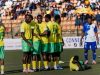
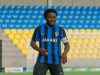
It’s the story of my 12-year-old son, David Kwame Aduraagba Fasetire, whose dream of becoming a globally-acclaimed football star is facing a litany of hurdles staked in his path by the failure of our health workers to dislodge a tumour that is growing rapidly on his neck.
Incidentally, the spread of this tumour is not for lack of effort on the part of my wife and I, but due to the inability of private and public health workers to take decisive action that could have nipped it in the bud from the word go.
The unfolding story (like a game of catch me if you can) began at a highly-acclaimed but now obviously overrated hospital located along Oduduwa Street, off Governor Road, Ikotun.
To my greatest surprise, after paying N36,000 to cover registration, tests, and drugs, I was told in a subtle style that the boy needs ‘specialist attention’ at the nearby government-owned General Hospital. In order words, the private hospital collected money for what they knew they could not do!
Nonetheless, our next port of call was the aforementioned General Hospital, and the doctor on duty alarmingly told my wife, “Your son has a cancerous growth which needs urgent attention before it spreads out of control. He needs surgery that will cost about N300,000 only.”
Rather than get scared, I calmly sent out an SOS message via various WhatsApp groups and – to God be all the glory – a lot of emotionally charged well-wishers responded faster than I expected.
We got N850,000 that same night and proceded to the hospital happily the following day … so that the treatment could start in earnest. At the end of the day – after making payments for tests, x-ray, scan, blood bank, surgical tools, injections, drugs, drips, dressing items and bandages – we spent over N900,000 (which was well above the N300,000 margin the doctor initially stated).
All the money was spent in high spirit, because I felt the process towards my son’s recovery had begun, and I was deeply grateful to all donors who helped us gather more money than I had requested.
Conversely, though, all our glee disappeared the following morning when we got to the hospital and were informed that junior doctors who would assist in the surgery were on strike. So, the process could not commence as planned and everything had to be put on hold.
Alarmingly, the strike persisted for seven months (July 2025 – February 2026). During that time, most of the material expired and became useless, meaning we would need to make fresh purchases anytime we were called to eventually come for the procedure.
All through that long delay, three riddles kept rolling through my mind – Did the doctors not know they would go on strike before telling us to make payment? Why did they collect the money when they knew they were going on strike? Why tell us it was urgent when indeed they would eventually delay us for seven months? Questions begging for answers.
Ironically, when the doctors eventually called us for the long-awaited surgery in the last week of February, they ended up extracting dead tissue through my son’s nostrils only, without touching any part of the swollen neck (internally or externally).
More questions then emerged: Were they scared of performing major surgery for the boy? Did they not know exactly what to do? Were they just giving the boy makeshift attention to justify all the money they had collected? More questions, no answers.
After five months and seeing that the lump was getting bigger and painkillers could no longer keep the kid comfortable, I decided to take him to a ‘specialist hospital’ along Akowonjo Road, near Egbeda – with great expectations of finally getting better treatment. Sadly, the story turned out to be not any better than where we were at the beginning.
After collecting N20,000 for registration, N95,000 for tests, scan and x-ray, N8,000 for drugs and N10,000 for doctor’s appointment, we were twice tacitly told by two different doctors to proceed to Lagos State University Teaching Hospital (LASUTECH) for ‘specialised attention’ – but without any proper referral letter from the so-called ‘specialist hospital’ at Akowonjo. So disheartening!
When I shared this story with some associates in my neighbourhood they urged me to take legal action against all three hospitals, especially now that benefactors who made donations for the surgery are thinking of me as a trickster and scammer collecting money through deception.
However, rather than seek legal action, I’ve decided to leave it to God for judgement. It’s also important to know that legal action is all about money and time-consuming. I
‘ve also been enlightened by stories of other people who shared with me how they’ve faced similar scary situations in recent days.
Correlatively, as I prepare to embark on the next stage of this unusual saga to restore my son’s health, I begin wondering about the acumen of Nigeria’s current generation of health workers.
As I do so, I recall lamentations by many Nigerian university lecturers in recent years that most undergraduates carry secondary school results that they appear to have bought rather than earned.
I have gone one step further to infer that even our graduates now emerge from the Ivory Tower with certificates that they cannot defend in practical terms.
What then would you expect when such graduates are in the medical line? The answer is what I’ve experienced at two private hospitals and a public one within the Ikotun-Igando-Akowonjo axis.
That means we must all redouble our efforts and prayers for continued good health in our lives. At the same time, I have to start praying hard that there will be a better end to this story … as my son’s health saga now continues at LASUTECH.
Yet new questions are already emerging – Are we set to face more hurdles as we’ve seen along our route so far? Are we in for more rounds of hide and seek or cat and mouse games? Will we finally get succour and victory for Little David?
Indeed, David truly needs lots of prayers from all and sundry at this point in time, because the first question the doctor at LASUTECH asked when we started the process there this past Tuesday was, “Where is your referral letter?” – and my wife had to rush all the way back to the public hospital near Igando to get it. May God see us through this storm, ijn.
– Watch out for Part 2!