
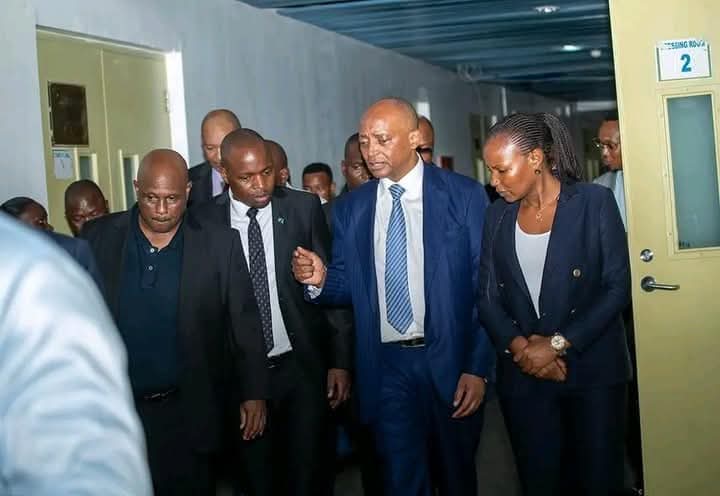
Confederation of African Football (CAF) President Dr. Patrice Motsepe has announced increased funding for the training of coaches across Africa as part of a renewed commitment to developing the game following the continent’s historic performance at the 2026 FIFA World Cup.
READ ALSO: CAF Doubles WAFCON 2026 Winner’s Prize to $2m as Super Falcons Eye Record 11th Title
Speaking on Wednesday, Motsepe praised the achievements of Africa’s 10 representatives at the expanded 48-team tournament, describing their performances as a major milestone for African football.
Nine of the 10 African teams advanced from the group stage to the Round of 32, representing a remarkable 90 per cent qualification rate, the highest ever recorded by African nations at the FIFA World Cup.
Africa was represented by Algeria, Cabo Verde, Côte d’Ivoire, DR Congo, Egypt, Ghana, Morocco, Senegal, South Africa and Tunisia. Morocco and Egypt progressed to the Round of 16, while Morocco also reached the quarterfinals for the second consecutive World Cup.
Motsepe said the performances reflected the steady progress of African football but insisted there was still room for improvement ahead of the 2030 FIFA World Cup.
“We have identified specific areas where there is room for improvement and I am confident that the coaches, technical teams and players will implement the necessary improvements,” Motsepe said.
To build on the momentum, CAF will organise a technical conference involving national team coaches, technical staff, former African internationals and football experts to review Africa’s World Cup campaign and develop strategies for future success.
A key outcome of the announcement is CAF’s decision to increase investment in coaching education across the continent.
According to Motsepe, CAF will significantly expand funding for coaching development and organise numerous coaching courses across all six CAF regional zones to improve the quality of coaches at every level of the game.
He also reaffirmed CAF’s commitment to youth football through the African Schools Football Championship, describing it as a vital platform for nurturing future stars.
Motsepe further called for stronger partnerships between CAF’s 54 Member Associations, governments and the private sector to improve football infrastructure, insisting every African nation should have a CAF and FIFA-approved stadium capable of hosting international matches.
The CAF President expressed confidence that continued investment in players, coaches, leagues and infrastructure would eventually lead to an African nation winning the FIFA World Cup.



 President Dr. Patrice Motsepe has announced increased funding for the training of coaches)