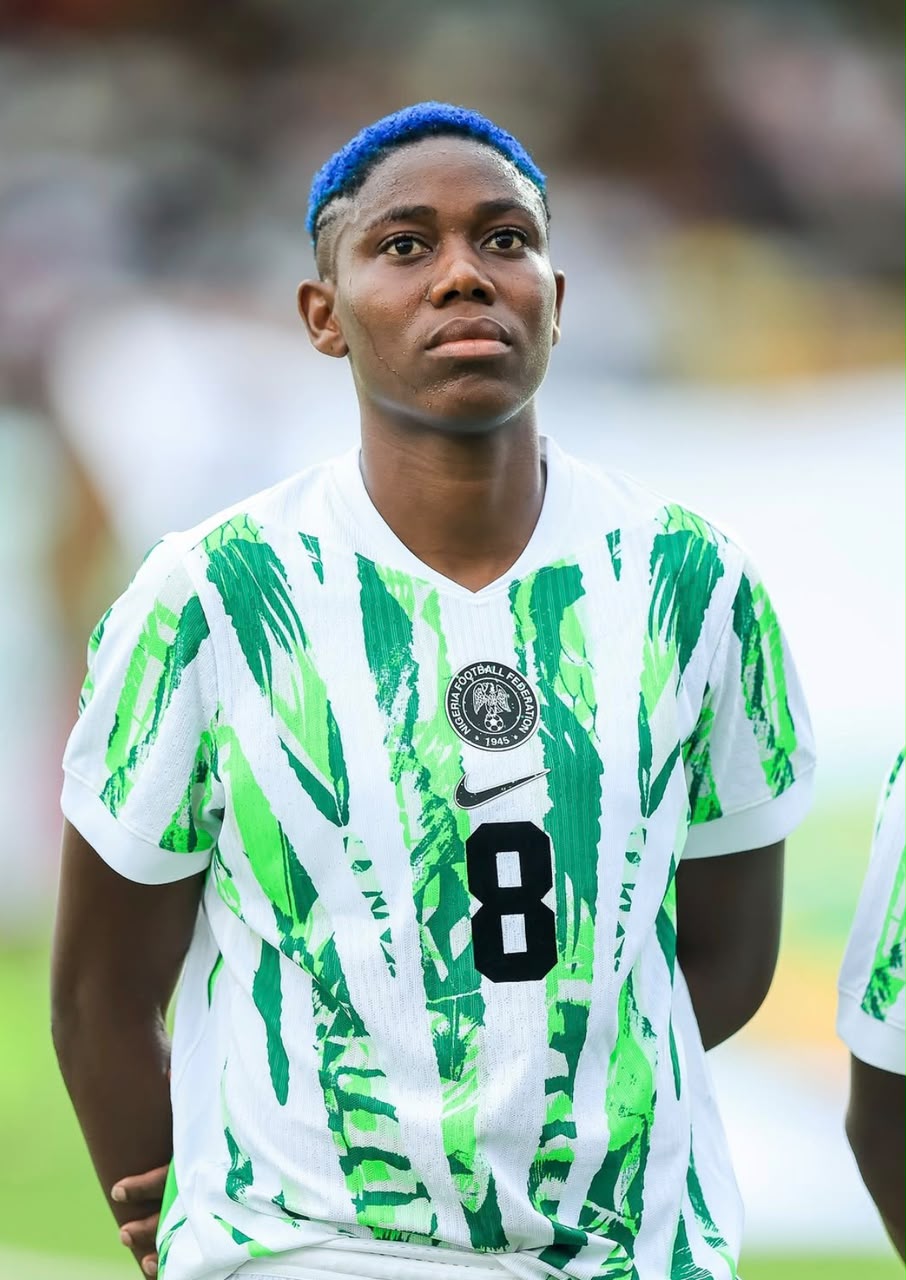
Super Falcons star Asisat Oshoala has responded after a social media user questioned why a woman should have an opinion on football.
The exchange surfaced on social media today after a Asisat commented on a post about the Brazilian footballer, Raphinha and a another X user replied her.
In the response, the man questioned Oshoala’s involvement in football discussions, asking,
“Wetin concern woman with football?” He went on to make a reference to her personal life, telling her to cook for her boyfriend instead.
Oshoala subsequently responded to the comment on X, drawing attention to the remarks and the wider issue of how women are treated when they express opinions about football.
The incident has once again brought attention to the gender-based comments female footballers and other women in the sport can encounter online.
For Oshoala, however, football is hardly an unfamiliar subject.
The Nigerian forward has spent much of her life in the game, progressing from grassroots football in Lagos to becoming one of the country’s most decorated female players.
She has represented clubs in England, China, Spain, the United States and Saudi Arabia, while also establishing herself as a key figure for the Super Falcons.
Oshoala has also made history on the international stage. She became the first Nigerian player to score at three different FIFA Women’s World Cups and has won the CAF Women’s Player of the Year award a record six times.
Her experience extends beyond simply playing the game. Oshoala has consistently used her platform to support the development of women’s football, including through the
Asisat Oshoala Foundation, which provides opportunities for young girls interested in the sport.
The latest exchange therefore goes beyond one social media comment. It highlights the continuing conversation around women having a voice in football, whether as players, coaches, analysts, supporters or commentators.
Oshoala’s response has since attracted attention online, with the incident generating further discussion about the treatment of women who actively participate in football conversations.
For one of Africa’s most accomplished female footballers, the message remains clear: women have a place not only on the football pitch, but also in conversations about the sport.