Nigeria has taken a significant step towards becoming more self-sufficient in rugby development after a three-day World Rugby technical programme in Abuja strengthened the country’s pool of certified coaches, referees, medical personnel and educators.
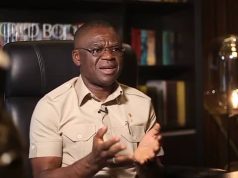
President of the Nigeria Rugby Football Federation (NRFF), Dr Ademola Aré, believes the development can have a lasting impact on the sport if participants take their newly acquired knowledge beyond Abuja and use it to develop rugby in their respective states and communities.
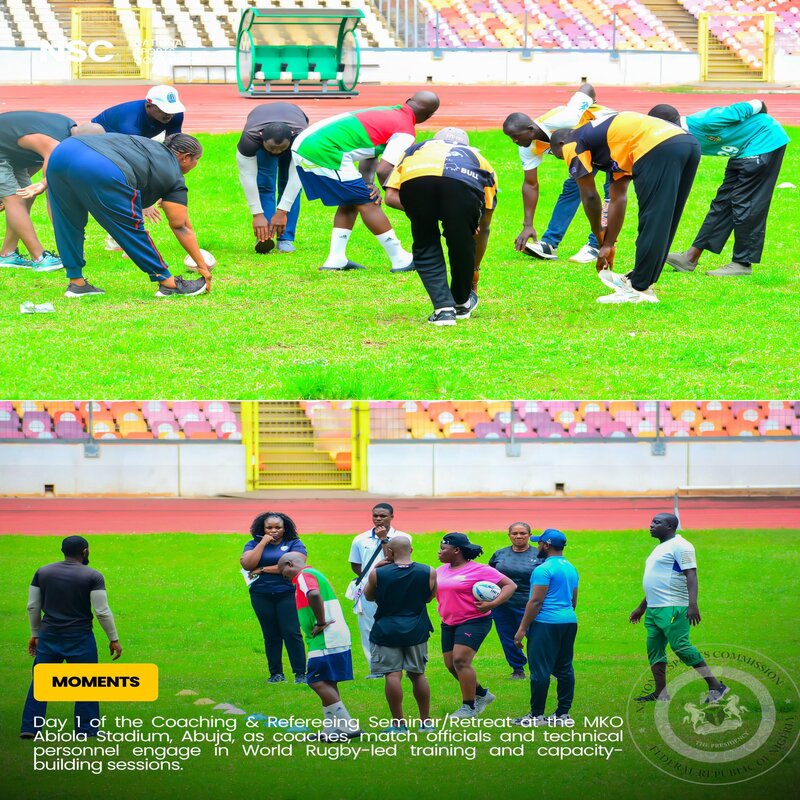
The programme, held from September 10 to 12, covered Level 1 and Level 2 coaching, Level 1 and Level 2 match officiating, First Aid in Rugby, Intensive Care in Rugby, safeguarding and World Rugby educator assessments.
For Aré, developing qualified technical personnel is just as important as producing talented players.
“No matter the strength of your team, if you don’t have qualified, certified referees, coaches and medical people, they cannot even follow you for any outside programme,” Aré said.
Nigeria already has personnel who have progressed to Level 3 in coaching, refereeing and medical areas, but the NRFF president stressed that having only a handful of highly qualified individuals is insufficient.
The federation therefore wants to create a much deeper technical workforce capable of supporting rugby’s expansion across the country.
That ambition received a significant endorsement from World Rugby East and Southern Africa Game Growth Manager Robert Bwari, who said Nigeria has now developed educators capable of training coaches and referees locally.
“Nigeria now has educators who can train coaches and referees locally; meaning World Rugby does not always need to send educators here,” Bwari said.
World Rugby can instead provide supervision and quality assurance while qualified Nigerians increasingly handle development programmes themselves.
That represents a potentially important shift for the NRFF.
Rather than depending continuously on international instructors travelling into the country, Nigeria can build a system in which knowledge is transferred locally, and more coaches and officials are developed at a faster rate.
About 80 participants registered for the three-day seminar and workshop, while the NRFF said the turnout demonstrated the increasing interest in developing the technical side of the sport.
Aré challenged those participants to ensure the certificates they received translate into tangible development.
“Go back and impact your communities because rugby needs you. Without you, rugby cannot make headway.”
He also urged them to work closely with state rugby associations, sports councils and ministries to expand participation and secure greater recognition for the game.
The capacity-building drive comes as Nigerian rugby attempts to make further progress internationally.
The country’s men’s team, the Stallions, is preparing for the World Rugby SVNS 3 qualifier in Uganda on September 26 and 27, with Aré saying Nigeria has risen to seventh in Africa after significant progress over the last four to five years.
For the NRFF, however, sustainable progress cannot depend entirely on what the national team achieves on the field.
Producing Nigerian coaches, referees, medical experts and educators capable of developing the next generation at home could prove just as important — and the days of waiting for foreign instructors every time expertise is needed may gradually be coming to an end.