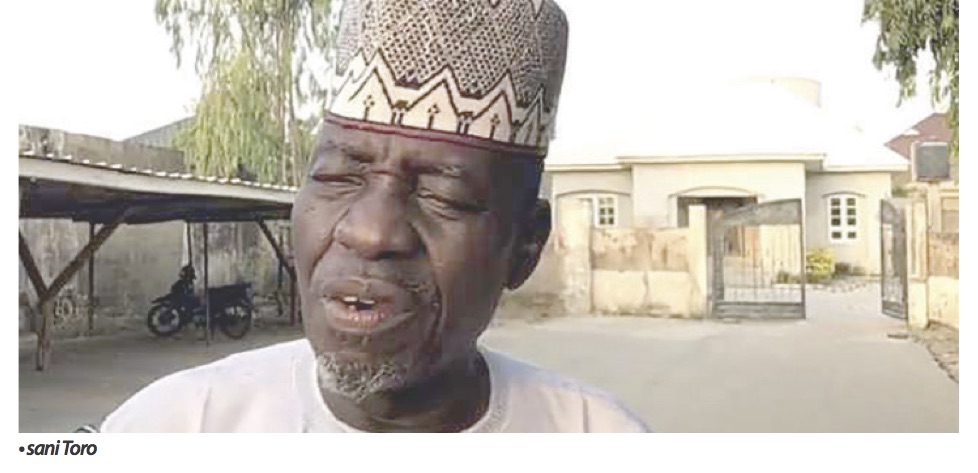
Former Secretary-General of the now-defunct Nigerian Football Association, Alhaji Sani Toro, has called for fundamental changes to the statutes and regulations governing Nigerian football, warning that the existing structure is no longer sustainable and has concentrated too much power in the hands of a few.
Toro said the resignation of the Nigeria Football Federation leadership provides an opportunity for the country to address the structural problems that have affected football administration for years, insisting that simply replacing individuals without changing the system would not solve Nigeria’s problems.
“We must amend certain statutes and regulations governing football in the country because the current one is not sustainable and has left power in the hands of a few,” Toro said.
The veteran administrator believes Nigeria cannot undertake such reforms in isolation and must work closely with the Confederation of African Football and FIFA to ensure any new structure complies with international football regulations.
“We cannot handle the entire process alone,” he said.
“We must work in line with CAF and FIFA and their statutes to achieve that.”
Toro’s intervention comes at a pivotal moment for Nigerian football following the resignation of NFF President Ibrahim Musa Gusau, General Secretary Mohammed Sanusi and members of the federation’s Executive Committee.
The resignations came after mounting criticism of the country’s football administration, particularly following the Super Eagles’ failure to qualify for the 2026 FIFA World Cup and the Super Falcons’ historic failure to reach the 2027 Women’s World Cup.
The crisis has now triggered a wider debate over whether Nigeria should simply organise another election or first undertake fundamental reforms of the system.
Toro has long argued that the problem is structural rather than merely personal. In July, before Gusau’s resignation, he warned that Nigeria’s planned NFF election would not necessarily produce meaningful change because the existing electoral structure favoured continuity.
“This coming election is already concluded,” Toro was quoted as saying at the time, arguing that the same structures could simply reproduce the same leadership.
His latest position goes further, with the former NFA secretary-general calling for the governance framework itself to be reconsidered.
He believes the restructuring should not stop at the national level but should also extend to the state football associations, where he wants broader representation of stakeholders.
“Even at state level, football governance needs to be restructured to reflect a proper representation of all stakeholders,” Toro said.
That proposal could have significant implications because Nigeria’s football administration is currently built around a system in which state football associations play a major role in the federation’s electoral structure.
The debate over representation has intensified in recent months, with reform advocates arguing that clubs, players, coaches, referees and other stakeholders should have a stronger voice in deciding who leads Nigerian football.
The NFF had already approved amendments to its statutes, electoral code and standing orders earlier this year and had scheduled its elective congress for September 26 in Lafia.
But following the resignation of the Gusau-led leadership, those electoral preparations have now been suspended. The NFF says a fresh electoral process will begin after comprehensive reforms are completed in consultation with FIFA and CAF.
That development appears to align closely with Toro’s argument that Nigeria needs to reform before returning to the ballot box.
Toro is not a newcomer to Nigerian football administration. He served as secretary-general of the then Nigeria Football Association from 1993 to 1999, a period widely regarded as one of the most successful eras in the country’s football history. During that period, Nigeria won the 1994 Africa Cup of Nations, qualified for the World Cup for the first time and won Olympic football gold at Atlanta 1996.
His experience during that golden period has strengthened his argument that Nigeria needs an administration built around proper structures, technical competence and broad stakeholder involvement.
He has previously argued that structural defects, rather than a lack of football talent, have contributed significantly to Nigeria’s decline.
Now, with the NFF leadership gone and the government directing a comprehensive reform of Nigerian football, Toro believes the country has a rare opportunity to rebuild the system properly.
President Bola Tinubu has directed the National Sports Commission to work with the NFF Secretariat and relevant stakeholders on a broad reform process, including engagement with FIFA and CAF while maintaining Nigeria’s international football obligations.
For Toro, that process must go beyond changing names at the top.
It must address the statutes, electoral system and representation structure that determine how Nigerian football is governed.
And with the NFF now entering a reform period, his warning is clear: Nigeria must change the system before it changes the people running it, otherwise the country risks repeating the same cycle all over again.