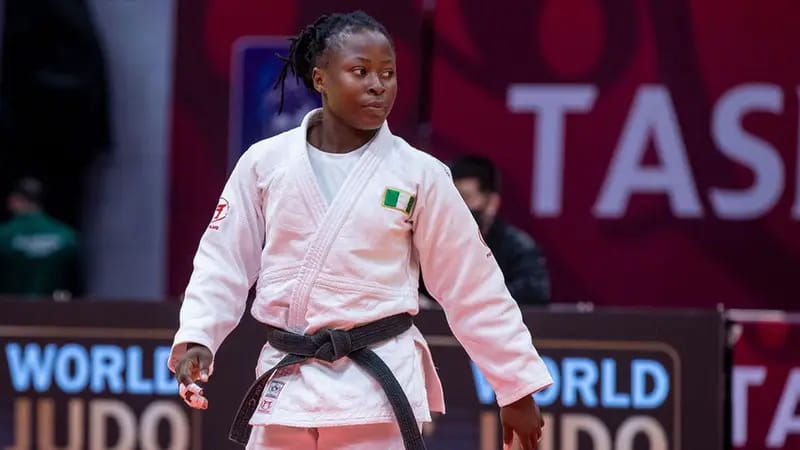
Generation after generation of talented judokas came and went, but the podium remained out of reach. On Saturday in Glasgow, Enku Ewa Ekuta finally ended the long wait.
The 28-year-old Nigerian produced a courageous display in the women’s -63kg category to claim a historic bronze medal, becoming the athlete who restored Nigerian judo to the Commonwealth Games podium for the first time since Manchester 2002.
The achievement is one of the most significant moments of Team Nigeria’s Glasgow campaign—not simply because it added another medal to the country’s impressive tally, but because it revived a sport that had been absent from the Commonwealth podium for nearly a quarter of a century.
For Ekuta, the journey to history began long before Glasgow.
Born into one of Nigeria’s most respected judo families, the sport has always been part of her identity.
Her mother, Catherine Ekuta, represented Nigeria internationally, while her father, Ewa Ekuta, is a former judoka and a respected figure in the Nigeria Judo Federation. Growing up in that environment, Enku’s path into judo seemed almost inevitable.
She quickly justified the expectations.
As a youngster, Ekuta dominated domestic competitions before announcing herself on the continental stage. In 2019, she won African Championship silver, and just a year later stunned the continent by defeating Cameroon’s Hélène Wezeu Dombeu—the reigning African Games champion and former Commonwealth silver medallist—to capture the African Championships gold medal in Dakar.
Her rise continued when she qualified for the Tokyo Olympic Games, becoming the first Nigerian female judoka in years to compete at the Olympics and further establishing herself as one of Africa’s elite competitors.
Ahead of Glasgow, Ekuta earned her place on Team Nigeria by excelling at the national Commonwealth Games trials in Abuja, arriving in Scotland as one of the country’s strongest medal hopes in judo.
She justified that faith.
Displaying composure, tactical discipline and determination throughout the competition, Ekuta battled her way onto the podium to deliver one of Nigeria’s most emotional medals of the Games.
Her bronze also underlines the growing diversity of Team Nigeria’s success in Glasgow.
While weightlifting has produced a flood of gold medals and athletics has continued to make history, judo has now joined the list of medal-winning sports, demonstrating the depth of talent within the Nigerian contingent.
With Ekuta’s historic bronze, Team Nigeria’s medal haul climbs to 21 medals—10 gold, 6 silver and 5 bronze as Nigeria continues one of its finest Commonwealth Games campaigns in modern history.
For Enku Ekuta, however, numbers tell only part of the story.
Her bronze is more than a medal.
It is the moment she revived a proud tradition, inspired a new generation of Nigerian judokas, and ensured that after 24 long years, Nigeria’s flag is flying once again on the Commonwealth judo podium.