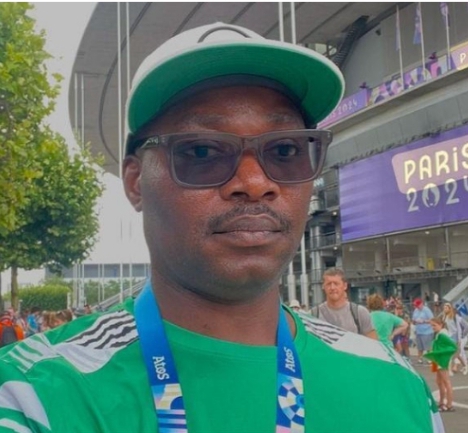
For Victor Okorie, a 400m hurdles silver medallist at the 2003 African Games, every new season in Nigerian athletics is more than a competition — it’s a mission.
Now serving as Performance Director and Board Member of the Athletics Federation of Nigeria (AFN), the U.S.-based former hurdler is steering a new vision for the sport: one built on early preparation, strategic partnerships, and a redefinition of athletics as a driver of economic growth.
Read Also: African Table Tennis on the Rise — Oshodi Confident of Strong Showing at 2026 World Team Championships
Speaking with optimism about the months ahead, Okorie said the AFN has been working tirelessly to ensure a well-structured and early release of next season’s athletics calendar.
“Athletes should prepare for an eventful year,” he said with confidence.
“We want to give athletes enough time to prepare properly — mentally, physically, and emotionally. That’s how we build consistency and world-class performances.”
The 2026 season promises to be one of the busiest in Nigeria’s sporting history, with a packed schedule featuring the National Sports Festival in Enugu, the Confederation of African Athletics Championships, World Relay Championships, Commonwealth Games, World Athletics Indoor Championships, World Athletics U-20 Championships, and the Youth Olympic Games — alongside the annual AFN National Trials.
According to Okorie, the federation is leaving no stone unturned to ensure Nigerian athletes are ready to shine on all fronts.
He revealed that the AFN is currently in talks with top sportswear brands to secure partnerships that will provide high-performance kits for athletes.
“We want our athletes to feel proud in what they wear,” Okorie explained. “This partnership isn’t just about appearance — it’s about comfort, motivation, and pride in representing Nigeria.”
Okorie, who has been vocal about repositioning athletics as a business ecosystem, commended the National Sports Commission (NSC) for its continued support but urged corporate Nigeria to take a more proactive role.
“Athletics can be more than medals,” he said. “It can build brands, create jobs, and inspire communities. That’s the direction we need to take.”
He stressed that with strategic investment, sports could become a major economic driver, generating opportunities across logistics, tourism, and youth empowerment.
As one of the key figures in the organizing committee of the upcoming Enugu 2026 National Sports Festival, Okorie’s enthusiasm is unmistakable. To him, the festival represents more than a competition — it’s a cultural and economic renaissance for the host state.
“Hosting the festival will open doors for Enugu,” he said. “It will attract business, boost tourism, and strengthen inter-state relationships. It’s truly a win-win moment.”
Okorie revealed that Team Enugu will compete in all 36 events, aiming to finish among the top three states or even claim the overall title.
“Enugu has the athletes, the heart, and the hunger to succeed,” he asserted. “We’re not just hosting — we’re competing to win.”
Okorie lauded the National Sports Commission for sustaining the AFN’s programs through steady funding and administrative support, describing the intervention as a “lifeline” for Nigerian athletics amid economic constraints.
However, he emphasized that to sustain growth, private sector participation must increase.
“Government has done well, but we need more hands on deck,” he noted. “Corporate partnerships can accelerate talent development and help Nigeria reclaim its place among global athletics powerhouses.”
For Okorie, the mission goes beyond medals and podium finishes. It’s about building a system where every race, relay, and record contributes to a larger national story of unity and progress.
“Sports can transform lives,” the 44-year-old said. “If we nurture it right, it will reward us all — athletes, fans, and the nation.”
With Enugu 2026 on the horizon and Nigeria’s athletics calendar brimming with international events, Victor Okorie’s words carry both conviction and clarity — that the next lap for Nigerian athletics isn’t just about crossing the finish line, but changing the game entirel