

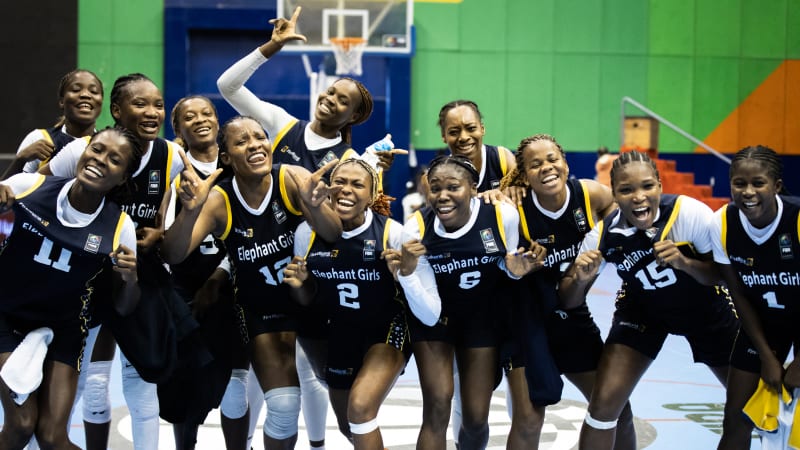

First Bank Basketball Club of Nigeria failed to reach the quarter-finals of the ongoing Women’s Basketball League Africa (WBLA) in Cairo and will now compete for a 9th-place finish when they face FAP of Cameroon in today’s classification game.
READ ALSO: Uganda Arrive First for AFCON: Team Chief Says ‘We’re Here Early to Shock Africa — The Mindset Has Changed’
The Elephant Girls returned to continental basketball this year after a six-year absence, marking a long-awaited comeback for one of Nigeria’s most storied women’s teams.
However, their re-entry into Africa’s elite competition has been challenging, as they were relegated to the 9th–10th placement round despite finishing the group stage on a high.
First Bank closed their Group Phase campaign with a gritty 58–52 win over FAP on Wednesday, but the victory was not enough to secure a last-eight berth.
An unfavourable points deficit denied them one of the two “best losers” slots, which instead went to CNSS of DR Congo and Sportive Clube de Luanda of Angola.
Their early exit reflects the shifting balance of power in African women’s basketball.
Traditional Nigerian powerhouses—First Bank, Dolphins, and Nigeria Customs—now find themselves trailing behind as clubs from Morocco, Angola, Egypt, and DR Congo benefit from sustained investment and more structured domestic calendars.
Today’s classification clash against FAP will be the second meeting between the sides at this tournament. The match tips off at 5:30 pm (Nigeria Time) at the Prince Abdallah Al Faisal Sports Hall in Cairo.
First Bank will hope to replicate the defensive intensity and composure that powered their earlier victory over the Cameroonians. FAP, on the other hand, will seek revenge, led by Nigerian-born veterans Idubamo Pius Beggi and Akaraiwe Nkem, who continue to anchor their squad.
For First Bank, finishing inside the top 10 may offer some consolation, but it also underscores the urgent need for stronger domestic structures back home.
The team’s six-year absence from continental action mirrors the broader decline of women’s club basketball in Nigeria, which has suffered from inconsistent leagues, administrative uncertainty, and limited funding.
While other African nations have invested heavily in facilities, youth development, and international partnerships, Nigerian club basketball has struggled to maintain stability.
First Bank’s campaign in Cairo is both a reminder of their proud legacy and a call for deeper reforms to restore Nigeria’s dominance in the women’s game.







 in Cairo)