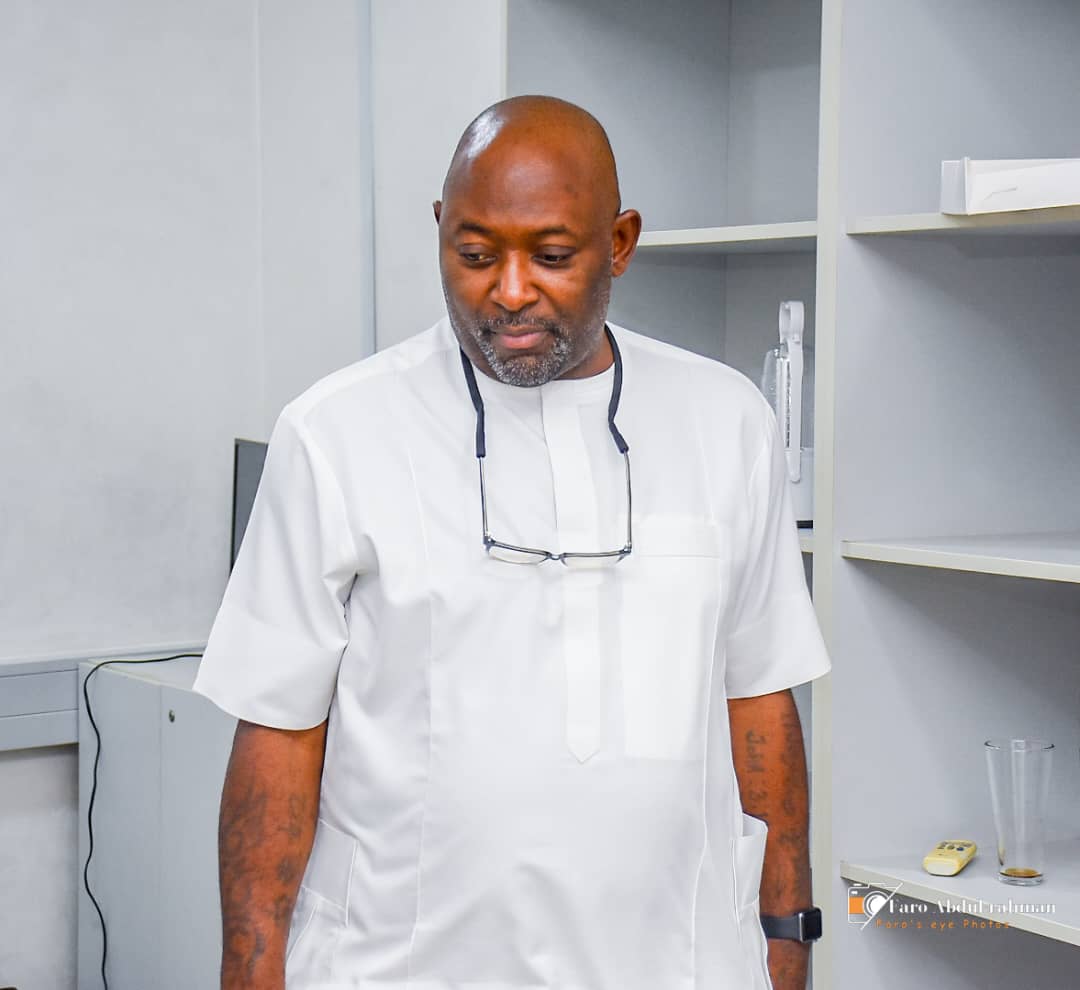

In this second installment of a three-part exclusive interview with Sports247, Anambra State Football Association chairman, Chikelue Iloenyosi (aka General) reveals how his love for helping people in need propelled his advent into sports administration.
Read Also: UNSCRIPTED: Anambra State FA Chairman Chikelue Iloenyosi Reveals How He Got His Nickname ‘General’ (Part 1)
Q: As an active footballer, you played in several countries across the world; what was the experience like while flying from one place to another?
A: The experience was wonderful and full of satisfaction. Everybody knows I’m someone who has a lot of passion for anything I’m doing. So, my passion followed me everywhere that I played football.
I played in Germany, Turkey and China. I played in Italy and I even played in Saudi Arabia. I’ve been travelling all my life. So, it’s not travelling to clubs that makes me happy and feel special. The most important thing was what I was able to do there.
For me, I believe the most important thing in life is what you are achieving and what people like about you. In turn, you should show love to other people. Life is not about what you are or who you are; it’s about how many people you are able to put a smile on their face.
Q: Does that mean you are a philanthropist?
A: I don’t want to call myself a philanthropist, I just like helping people when they are in need. I know that I’ve done a lot of things for so many people, including my football colleagues.
I was recently in Lagos, and I was happy to meet some of my former teammates. I showed them love because these are my people, and I know them very well. I’m so happy about everything life has given me, and I cherish the opportunities for me to show love to other people. That’s one of my passions, and I’m happy about it.
Q: How did you feel the first time you travelled abroad for football trials?
A: The first time I travelled abroad for trials was when I went to Fernebahce in Turkey. I was still with Iwuanyanwu Nationale at that time, and I went to Istanbul for the trials. That was also my first experience of travelling to Europe.
My godfather, Jay Jay Okocha, was in Fernebahce at that time. He arranged the trial and provided everything for me. Joachim Low, the former coach of Germany’s national team, was the manager there at that time. We were seven people who were there for the trial, and I was the only one they picked. After picking me, Joachim Low came to meet me and said, ‘You are going to be an influential player.’
Q: What were you able to achieve during your time with Fernebahce?
A: The most important memory for me there was that I was the only one on the junior team who was also able to play a match for the senior squad. So, it was a big opportunity, and I did not joke with it.
Q: Did you think you would be successful before you went for the trials; or what was going through your mind before you travelled to Turkey?
A: Before I went for the trials, I told myself that I would not come back empty-handed. I promised myself that my coming back to Nigeria would be to pack my property and go back to Europe immediately.
It was a moment of passion and determination for me. That helped me to gain a lot of improvement, and I was so happy that I did not disappoint my family. For me, everything about life is family first, and I am happy that I did not disappoint them.
Q: You were also in Germany for a while … what was the experience like?
A: That was another interesting experience for me. I met a lot of German people who were so nice and they loved me. German people usually like anyone who can work very hard.
I also remember meeting Winfried Schafer, who later on became the coach of Cameroon and is now the technical director of Ghana Football Association. He was my coach at Borussia Berlin. He was the one who signed me, and he also earlier signed Jonathan Akpoborie at Stuttgart. He really showed me that he loved African players.
That’s why he was successful when he later came to coach Cameroon. He was able to win the Nations Cup for them in 2002. He is a man driven by passion, just like me. We still talk and communicate regularly because we that were in Germany before now have a platform through which we can keep in touch with chatting.
Q: During your entire playing days, who would you consider as your most difficult and toughest opponent?
A: Wow! That had to be no other person than George Weah. I saw him as a real African player … a strong man and a great footballer. He’s a guy who you will try to intimidate, but he will not submit to you and he does not give up. He even talks to his opponent during the match, but I don’t listen to such things when I’m playing.
I come from a place where I got to know that football can’t kill you. Just go unto the field and do your thing. So, I tried to handle him; but I knew even then that he was a fantastic player, and at that time, he was at his peak. He did not stand in one place while playing, but kept on moving everywhere. That made him hard to mark.
I also remember Mohammed Kallon of Sierra Leone, but he is not too tall. He tried to intimidate Taribo West and me all the time, but he did not want anyone to touch his legs. That’s why Taribo said we should just kick him.
Taribo was also with him at Inter Milan. So, he knew him very well. He warned me that Kallon was fast. So, I must be ready to run with him everywhere he went.
Q: What was football like back then as compared to nowadays?
A: Football in those days was full of passion; but today, it’s all about money, money, money. In our days, we put passion before money, but things have changed.
For me, I’m so happy about everything that I encountered in my football career and life in general. I played for the Super Eagles, and I played at the Olympic Games. What else could I ask for?
I struggled to make sure I am who I am today. I am married now, and I have two kids, Amaka and Chico. I don’t like talking about my family matters, but I’m happy that I have them. Every time you check my phone’s status, you’ll see my children. So, they are making me happy, and I’m making them happy in return. Life goes on.
Q: Is any of them taking after you in football?
A: Yeah, my boy is playing football, but he’s still small … just ten years old. He’s coming up and wants to do better than me. He’s still small but already thinking big.
Q: That’s great. OK, let’s now talk about you as a football administrator. Please share the experience you are getting as the chairman of Anambra State FA…
A: The biggest thing I’ve learnt is that football is politics and politics is football. There are many obstacles you’ll face, but the most important thing is for you to make sure you are straightforward.
Keep your hands clean and make sure you are doing the right thing. Once you do the right thing, you’ll get it right, no matter the challenges.
It’s not everybody that will like you and you will surely face a lot of criticism. So, the most important thing is that you should just do the things you know will help you to impart on peoples’ lives. So, I don’t care who criticises me. I just do what I want to do and make sure the development of football from the grassroots is what we are doing right.
We must make sure that we impact the lives of talented kids and ensure we keep them out of trouble. Let’s take them away from kidnapping, cyber crimes, cultism, drugs, and so many other social vices. Once you engage them in football and make sure you get it right, everything will work well for you.’
– to be continued