

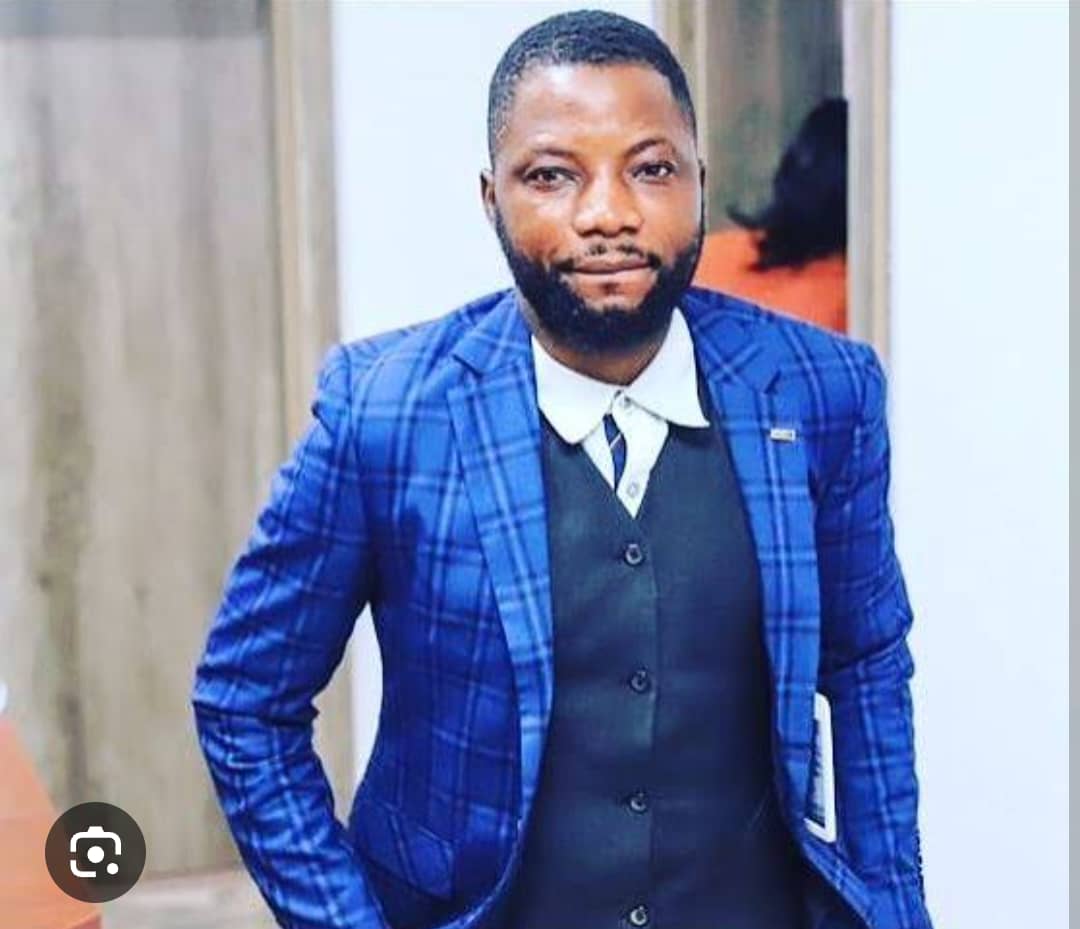

Sports247 spoke with National Sports Commission (NSC) director-general, Honourable Bukola Olopade’s special assistant on media, Kola Daniel on various issues that cut across the trajectory of his adventure in the vibrant world of journalism, and the erudite broadcaster revealed that he always keeps his eyes on his job in order to avoid distractions that could bring him down…
READ ALSO: Olopade Declares: Our Initiative At NSC Is To Support All Sports
Q: Tell us how your adventure in journalism began.
A: I began journalism as a freelance writer far back 2004, 2005. I was a baby journalist, and I was privileged to get acquainted with Frank Ilaboya, who was then my boss. He was the brain behind me; stabilising me as a journalist, alongside Ovedje Kodesoh of AIT.
I was a sole correspondent of Channels TV in Abuja through Frank Ilaboya’s Sports Ville. I was also reporting for Sports Metro as a freelance journalist. That was how my story began.
I was passionate about what I was doing, knowing that … somewhere, somehow … people would see my work and appreciate it.
That’s how I soon ran into Mike Obasi, a friend and a brother, who was the sole reporter of Hot FM at that time. We spoke at length, and I asked if I could be the one who would be reporting the Nigerian Professional Football League (NPFL) on his platform, which he obliged. That was the credence I needed at that point in time.
Q: What was the experience like being a reporter of the Nigerian league?
A: I was actually reporting NPFL matches because I was an advocate of the domestic league, and I took it upon myself. I travelled the length and breadth of this country to cover the NPFL.
While I was doing that, fortune smiled on me, and I got acquainted with Mallam Shehu Dikko, who made me an NPFL match delegate. That made it easier for me to travel; knowing fully that I would be paid for reporting everything about the league.
It became much easier for me to travel across the length and breadth of the country. So, I took it upon myself that I had to do my best in covering the NPFL. That was the tonic I needed for me to stabilise as a journalist.
Q: How did you then get into the limelight of analysing sports on television?
A: After that, I joined Independent Television (ITV), where I rose to the position of head of sports. Before then, in 2010, I became a foremost online journalist in Nigeria, alongside my boss, Samm Audu, who was the brain behind my writing skills.
I was originally a broadcaster on radio and television; but I needed to test my strength in the print media … and Samm Audu gave me that platform.
We became the foremost online journalists, and we were working for African Football. That was in 2012. At that time, most journalists did not know how to click on links to get stories through the internet.
We brought African Football to Nigeria. It was a South African publication that became an online media outfit to reckon with, as far as sports on the internet was concerned, even beyond Nigeria.
During my days with African Football in 2013, I was privileged to be paid $1,000; which meant I was earning about N256,000 as of that time.
Q: We understand that you also worked with another online sports platform after African Football. Tell us about it…
A: Yes, I did. My boss, Samm Audu, who took me to African Football, said we needed to start our own online publication, which he named Score Nigeria, which we both started together.
He was the key owner, and I was his partner in progress. I gave it my all as a journalist. All that I needed to do was what I did at that point in time, and I entered the limelight.
I started covering the World Cup and Nations Cup. I have now covered five editions of the Nations Cup and four of the World Cup as a journalist. I also covered three Olympic Games.
Fame came for me through the process of covering the World Cup, Nations Cup and Olympics. I tried as much as I could to carve a niche for myself through my philosophical concepts
In one way or another, some see hard work as torture, but I take it as a duty, and it paid off for me. That’s what I was actually doing as a journalist.
Q: Were you engaged in any other profession before your adventure in journalism began?
A: Before my story began as a journalist, I was a lecturer at the University of Abuja. I left lecturing for freelance journalism because of my love for media activities.
I left my job as a lecturer where I was earning N126,000 to join Frank Ilaboya as a freelance journalist. Although I had to accept a slashed salary, I had a strong conviction that I was going to make it big through journalism.
I knew that I had the right voice quality for broadcasting on the radio, and I held unto it strongly. My writing skills then came to bear when I was working with Samm Audu as a foremost online journalist in this country.
Q: You also have your own media outfit, but you soon opted to step into sports administration. How did it happen?
A: When I became the head of sports at ITV, I opened my media outfit, which I named CKD Media. That was what I was doing until the fateful day came on August 6th, 2019.
I was driving when my phone rang twice. So, I parked and picked up the phone. The voice at the other end said, ‘I am Sunday Dare.’ I was surprised that the then minister of sports was calling me, and he shocked me further by revealing that he had already appointed me as his special assistant media.
He urged me to report at his office the next day, which happened to be a Thursday. When I got there, he said, ‘You look smallish,’ which made us both burst into laughter.
He wanted me to start work that same day, but I begged for ten days grace before starting, so that I could resign at ITV and put myself together for the new task ahead.
He then told me that other people with high credentials and huge experience had applied for the job, but he just had me in mind, and he preferred giving me the job.
I discussed it with my parents, and they said I should pray over it, which I did. On the tenth day, my phone rang at 15 minutes after seven in the morning … it was Honourable Sunday Dare.
He wanted to confirm if I was ready to start work, and I told him I was. That was how I started with him as his special assistant media in 2019.
Q: What would you say was the biggest lesson you learnt while working for Sunday Dare?
A: I was privileged to learn leadership skills, media administration and strategic implementation of public relations ideas, all of which I did for four years.
I worked alongside Toyin Ibitoye and John Joshua-Akanji (J.J.). I thank God that the journey went well and ended successfully.
Q: Did you ever dream of getting to such a lofty position when you started out as a journalist?
A: I never knew what the future held for me. So, a day came when I penned a goodwill message to the senior journalists who made me what I am today. I thanked Frank Ilaboya, Ovedje Kodesoh, Samm Audu, Mike Obasi, and others who helped me grow.
They taught me the rudiments of good reportage and how to disseminate information generally. That helped me work effectively with Honourable Sunday Dare.
So, I wrote that piece to state my gratitude for all they had done for me. I don’t know what the future holds, but I know God leads, and we follow.
Q: How then did you become Honourable Bukola Olopade’s special assistant media?
A: Two months after our tenure with Honourable Sunday Dare, Senator John Owan Enoh was appointed as minister of sports. I did not know when Honourable Sunday Dare recommended me to him.
One night, he called me over to his house, and we discussed extensively. That was how I resumed the following day as his special assistant media.
After two, three months with him, Dan Amehi joined me, and I became his media aide.
We worked together with Senator John Owan Enoh for one year, six months; but I was not seeing myself as someone who was quite productive the way I actually wanted to be.
So, after we came back from Paris 2024 Olympics, I resigned from my appointment because I needed to give my media outfit more attention. I started reviving CKD Media. But, a fortnight after I resigned, Honourable Sunday Dare was appointed into the cabinet as a special adviser for media publications to the president, and Mallam Shehu Dikko was named chairman of the National Sports Commission.
He beckoned on me to come and work as his special assistant media. I assumed duty immediately, but I spent only three weeks with Mallam Shehu Dikko as SA Media due to overlapping job specifications. That was because of the presence of three of us in that department.
One of us had to be redeployed when Honourable Bukola Olopade was appointed as the National Sports Commission’s director-general. So, I decided to leave Shehu Dikko’s office and moved to join Honourable Bukola Olopade.
That was how I became the special assistant media to Honourable Bukola Olopade, alongside my good friend, Mike Obasi. He was appointed as the media aide to Honourable Olopade, and we all have a robust relationship.
We’ve been working officially to disseminate information to the general public and provide press releases for the media, while also updating them about all line of activities at the sports commission. That is the clear picture of my rise after I left university in the year 2000.
Q: You must have faced some criticism or even hatred as you kept rising. How do you react to that?
A: My eyes are always on the ball and I never get distracted, because I actually know where I am going. So, I don’t want distraction to slow me down.
I had a philosophical concept right from my days in the university – ‘Don’t care what people say about you, care for what you do and know that you have good reasons for your actions.’
Rumours are carried by enemies, pride is for ignorant people, and gossip is accepted by fools who do not make enquiries. If they make enquiries, they should know that my actions are right.
I follow the principle of utilitarianism and codes of maximum utility as postulated by Jeremy Bentham. He stated that an action is right, provided it gives happiness to the greater number of people.
My action might be right once I’m satisfied with it. That’s because I think of utility first. So, if I’m satisfied with what I’m doing, I don’t care if other people are not satisfied.
Apart from that, people who kept asking if I could write well, because they knew me as a broadcaster and a television person, only spurred me to work harder. That was the tonic I needed to improve on my job.
Q: Hearing you mention the utilitarian strategy suggests that you like reading books, is that true?
A: Yes, it is. I always read a lot of books and newspapers. Right from my days in the university, I read a lot of books up to my PhD project, which I am now working on.
It was later on that I took it upon myself that I wanted to start writing as well. That’s why I started writing for African Football. You can’t write for African Football if you are not good.
Apart from that, I also remember how I got a job in Football Live and I was paid N90,000. You gave me that job, and I did it to the best of my ability.
It spurred me to be who I am today. It’s not easy. So, I give all the glory to God. All glory goes to God, and all the glory goes to God.
Q: Would you say working for Frank Ilaboya, Samm Audu, and Ovedje Kodesoh helped to prepare you for your current duties at the NSC?
A: I must say it with all sense of authority, for you to write for three major principals in the sports commission is not a job for fools.
I stand to be corrected, but I learnt that, since 1974, I have been the longest serving media administrator in the sports commission.
I have served three different principals. It has been through God’s strength, God’s favour, and God’s mercy … not by my power, not by my strength, but through the favour of God. If there is something you are doing and you are doing it well, keep on doing it.
Q: What are your basic job specifications and requirements as special assistant media to the DG?
A: My position makes me the eyes and mouth of the sports commission in relating with the media. I also write daily official statements to update the general public about the NSC’s operations every day.
That’s not a child’s play, and it’s not an easy task. You must know what you’re doing before you can assume that position. So, I give all glory to God for giving me the ability to do it.
Q: Let’s go further back to your days as a child. Did you plan to become a journalist while in school?
A: Yes, my interest in journalism began when I was in JS2. I would take two naira from my mum to go and buy Sports Souvenir. It was a popular newspaper about football which came out every weekend at that time.
I would read all the articles in Sports Souvenir, and that made me become so familiar with the terminologies of sports. I can remember when I was in SS1, I used to describe someone in my school as a mercurial midfielder.
I saw that expression in a newspaper that I read. I also saw other expressions like combative midfielder, talismanic goal poacher, predator in front of goal, and so on.
All these terminologies of football were what I read in Sports Souvenir, Complete Football, Complete Sports, and others. All these terminologies became part of me and became more or less my familiar companions.
So, it was easy for me to delve into journalism, as I already understood the terminology to use, and I knew how it works. Furthermore, I used to watch the news on NTA and AIT, as well as listen to the radio regularly.
When I got to Abuja, I started following Ovedje Kodesoh on AIT’s sports programmes. I then went to meet him on one fateful day and asked him to interview me for a job; which he did, and he liked my presentation.
He then gave me a platform on Sports Zone, to which they would invite me to give analyses of sports on the programme.
Q: What then marked the turning point or your breakthrough moment on TV and radio?
A: The high point of my career came when I was a guest on AIT, and I started doing programmes with late Felix Okugbe on Mundial Sports International. I made a mark as the youngest Nigerian to run commentaries when I took the microphone for our game against Ethiopia with Tunde Orebiyi in 2006.
It was through Mundial Sports International that I got that opportunity. At that point, it became evident that I could run commentaries in sports, which I did at that early age.
That was another platform I used to orchestrate my media ability, and God used those people to help me get to where I am today.
Q: What is the basic principle that guides you in how you work on a daily basis?
A: For me, I never mix professionalism with pleasure and personal interest. When I want to write official press statements, I have to be principled.
I have to do my job to the best of my ability and conscience. I have to do it effectively, and I enjoy what I do.
Q: Is there any day you remember as the best you’ve ever had as a journalist?
A: My best day was the first time I flew in a private jet with Honourable Sunday Dare. We had to go out of the shores of this country, and we were only four in the private jet. I said to myself, ‘Wow! This is how life is sweet.’
Before you knew it, I started flying private jets here and there, courtesy of my writing skills. I was able to do it because I learnt from a Yoruba expression that says, ‘When a child knows how to wash his hands, he will eat with elders.’
That’s my story, and it has become part of me. It’s something that I’ve been able to do through the power of God.
Q: You’ve been like a bridge between the olden days style of journalism and the modern craze of social media; which do you prefer?
A: I prefer the old style of journalism for several reasons. The approaches to journalism we saw in the 90s and early 2000s were styles of repute.
In those days, you wouldn’t write if you are in doubt about your content. You must get your facts before you write. You cannot put it on air if you are suspecting anything about it.
Once there’s no clarity, you leave it. That’s the principle I was taught at the Institute of Journalism. It simply means, ‘Leave it if you are not sure about it, don’t guess.’
It’s different nowadays, because somebody can fabricate a story and put it online. You can write anything you want once you have a phone.
You can just look for a platform, put it up easily, and no one will ask you about it. On the other hand, the journalism of the 80s and 90s, into the early 2020s, depended on your name first.
Once you write what is not true, you lose your credibility, and nobody will believe you again. You lose your personality and credence. But, today, it’s mostly because of poverty, and people are not scared of posterity.
Every Tom, Dick and Harry is now a journalist, once they have a phone and a social media account. They put out news without passing through the ethics and norms of human conduct, thereby leaving out the professional aspect of it.
So, I prefer the traditional style of journalism, which gives us more respect, and your personality defines it.
Q: When you look back at your early life and where you are now, what do you see?
A: I will sometimes look at myself and start thinking, ‘That Sabon Gari boy in Kano, that kid on the streets, who seemed to have no future, see what has happened to you today. See where you are now.’
At that point, I will again thank God for how He allowed fortune to smile on me. It’s all about the power of God.
Q: What’s your advice for up and coming journalists or students who want to go into journalism?
A: The journalism that I was taught entails total focus, no distractions. You show it, and you wear the look of a journalist.
You put total focus on what you are doing, and your personality defines it. It’s not what we are seeing nowadays. They have abused the instinctive drive of journalism. That’s what aspiring journalists must avoid.
Q: What can elders of journalism do to help the younger ones?
A: They need to give young journalists good training and constant retraining. It’s only through that approach that we can change the present mentality and focus. They can be taught that the essence of the job is not about collecting brown envelopes after events or interviews. Your duty is to check sports administrators.
Put them on their toes and keep them under constant check, so that they would always do the right thing. We are the watchdog, the checkers, the sentinels…
We should be accountable regarding all lines of activities of our administrators. We should check embezzlement and misappropriation of funds.
We must check their productivity, their performance and their activities. Those are things journalists should think about.
They should report facts and report the truth, say it the way it is … irrespective of who is involved – whether it’s your brother, sister, father, mother, uncle or any family member … say it the way it is.
That is the journalism I was told about and which I was taught while growing up in various organisations where I have been privileged to work.
Q: What message do you have for the administrators you have worked under?
A: I want to use this medium to thank Honourable Sunday Dare for shaping my life, for giving me the platform I needed to exhibit my skills. Without him, there is no Kola Daniel.
He gave me all I needed and brought me to the limelight. So, I use this medium to say, ‘Thank you, sir, Honourable (Chief) Sunday Akinlabi Dare.’
He gave me the confidence that I needed to make progress in life. He took me from nowhere and made me somebody. I say a deep thank you, sir.
Q: On a final note, if you have a chance of coming in another life, would you still love to be a journalist?
A: If I come to another life in this world, I still want to be a journalist. I told my son the same thing some days ago.
That’s because journalism has given me everything I need in life … fame and fortune. What else do I need? That’s to say, I’m in the right profession.
So, if I come back to this world, I want to be a journalist again. I still want to be a journalist, and I will do it all over again as I’m doing it now.
I’ve been privileged to have won countless awards, and I’ve distinguished myself in the line of the profession.
I became the best journalist in the country in 2016, when I won the television category at the Nigerian Sports Awards at Eko Hotel. I also became the best journalist in Abuja in 2017 and the best NPFL journalist in 2018.
It’s been great for me being a journalist. All that I’ve needed, I got it through journalism. So, if I come to another world after this, I want to be a journalist again.
Q: That’s wonderful. Thanks for sharing some of your time with us…
A: Thanks for giving me the opportunity to share my story with your readers.
Q: You are welcome….
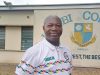


 director-general, Honourable Bukola Olopade's special assistant on media, Kola Daniel)