
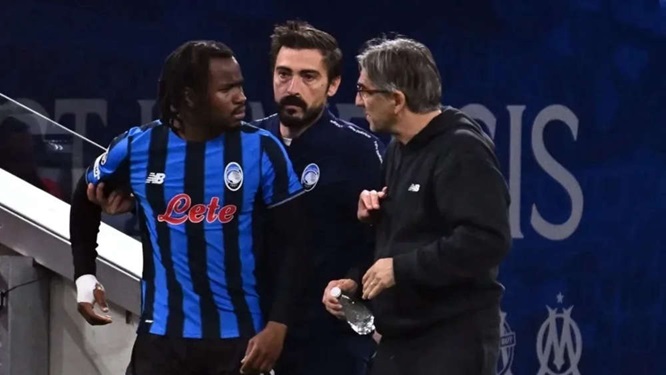

Former English forward Troy Deeney has strongly criticised Atalanta manager Ivan Jurić following the heated confrontation involving Nigerian winger Ademola Lookman. Deeney, known for his forthright commentary, stated that while disagreements and emotional flare-ups are common in football, allowing an altercation to escalate into physical contact is completely unacceptable.
Deeney explained that football is a passionate sport where tempers naturally rise, especially in competitive environments. However, he stressed that there are boundaries that must not be crossed, particularly by someone in a leadership position like Jurić. “Arguments and spats happen all the time,” Deeney said, “but taking it physical? That’s a line you should never, ever cross.”
Read Also: Nigel Reo-Coker Faults Ivan Jurić’s Physical Confrontation With Ademola Lookman
The former Watford striker pointed out that the manager’s role goes beyond tactics and substitutions—coaches are expected to be responsible figures who control the emotional tone of the team. According to him, by losing his composure, Jurić not only put Lookman in an uncomfortable situation but also set a bad example for the rest of the squad.
Deeney noted that even the most intense rivalries and dressing-room confrontations he experienced throughout his career never descended into physical aggression from a manager. He highlighted that while players are often punished for on-field misconduct, coaches too must be held accountable when they fail to uphold professional standards.
He warned that incidents like this can lead to long-term distrust between players and their coach, potentially disrupting dressing-room chemistry and affecting performance. Deeney urged football authorities to ensure managers are held to the same behavioural expectations as players.
In closing, Deeney reaffirmed that high-pressure moments should never justify physical aggression. “Football is emotional,” he said, “but leaders have to control those emotions. Once you put hands on a player, you’ve gone too far.”