


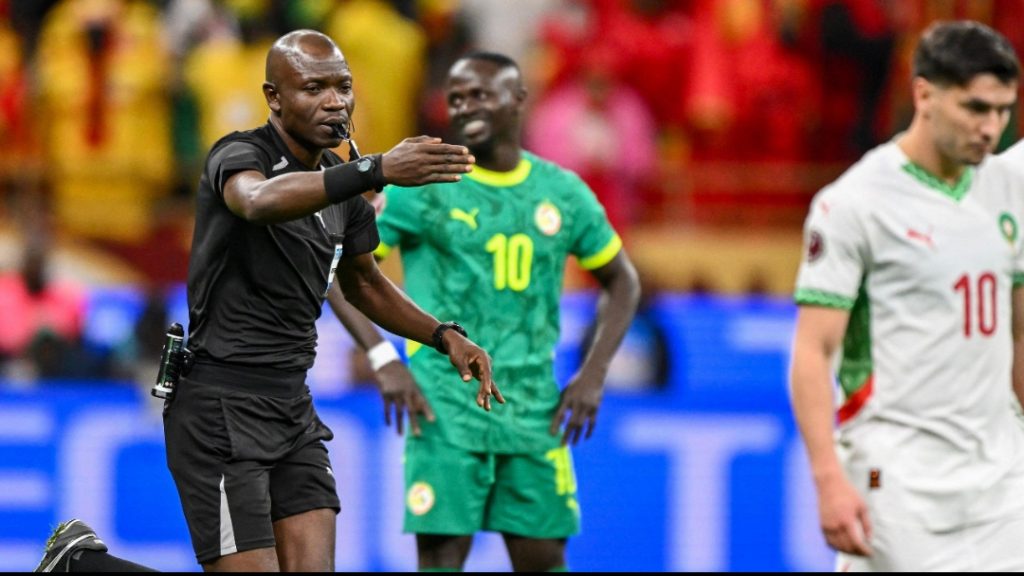
When Congolese referee Jean-Jacques Ngambo Ndala blew his whistle to restart the 2025 Africa Cup of Nations final in Rabat, little did he know that his decision would become the decisive factor in one of African football’s most controversial legal battles, Sports247.ng reports.
Ten months after the dramatic final, the Court of Arbitration for Sport (CAS) on Tuesday, November 24, 2026, unanimously upheld Senegal’s appeal, overturning the Confederation of African Football (CAF) Appeal Board’s decision to award Morocco a 3-0 victory.
However, the most significant aspect of the ruling lies not simply in Senegal reclaiming their continental crown, but in the legal reasoning behind the decision.
At the heart of the dispute were Articles 82 and 84 of the AFCON regulations, which Morocco relied upon to argue that Senegal’s temporary withdrawal from the pitch constituted a forfeiture.
CAS, however, established a crucial distinction between temporarily interrupting a match and permanently abandoning it.
The arbitration panel determined that the two regulations were applicable when a team’s conduct resulted in the referee permanently calling off a match.
That never happened in Rabat.
Instead, Ndala allowed proceedings to resume after both teams returned to the pitch and demonstrated their willingness to continue playing.
The CAS panel determined that the decision to restart or terminate the encounter fell exclusively within the referee’s authority.
The ruling consequently relied on the legal principle known as the ‘field of play’ doctrine, which generally protects decisions made by match officials from retrospective judicial intervention unless there is evidence of arbitrariness or bad faith.
Although the final was played under extremely tense circumstances, the panel found no evidence that justified describing Ndala’s decision as arbitrary.
Interestingly, the verdict lends weight to the position expressed earlier on Tuesday by Nigerian sports attorney Pius Ndobuokwu in an exclusive interview with Sports247.ng.
Ndobuokwu had predicted a favourable outcome for Senegal, emphasising the reluctance of CAS to allow football results to be determined through administrative proceedings rather than on the pitch.
However, Senegal’s successful appeal does not amount to an endorsement of their walkout.
CAS acknowledged that the Senegalese Football Federation, head coach Pape Thiaw and certain players had already been sanctioned through separate disciplinary proceedings.
The distinction is important: misconduct can attract disciplinary punishment without necessarily invalidating the result of a completed football match.
By reinstating Senegal’s original 1-0 victory, CAS has delivered a significant ruling on the limits of administrative intervention and the authority of match officials.
Ultimately, the whistle that allowed the AFCON final to continue in January became the legal foundation upon which Senegal reclaimed their African crown in November.