
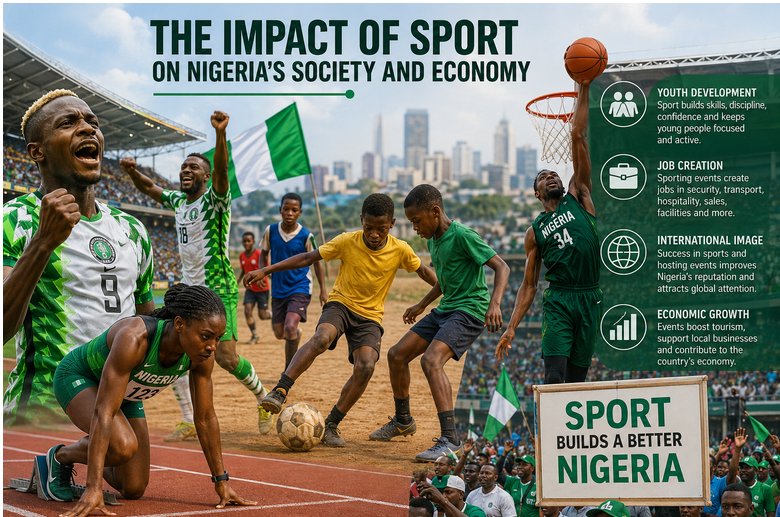
In Nigeria, sports have a significant impact on daily life. It sparks enthusiasm. It brings people together. It gives young people something positive to think about. Although basketball, athletics, boxing, and other sports have large fan bases, football is the most popular sport. Sport continues to inspire millions of people and shape communities through local games and worldwide competitions.
A lot of sports fans also want to watch international leagues. Some people watch local and international American football games; some dabble in NFL betting. People from different nations and cultures are now linked through sports entertainment.
One of the main advantages of sport is that it fosters youth development. There are many more lessons to be learned by participating in sports than just winning games. Youngsters learn how to cooperate with others, abide by the law, and remain dedicated to a task. They also discover that hard work and practice are frequently necessary for success.
Many young people spend their free time on basketball courts. Others enjoy football fields or athletic tracks. They prefer these activities instead of risky ones. They stay busy and have structure when they have a space to play. Coaches frequently take on the role of role models, promoting good behavior and discipline. This help can really make a difference, especially for kids in tough situations.
Additionally, sports enhance both mental and physical well-being. Regular exercise lowers the risk of many health problems. It also boosts strength and improves fitness. Additionally, it can help young people feel more confident and less stressed.
Nigeria’s economy benefits from sport as well. Every athletic event gives many people the chance to make money. Large events help many people. They help stadium workers. This includes security staff, ticket sellers, cleaners, photographers, food vendors, and transport providers. When people travel to attend competitions, hotels and restaurants frequently see an increase in business.
Major events also increase activity for small companies. Shops sell souvenirs, flags, sports gear, and jerseys. As spectators congregate before and after games, local markets can get busier. Many households are able to make extra money thanks to these additional sales.
Long after a competition is over, sports facilities continue to generate jobs. Stadiums require personnel for building maintenance, playing field upkeep, event management, and security. Coaches, trainers, medical personnel, and administrators are employed by sports academies. The need for these occupations may increase as more young people participate in organized sports.
International athletic competitions also enhance Nigeria’s reputation globally. When Nigerian athletes excel, the nation receives favorable publicity. Their accomplishments demonstrate skill, tenacity, and diligence. Nigeria has the opportunity to be seen favorably by millions of viewers of international competitions.
Organizing athletic tournaments can draw tourists from other nations. Fans can experience Nigerian culture. They can enjoy food, music, and hospitality by going to games and competitions. These trips can boost tourism and inspire more travel. As more individuals learn about what the nation has to offer, tourism-related businesses frequently gain.
The government, schools, and businesses all help promote sports. More kids can improve their skills. They can use better training facilities. Safe playgrounds and youth programs help too. Funding community clubs helps find gifted athletes early. Coaches play a key role, too.
Ultimately, sports provide much more than just amusement. It raises Nigeria’s global status. It creates jobs. It helps youth learn life skills. It also supports local businesses. Sports’ beneficial effects on society and the economy are expected to increase for many years to come as long as investment in it persists.