
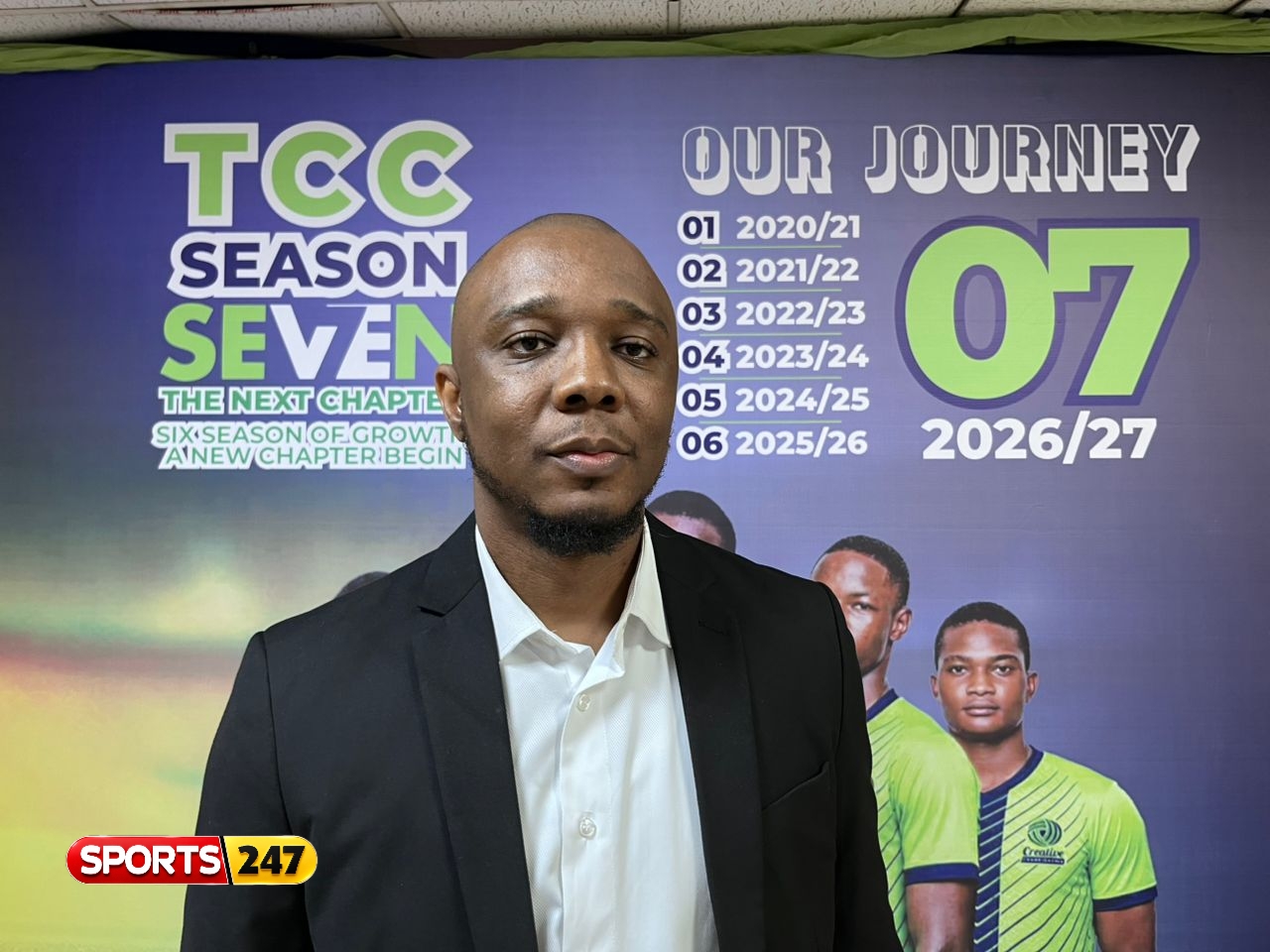
Chief Operating Officer of The Creative Championship (TCC), Chike Nwoye, says the privately owned football league is targeting intelligent expansion, greater fan engagement and increased use of technology as it enters its seventh season.
READ ALSO: TCC Enters Seventh Season With 14 Teams, Unveils New Partnership and Development Plans
Speaking at a media parley held at the Ivory Health Club, Ikeja, on Thursday August 27, 2026, Nwoye said the TCC’s ability to stage successive uninterrupted seasons since its establishment in 2020 is evidence that its private ownership model is working.
For Nwoye, the ability to consistently stage the competition without interruption has been one of the clearest indications that the TCC model is working.
“Having successive uninterrupted seasons, are proof that we are actually doing something very great.”
According to the COO, sustaining a sports business in Nigeria is difficult, making the TCC’s continuity particularly significant because the competition is privately owned rather than dependent on government funding.
“Doing business in Nigeria is tough. Doing sports business in Nigeria is probably tougher,” Nwoye said, stressing that the strength of the TCC lies in its collective of like-minded private owners.
He, however, acknowledged that the TCC has areas that require improvement and that its next phase will involve examining what has worked over the past six seasons while introducing new approaches where necessary.
The 2026/27 season will see D’Shack Football Academy and Gaiters FC join the TCC Cup, while the established league remains at 12 teams. Nwoye explained that both clubs impressed during the selection process and will be assessed through the Cup before a decision is made on their future league participation.
One of the biggest developments for the new season is the league’s increasing reliance on technology and performance data.
Nwoye said the TCC has used data since its establishment, moving away from relying solely on the traditional method of evaluating players through visual observation.
The league is now taking that approach further through Hudl’s Titan GPS athlete-tracking technology, which can provide real-time information on players’ physical performance and workload.
The technology can help teams monitor factors such as player exertion, fatigue, workload and potential injury risks, giving coaches and performance staff more information with which to manage players.
“It’s very expensive, but it is worth it,” he said of the investment.
Nwoye acknowledged the operational challenges of running football in Nigeria, particularly venue availability, noting that only three teams currently own their home grounds.
Looking ahead, Nwoye said the TCC’s ambition over the next five years is built around three major priorities: sustainability, intelligent expansion and fan engagement.
The league wants to maintain the achievements of its first six seasons while improving its weaknesses and creating a stronger platform for players and clubs.
The TCC’s official history records Beyond Limits as the dominant league force in recent seasons, winning the 2023/24, 2024/25 and 2025/26 league titles, while the TCC Cup has produced different winners across its history.
The league has also established the TCC Elite Cup in partnership with Abuja’s Elite League, creating an additional competitive pathway between teams from different regions and helping prepare players for international opportunities.
For Nwoye, however, the ultimate objective is not simply to have a bigger league.
It is to create a competition that is better run, more data-driven, more visible to fans and capable of providing a sustainable pathway for young Nigerian footballers.
He also identified fan engagement as an area requiring significant improvement, saying the league must make more Nigerians aware of its work and its contribution to the football ecosystem.
“We want people to know that in the Nigerian football ecosystem there are these guys that are doing things differently.”
As the TCC begins its seventh season, the challenge will be to turn that vision into measurable progress, both on the pitch and in the broader Nigerian sports business landscape.
With 20 teams as a long-term target, technology driving player development and a push for greater visibility beyond Lagos and Ogun, the TCC’s next phase appears set to be less about simply getting bigger and more about getting smarter.







, Chike Nwoye, says the privately owned football league is targeting intelligent)