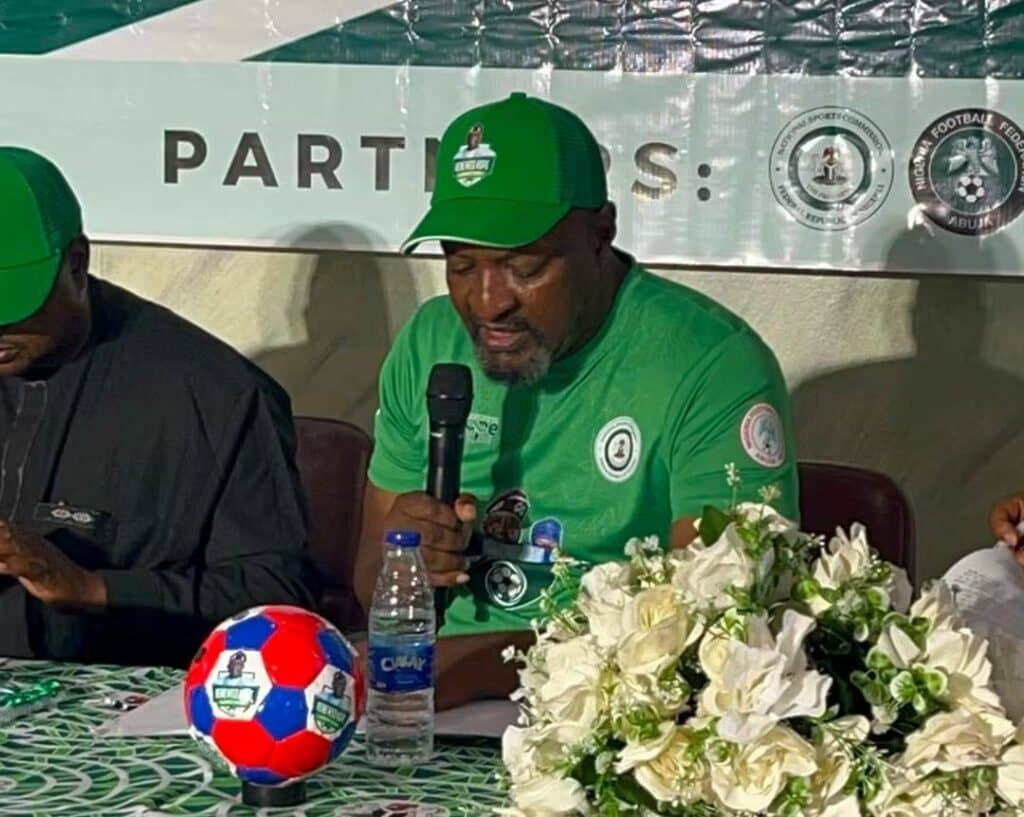
Convener of the 1st Renewed Hope National Unity Cup and former member of the House of Representatives, Honourable Suleiman Kwande, has reeled out several benefits that will accrue to players, coaches, clubs, states and partners who participate in the forthcoming competition.
READ ALSO: Renewed Hope Unity Cup Is ‘Bold National Investment In Nigeria’s Future’ – Yahaya Kwande
Sports247 reports that, while confirming that the competition will commence on October 1st, with teams from all 774 local government areas of the country involved, Kwande, who is currently the chairman of Plateau State Football Association, stressed that it will be a highly rewarding contest.
Kwande further described the tournament as ‘a visionary national grassroots initiative conceived to revolutionise football development across the country,’ and confirmed that the contest, which will spread across two months, is for male footballers betwen ages 18 and 20 years,
He further disclosed that all participating teams will be fully kitted, while their coaches will have the opportunity of building on their technical knowledge through a train-the-trainer initiative, with many other benefits that will be buoyed by immense corporate and government backing.
“The implementation of this landmark initiative will be driven through strategic partnerships involving the federal and state governments, the private sector, corporate Nigeria, development partners, international football organisations, friends and well-wishers of President Bola Shmed Tinubu.
“(We will also have) philanthropic organisations and patriotic Nigerians committed to advancing football and youth development. These partnerships will facilitate the provision of equipment, coaching education, live broadcast, infrastructure, player welfare, logistics and talent identification programmes.
“It will promote national unity and social cohesion, discover, develop and showcase football talents, guarantee interest for every LGA, global visibility through digital broadcasting, equip participating teams, strengthen grassroots football development and boost national coaches’ capacity development.
“Together, these stakeholders will contribute to building a sustainable football ecosystem that will continue to produce elite players, qualified coaches, stronger football institutions for generations to come, and other critical resources required to deliver a world-class football competition.”