
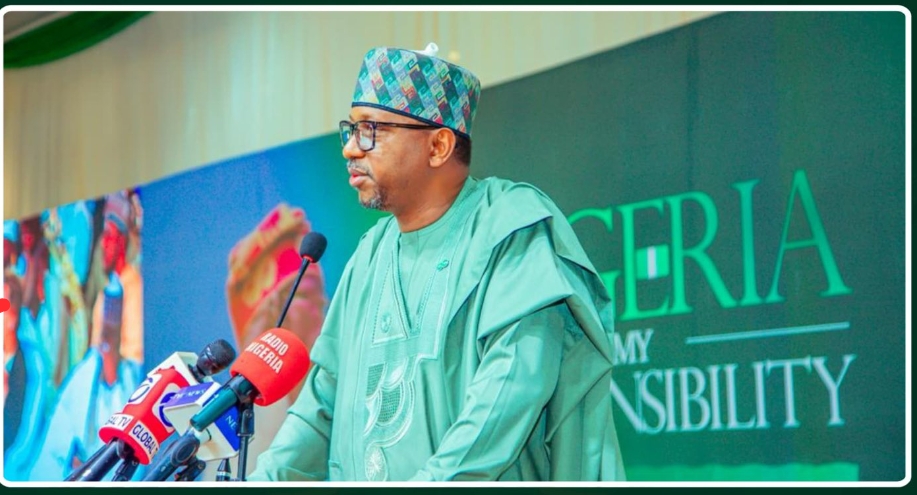

Chairman of the National Sports Commission, Mallam Shehu Dikko, has announced a major shift in Nigeria’s sports funding structure, declaring that sports federations will no longer receive automatic financial support from 2026 unless they can prove they are actively developing their sports.
READ ALSO: Abiodun Balogun Reveals: Why I Dumped Football For Traditional Music
Dikko made the revelation while outlining the Commission’s new accountability-driven approach, stressing that government funds will now be tied strictly to measurable activities and functional domestic leagues.
“The era of free meals is over. Federations must show evidence of growth, competitions, and development before receiving funding,” Dikko said.
According to him, the Commission will no longer bankroll federations that remain dormant or operate without structured competitions.
“If a federation does not have a functional league or regular activities, it cannot continue to depend on government funding,” he stated firmly.
Dikko explained that the new policy is designed to force federations to become more proactive, innovative, and development-driven, rather than waiting for annual handouts.
“We want federations that are working, not ones that only show up when it’s time to collect money,” he added.
The NSC chairman noted that the lack of accountability in sports administration has contributed to stagnation in several federations, weakening Nigeria’s overall sports ecosystem.
“Funding without structure leads to waste. Development must be deliberate and measurable,” he said.
Under the new system, federations will be assessed based on domestic league activity, grassroots programmes, athlete development pathways, and governance standards before any grants are approved.
“You must show us what you are doing. Sports development cannot exist on paper alone,” Dikko explained.
He also revealed that the policy aligns with the Commission’s broader vision to strengthen sports at all levels, from grassroots to elite performance.
“This approach will help us build a stronger sports ecosystem and ensure public funds are used responsibly,” he said.
While acknowledging that the policy may be uncomfortable for some federations, Dikko insisted it is necessary for long-term progress.
“Change is never easy, but it is necessary. Nigerian sports must move forward,” he concluded.
The announcement marks a turning point in sports administration, signaling a future where performance, activity, and accountability determine access to funding.