
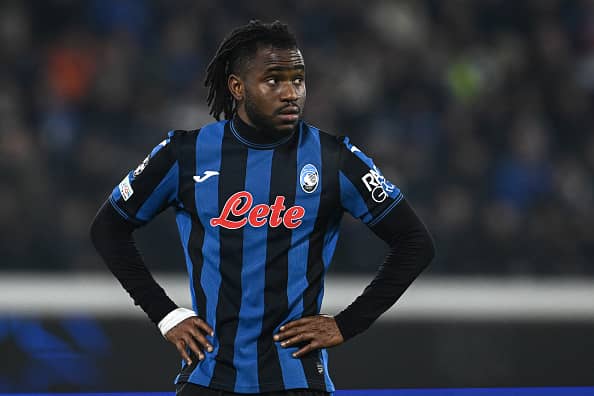

Former English footballer Nigel Reo-Coker has condemned the actions of Atalanta manager Ivan Jurić following his physical confrontation with Nigerian winger Ademola Lookman.
Reo-Coker, known for his outspoken analysis, insisted that Jurić completely crossed the line by allowing tensions to escalate to the point of physical contact, stressing that no manager should ever lose control in such a manner.
Read Also: Victor Boniface Admits He Has Been “Unlucky” With National Team Career
Speaking on the incident, Reo-Coker acknowledged that disagreements and heated arguments are part of football, particularly in high-pressure moments. However, he emphasized that a manager—who is meant to lead by example—must maintain composure, regardless of the situation. He argued that Jurić’s reaction was unnecessary, unprofessional, and damaging to his reputation.
According to Reo-Coker, “There are ways to handle confrontation, and physical contact should never be one of them. Even bigger and more experienced managers, with far more pressure on their shoulders, have never resorted to that.”
He pointed out that coaches carry a responsibility to set standards for their players, and losing control sets a poor example for a team already navigating through intense competitive environments.
The former midfielder added that Lookman, who has been one of the standout African players in European football in recent seasons, deserves respect and should not be subjected to such treatment from a coach. He argued that incidents like these undermine a player’s confidence and create unnecessary tension within a squad.
Reo-Coker also called on football authorities to take such incidents seriously and ensure disciplinary measures are consistent when a manager behaves inappropriately. He believes stronger consequences would discourage similar behavior in the future and protect players from managerial misconduct.
In conclusion, Reo-Coker reiterated that while confrontations happen in football, professionalism must prevail. “It’s okay to disagree,” he said, “but once you cross the line into physicality, you’ve lost it. That should never happen.”