
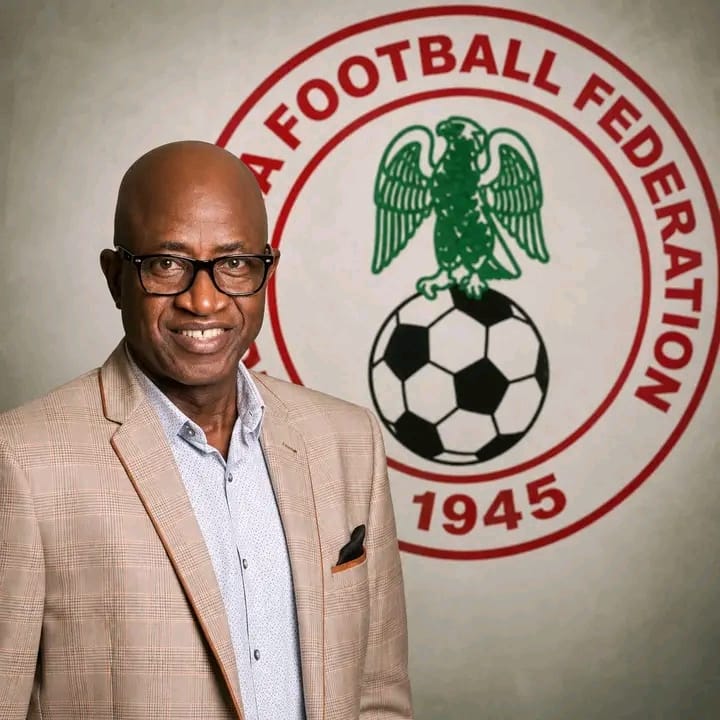
Calls for reform of the Nigeria Football Federation (NFF) electoral system have continued to generate reactions within the Nigerian football community following a letter released by former international Segun Odegbami advocating changes to the way football administrators are elected.
Reacting to the development, football stakeholder AbdulRahman Mohammed argued that the current electoral structure is heavily skewed and requires fundamental reform to create a more equitable platform for all stakeholders in Nigerian football. Sports247 gathered.
According to Mohammed, the concentration of voting power among the 37 State Football Associations, including the FCT Football Association, gives one bloc considerable influence over the outcome of NFF elections.
“What Segun Odegbami and others of like mind are simply asking for is that the electoral system that is heavily skewed, with 37 votes, is ab-initio predetermined,” Mohammed stated.
He proposed reducing the influence of the 37-member bloc by creating a broader electoral college representing Nigeria’s different football constituencies and geopolitical zones.
“Those 37 votes should be reduced to an electoral college of say one per North East, North West, North Central, South East, South West, etc.,” he suggested.
Mohammed believes such a restructuring would provide greater balance and allow other important stakeholders—including players’ associations, professional and amateur clubs, coaches and referees—to have a stronger voice in determining the leadership of the country’s football governing body.
He argued that a more representative electoral process would help create a level playing field and increase the possibility of competent administrators emerging to lead the NFF.
Meanwhile, Akin Dada also backed the call for fundamental changes, insisting that Nigerian football needs leaders who combine legendary status with the ability and courage to drive meaningful reforms.
“We need a Legend who is also a reformer, not the charade that we have there now,” Dada said.
He expressed concern about Nigeria’s declining reputation as a footballing nation, arguing that individual performances alone cannot restore the country to its former position.
Dada further called for reform-minded administrators with knowledge of the game’s history, facts and institutional realities to take responsibility for transforming the NFF.
The reactions have added further weight to an increasingly important conversation about governance, representation and accountability in Nigerian football.
For proponents of reform, the central question is whether the existing electoral structure can adequately represent the diverse interests that make up the country’s football ecosystem.
As discussions continue, stakeholders will be watching closely to see whether the latest calls translate into concrete proposals for restructuring the NFF electoral process.







 electoral system have continued to generate reactions within the Nigerian football)