
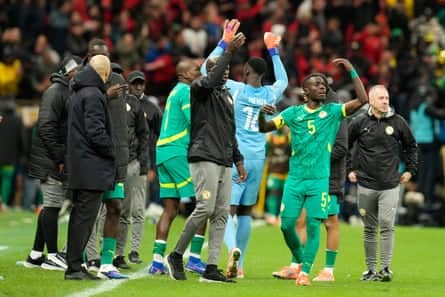

A Moroccan lawyer, Adil Mouline, has raised areas of concern over the likely outcome of Tuesday’s hearing by the disciplinary committee of Confederation of African Football (CAF) regarding the chaotic Cup of Nations final.
READ ALSO: How Chelsea Eventually Hooked Yisa Alao With Superior £600,000 Bid
Sports247 reports that, while indications earlier emerged that global body, FIFA, has taken over the matter, CAF’s executive and disciplinary committee will set the wheel of punitive measures in motion.
The hearing, which was initially scheduled to hold this past Sunday, was shifted by two days due to an appeal for additional time by Senegal Football Federation for them to prepare an appropriate defence.
However, while the disciplinary committee gets set to deliberate on ugly incidents that erupted during the AFCON 2025 final between Morocco and Senegal, Mouline declared that the panel must not look at punishment alone.
While averring that issues of justice, legality, sanctions and deterrence will also have to come into consideration, Mouline stated in a post on X that the committee will face a dilemma that extends beyond football.
Mouline expatiated, “This challenge is heightened in high-stakes competitions such as the AFCON 2025 final, where the integrity of the sport, the credibility of the organizers, and the expectations of millions of supporters converge.
“The biggest challenge faced by disciplinary committees in general, including sport’s governing bodies, lies in determining the most appropriate and adequate sanction when an individual or a group commits a violation.
“The incident involving the Senegal national team’s decision to leave the field of play during the AFCON 2025 final against the Moroccan national team presents precisely such a challenge.”
However, while stressing the need for appropriate sanctions to apply in the face of fairness, Mouline added that none of both countries must have an advantage over the other on account of the decision that would be reached by the governing body.
“Justice requires that sanctions restore equilibrium. A team must not be allowed to benefit, directly or indirectly, from violations of competition rules,” Mouline submitted in his extensive write-up.