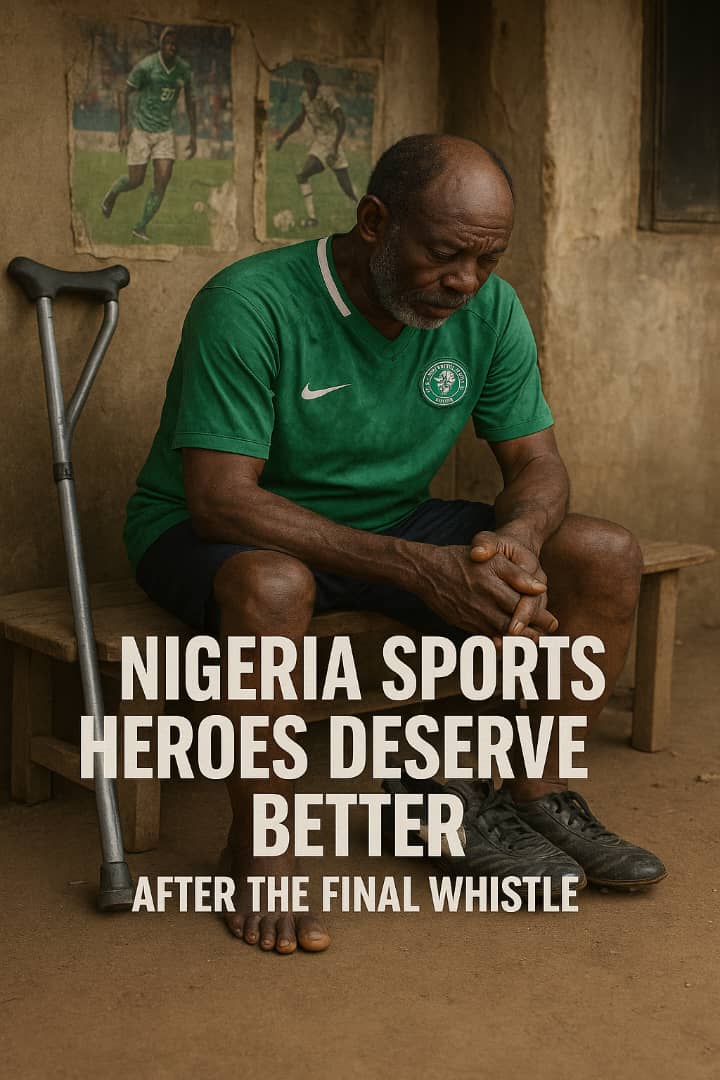

While the cheers of the crowd and flashes of cameras often define the lives of Nigerian athletes during their prime, the silence after retirement is deafening.
For many footballers and sports professionals, life after the final whistle is one of struggle, neglect, and in some cases, poverty.
Read Also: Against All Odds: The Inspiring Journey Of Ihitegbulem Chinonso Wisdom
The painful truth is this: for most Nigerian athletes, sports is a short-lived career with a long tail of consequences.
Once the glory fades and the earnings dry up, too many are left to fend for themselves—often with deteriorating health and little to no financial support.
The ” After the Fame” Reality
Years of intense physical exertion take a toll on the body. Many former Nigerian athletes face lingering injuries, chronic conditions, and mental health challenges.
Without adequate healthcare or a structured welfare system, the very heroes who once brought pride to the nation are left with no choice but to beg—sometimes publicly—for funds to cover medical bills or even daily needs.
A number of ex-internationals, once household names, have been seen on social media or in the news appealing for help, their stories drawing public sympathy but no long-term solution. This cycle must end.
Time for a Lasting Solution: Fashioning Out a Sustainable Pension Scheme
To ensure dignity, security, and a future for our sportsmen and women, Nigeria needs a structured, sustainable pension and welfare system. Here’s how it can work:
1. Establish a National Sports Pension Scheme
The foundation must be a dedicated pension system tailored for athletes, under the supervision of the National Pension Commission (PenCom). Contributions can be sourced from:
A fixed percentage of athletes’ earnings during their active years
Government subvention via the Ministry of Sports or Youth Development
Club and federation levies
Sponsorships and donations from corporate stakeholders
This structure would provide a safety net, ensuring athletes receive monthly stipends post-retirement.
2. Mandatory Insurance Coverage
Every professional sports contract should include comprehensive health and life insurance. This would cover:
Injuries sustained during competitions
Long-term disability support
Family compensation in the event of fatal incidents
Sports federations and the Ministry of Labour must work together to standardize and enforce these insurance terms across all leagues and disciplines.
3. Athlete Welfare Trust Fund
Separate from the pension plan, this fund would assist athletes who retire prematurely due to injury or unforeseen circumstances. Funding can come from:
TV rights revenue
Corporate Social Responsibility (CSR) allocations
Annual levies on sponsorship deals and sporting events
The trust fund can also support emergency healthcare and reintegration programs.
4. Career Transition and Financial Literacy Programs
Too many athletes retire without the tools to manage life beyond sports. Structured financial literacy and vocational training should be mandatory. This includes:
Business development courses
Scholarship opportunities
Skill acquisition programs in collaboration with NGOs and universities.
By preparing athletes early for life after competition, Nigeria can drastically reduce the number who fall into hardship.
5. Legislation and Athlete Unionization
A National Sports Welfare Bill is urgently needed to enshrine rights and entitlements in law. This should guarantee:
Access to pension funds
Post-retirement medical care
Opportunities for coaching, mentoring, or administrative roles in sports.
In addition, athlete unions can play a key role in negotiating terms, monitoring disbursements, and holding stakeholders accountable.
6. Sports Federations Must Be Accountable
Federations should not wash their hands of athletes once they retire. There must be:
Mandatory post-career planning policies
Retirement tracking systems
Exit reports and reintegration plans for retiring athletes.
Only through proactive planning can we ensure athletes don’t simply vanish into obscurity after years of national service.
Sports is a Career, Not a Gamble
Nigeria must treat sports with the seriousness it deserves. Just like civil servants and military personnel receive pensions after serving the country, so should athletes—who sacrifice their youth, health, and often education to wear the green-white-green.
If we want to continue inspiring future generations to take up sports, we must show them that their future will be protected—both on and off the pitch.
The time to act is now. Before another legend fades away in silence.