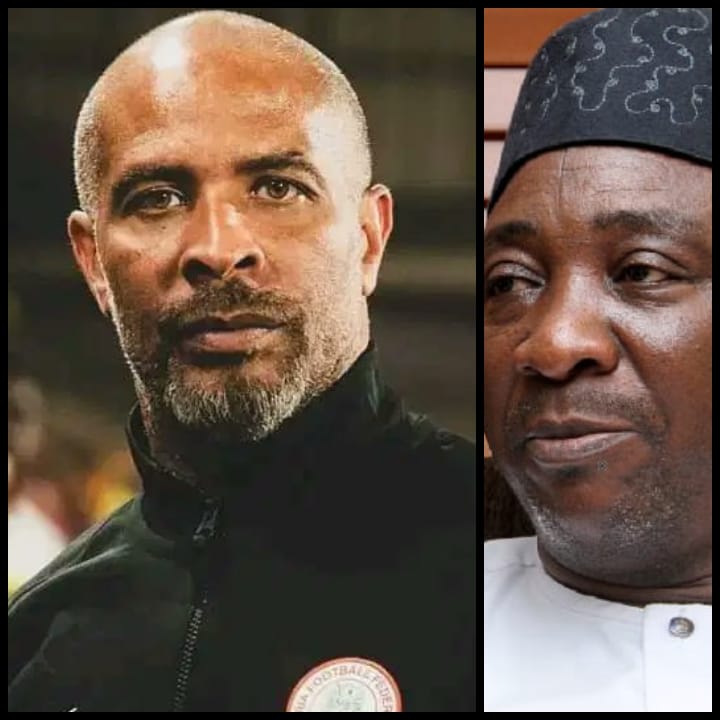
As contract negotiations loom between the Nigeria Football Federation and Super Eagles head coach Eric Sékou Chelle, debate is intensifying over whether the Franco-Malian tactician merits a significant salary increase following recent performances.
Unconfirmed reports suggest Chelle is seeking a 100 percent pay rise—from approximately $50,000 to $100,000 per month—as a condition for extending his contract, which is due to expire in January 2027.
Read Also: Where Does Super Eagles Coach, Eric Sékou Chelle Rank Among Africa’s Highest-Paid National Team Coaches?
The Case for a Pay Increase
Supporters of a revised deal point to Chelle’s impact at the 2025 Africa Cup of Nations in Morocco, where Nigeria finished third.
The podium result was widely viewed as a morale-boosting turnaround and a restoration of pride after the disappointment of failing to qualify for the 2026 FIFA World Cup.
Under Chelle, the Super Eagles have shown improved tactical discipline, resilience, and organisation.
Reports indicate the team did not lose any of their 17 matches in regulation time during his tenure—aside from a setback involving the CHAN Eagles—an indicator, proponents argue, of better squad management and mental strength.
Advocates contend that guiding the team through a turbulent transition period while laying foundations for sustained progress justifies a higher wage.
From this perspective, a $100,000 monthly salary would align Nigeria with leading African football nations that reward stability, progress, and long-term vision—not trophies alone.
The Argument Against the Increase
Critics, however, believe doubling Chelle’s salary is excessive at this stage.
Their core argument is that World Cup qualification remains the ultimate benchmark for any Super Eagles coach.
Despite improved performances and an AFCON podium finish, Nigeria’s absence from the 2026 World Cup qualifiers remains a significant blemish.
Skeptics also argue that promise and resilience should not outweigh concrete achievements such as qualification milestones and major titles.
In their view, Chelle should first consolidate progress with a major trophy or secure qualification for global tournaments before earning a salary comparable to Africa’s highest-paid coaches.
A Middle Ground?
Some analysts propose a compromise: a moderate increment tied to clearly defined performance targets. This approach would reward Chelle for stabilising the team, restoring competitiveness, and projecting future potential—while maintaining accountability for results that matter most.
Conclusion
The debate over Eric Sékou Chelle’s salary reflects a broader question confronting Nigerian football: should remuneration be driven by immediate results or by visible progress and future promise?
Chelle’s third-place AFCON finish, unbeaten regulation-time record, and revitalisation of the Super Eagles’ identity strengthen his case.
Yet, without World Cup qualification, opinions remain divided on whether a $100,000 monthly salary is justified now—or should wait until Nigeria fully reclaims its place on the global stage.
Ultimately, the NFF and Chelle’s negotiating team must strike a balance that best serves the Super Eagles’ long-term interests.