
Nigeria’s fast-rising flag football movement has been thrown into uncertainty after fresh details emerged about how a painstakingly negotiated agreement to form a unified national federation stalled, raising serious questions about unity, authority, and the future direction of the sport.
Read Also: Showtime Has Brought Professionalism Into Nigeria’s Flag Football – Azeez Amida | Sports247 Nigeria
Here is the revised story with a more disturbing, hard-hitting tone, while keeping it factual and balanced:
A revealing account released by Azeez Amida, founder and president of Showtime, has exposed the fragile state of flag football governance in Nigeria, following months of behind-the-scenes negotiations aimed at creating a single, government-recognised federation.
According to Amida, the turning point came on 9 September 2025, shortly after Team Nigeria returned from the African continental championship in Egypt.
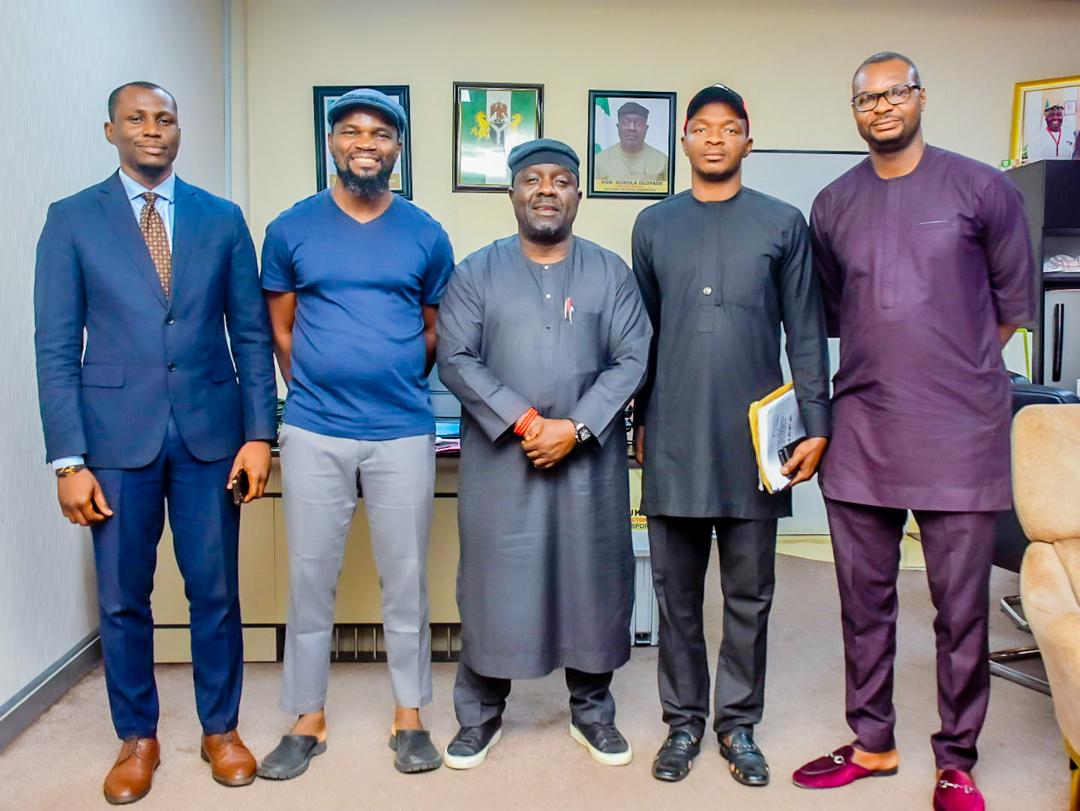
Acting on prior agreements with all parties, the Director General of the National Sports Commission (NSC), Hon. Bukola Olopade, convened a high-level resolution meeting to finalise the structure of a national flag football body.
The meeting stretched for more than nine hours, bringing together key stakeholders from across the ecosystem. Participants acknowledged that disputes over federation formation are common in Nigerian sports and are often part of the institutional growth process.
By the end of deliberations, consensus was reached on a 13-member federation framework, carefully designed to ensure balance and inclusion.
The structure allocated seats across major leagues and associations, reserved space for emerging bodies, and placed the NSC in a central administrative role.
The proposed name — Flag Football Federation of Nigeria — was also unanimously accepted.
But within days, that consensus unravelled.
Amida disclosed that NAFA subsequently contacted the NSC, requesting to be recognised as the sole authority over flag football in Nigeria.
The request effectively froze the agreed framework, forcing the Commission to halt implementation while further discussions continue.
The fallout has left athletes, coaches, and leagues in limbo — with no officially inaugurated federation and growing confusion over representation, authority, and international legitimacy.
Amida stressed that his decision to publish the timeline was not driven by rivalry or resentment, but by concern for the sport’s long-term survival.
“The issue has never been about control,” he explained. “It has always been about structure. Without structure, a sport cannot scale — not in participation, not in funding, and not in international competition.”
The NSC has repeatedly maintained that only one unified federation, recognised by government, can legitimately represent Nigeria. Yet weeks after the nine-hour meeting, that unity remains elusive.
For a sport enjoying unprecedented growth, continental success, and youth participation, the unresolved governance crisis now poses a critical question: will Nigeria’s flag football momentum be protected — or derailed by internal power struggles?
As documents and timelines continue to surface, one thing is clear — the future of flag football in Nigeria is no longer just about what happens on the field, but about whether its leaders can agree off it.