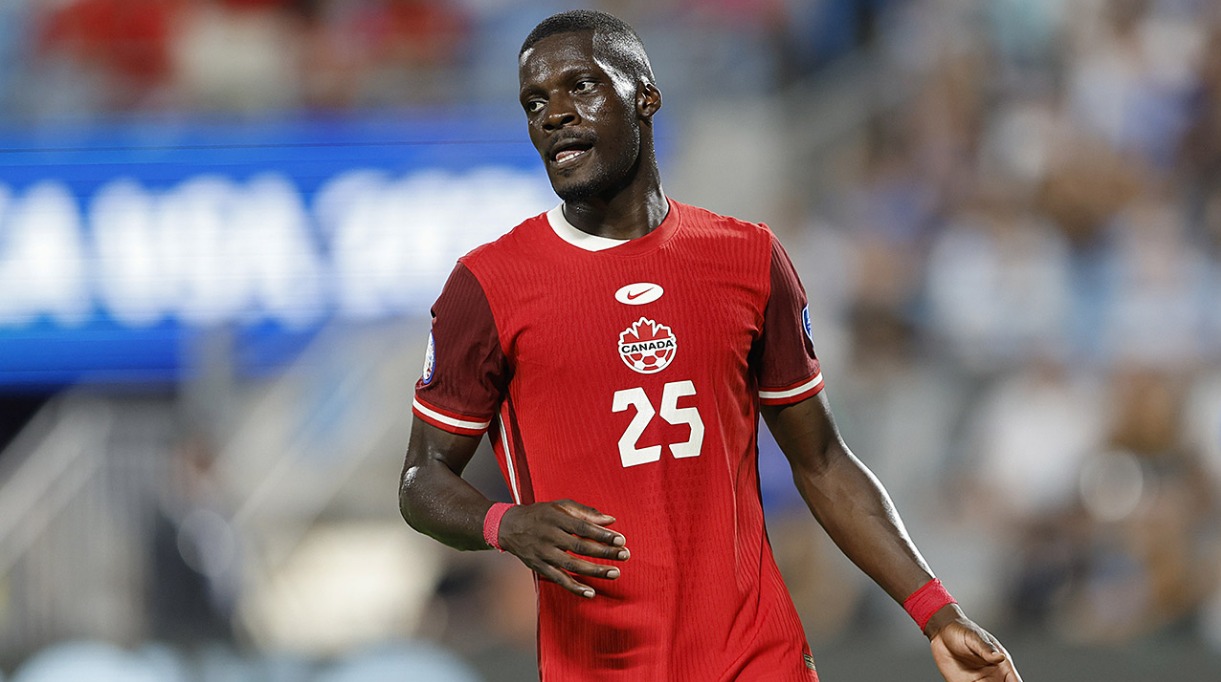
Tani Oluwaseyi’s career is not just a clean migration story with a football attached to it. It is a sharper example of how Nigerian sporting roots, Canadian youth structures and North American player pathways can meet in one forward’s development. Born in Abuja and raised from childhood in Mississauga, he sits naturally inside two football conversations at once.
For Nigerian readers, his rise carries the familiar question of talent leaving home and flourishing elsewhere. For Canadian football, it shows why immigrant communities are not a side note in the national team story. They are part of the player pool, the culture and the competitive identity.
That attention also sits inside a wider sports media economy, where match clips, analytics pages, fan forums and resources like the Granawin sportsbook review form part of the background noise around modern fandom. Oluwaseyi’s story deserves a different centre of gravity: development, identity and the hard practical work of turning movement across borders into a career.
How did Abuja and Mississauga shape the same player?
Oluwaseyi’s biography starts in Abuja, but the football pathway that took him to Canada’s senior setup was built after his family moved to Ontario. That matters because young players rarely develop from talent alone. They need coaching access, competitive matches, school environments and a system that keeps them visible.
Mississauga gave him that second framework. At St. Joan of Arc Catholic Secondary, he became a standout across school sport, not only football. The multi-sport background is easy to overlook, but it likely helped the athletic profile Canada now sees in him: size, mobility, timing and the ability to attack space.
This is where the Nigerian-Canadian angle becomes more interesting than a simple nationality label. His Nigerian background adds cultural and emotional context, while Canada supplied much of the formal pathway. The result is not a split identity. It is a layered one.
Why did the college route matter?
Oluwaseyi’s move to St. John’s University was a key step because the NCAA route can give late-developing players competitive minutes, physical preparation and tactical repetition. He was not fast-tracked as a teenager into a major European academy. His growth came through a longer North American route.
At St. John’s, his production made the next step possible. His sophomore season, in particular, pushed him into a different bracket, with double-digit goals and major conference recognition. That period helped define him less as a promising athlete and more as a forward with repeatable end product.
| Stage | Location | What it added to his development |
| Childhood base | Abuja | Early football culture and identity |
| Youth growth | Mississauga, Ontario | School sport, club exposure and Canadian pathway access |
| College football | St. John’s University | Competitive structure, maturity and scoring responsibility |
| Professional bridge | San Antonio FC | Senior minutes, pressure and finishing rhythm |
| MLS platform | Minnesota United | Higher tempo, visibility and Canada selection context |
The table tells a useful story: Oluwaseyi’s development was not one jump. It was a chain. Each stage added something the next stage demanded.
What did Minnesota United unlock?
Minnesota United gave Oluwaseyi the professional platform, but the San Antonio loan was just as important. In the USL Championship, he found the rhythm that many forwards need before they can look settled at MLS level. Goals in a senior league change how a player is viewed, especially when those goals arrive with physical presence and penalty-box movement.
By the time he returned to Minnesota, he was no longer just a draft pick waiting for minutes. He had a case. His 2024 MLS season then showed that he could translate development into impact, with goals, assists and a role that expanded beyond substitute appearances.
Forwards often get judged too quickly by finishing alone, but Oluwaseyi’s value is broader. He stretches defensive lines, occupies centre-backs and gives Canada another profile beside more established attackers. That variety matters in tournament football, where opponents can force teams into uncomfortable patterns.
What did Canada see in him?
Canada’s senior team did not call Oluwaseyi by accident. The national team has been building a faster, more aggressive identity, and he fits the need for directness in the final third. His debut against France in 2024 placed him immediately in a demanding environment, not a soft introduction.
At Copa América 2024, Canada made a strong run to the semi-finals and finished fourth. Oluwaseyi did not own the tournament, but he entered matches where the speed, pressure and margins were severe. Those minutes matter because they reveal whether a player can think and move quickly enough at international level.
His near chances against elite opposition also told a story. They showed he could arrive in dangerous areas. The next stage is converting those moments more consistently, which is usually the difference between being a useful squad forward and becoming a fixed international option.
Why does this matter for Nigerian-Canadian athletes?
Oluwaseyi’s rise belongs to a wider pattern. Canada’s sporting system increasingly reflects immigrant communities, and Nigerian-born or Nigerian-heritage athletes are part of that change across football, basketball and other sports. The point is not only representation. It is competitive depth.
For young athletes in Nigerian families across Canada, his pathway offers several practical lessons:
- Development does not have to follow one perfect route.
- School sport can still matter when it connects to stronger competition.
- College football can be a serious bridge, not a fallback.
- A loan spell can rebuild momentum instead of slowing a career.
- Dual identity can be a strength when the player has clarity and support.
This is also useful for Nigerian football observers. Not every Nigerian-born talent abroad will play for Nigeria, and not every dual-national case should be read as rejection. Sometimes the player’s formative football life, personal belonging and professional timing simply point elsewhere.
What comes next for Oluwaseyi?
The next question is consistency. Oluwaseyi has already shown that he can score in North America, handle a professional dressing room and enter Canada’s senior squad. Now the challenge is to turn flashes into a longer body of work.
For Minnesota, that means production across full seasons. For Canada, it means offering a reliable forward option when matches become tight and tactical. For Nigerian-Canadian fans, it means watching a player whose story touches both places without needing to flatten either one.
His rise is valuable because it is believable. It is not built on instant stardom or a single viral moment. It is built on family movement, school sport, college development, a loan that sharpened him and a national team opportunity earned at the right time.
That is why Tani Oluwaseyi is more than a name on a squad list. He is a case study in how modern Canadian sport is being shaped by migration, patience and communities with deep football memory.