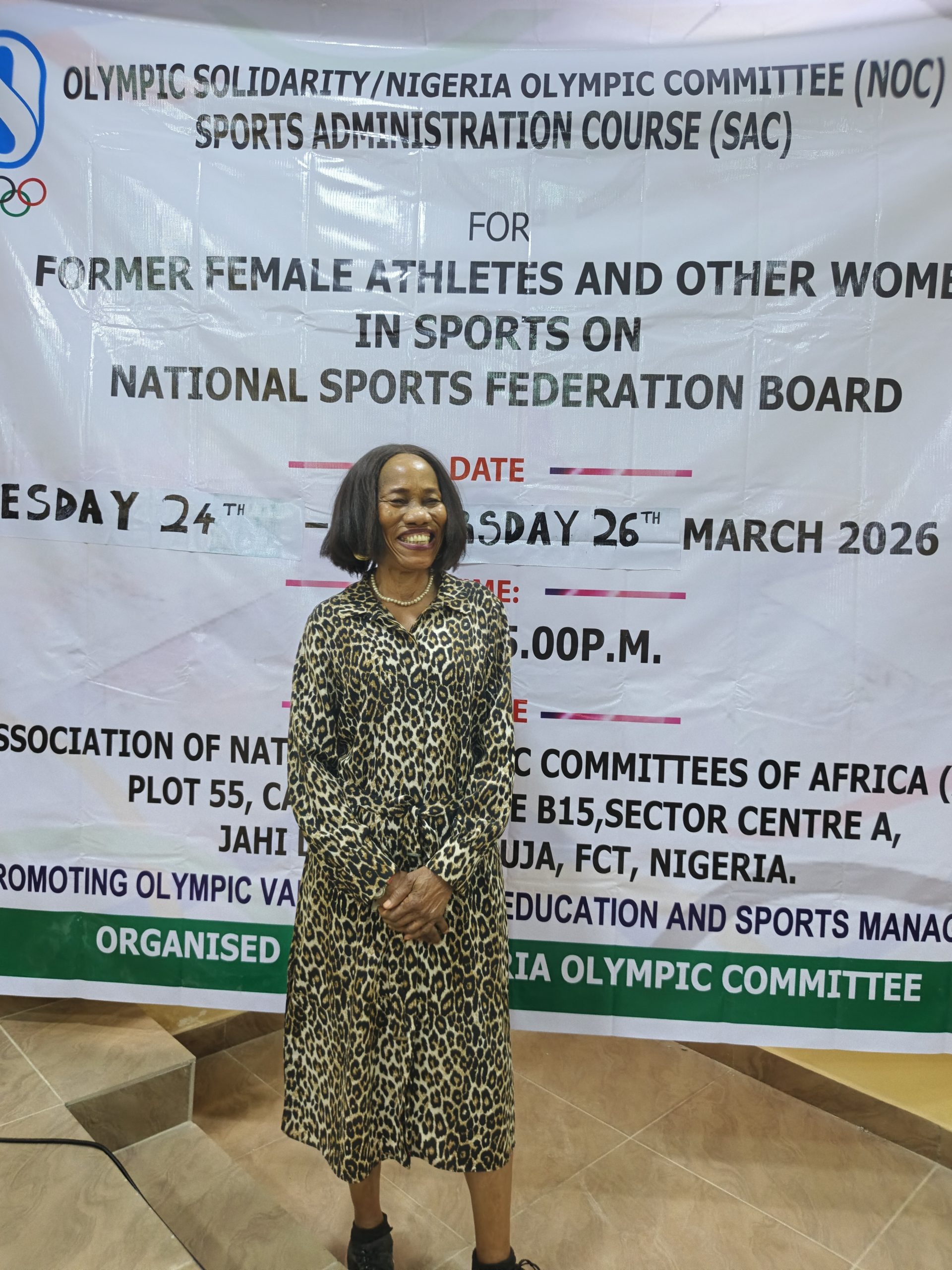

Former Nigerian volleyball international Kunbi Odukola has spoken on the need for stronger grassroots development and increased female representation in sports leadership, as she participates in the ongoing Olympic Solidarity/NOC Sports Administration Course organised by the Nigeria Olympic Committee.
READ ALSO: New Era for Women in Sports: Dr. Aluko Urges Bold Leadership and Athlete Welfare Reforms
Speaking with Sports247, Odukola reflected on her playing days, describing them as a defining period in her career. She revealed that she was part of the pioneering Nigerian team that qualified for continental competition at the Algiers Games 1978, before going on to represent Africa at the 1982 FIVB Volleyball World Championship in Peru.
“It was the height of sports for us then. Representing Africa at the World Championships was exciting and very educative. We met teams from the United States, Mexico, and across the world,” she said.
On her decision to enrol in the course, Odukola highlighted its potential impact on sports development in Nigeria, particularly at the grassroots level.
“This course is a collaboration between the IOC and NOC, and it is very resourceful. If we can cascade the knowledge to the grassroots, it will help harmonise the talents we have in this country,” she noted.
She added that the programme would benefit not only administrators but also coaches and other stakeholders, ultimately contributing to the growth of the sports sector.
Addressing the issue of gender inclusion, Odukola stated that opportunities for women in sports leadership remain insufficient, calling for deliberate efforts to improve representation.
“We don’t have enough women in sports leadership yet,” she said.
Drawing from her experience in golf administration in the early 1990s, she recounted efforts made to promote female participation by taking tournaments across different states and engaging key stakeholders.
“We moved from city to city, engaging women and even reaching out to governors’ wives to encourage participation. Today, we are seeing the results, with more women getting involved,” she explained.
Odukola expressed optimism that continued advocacy and visibility would lead to increased participation of women as athletes and decision-makers in sports.
On expectations from the course, she emphasised the importance of continuous learning and adaptability.
“I am open to learning. You have to unlearn things that are no longer relevant and embrace new skills and methods. That is how we improve performance and move forward,” she said.
The Olympic Solidarity/NOC Sports Administration Course continues to serve as a platform for empowering women and former athletes with the knowledge required to drive meaningful change in sports governance and development in Nigeria.