
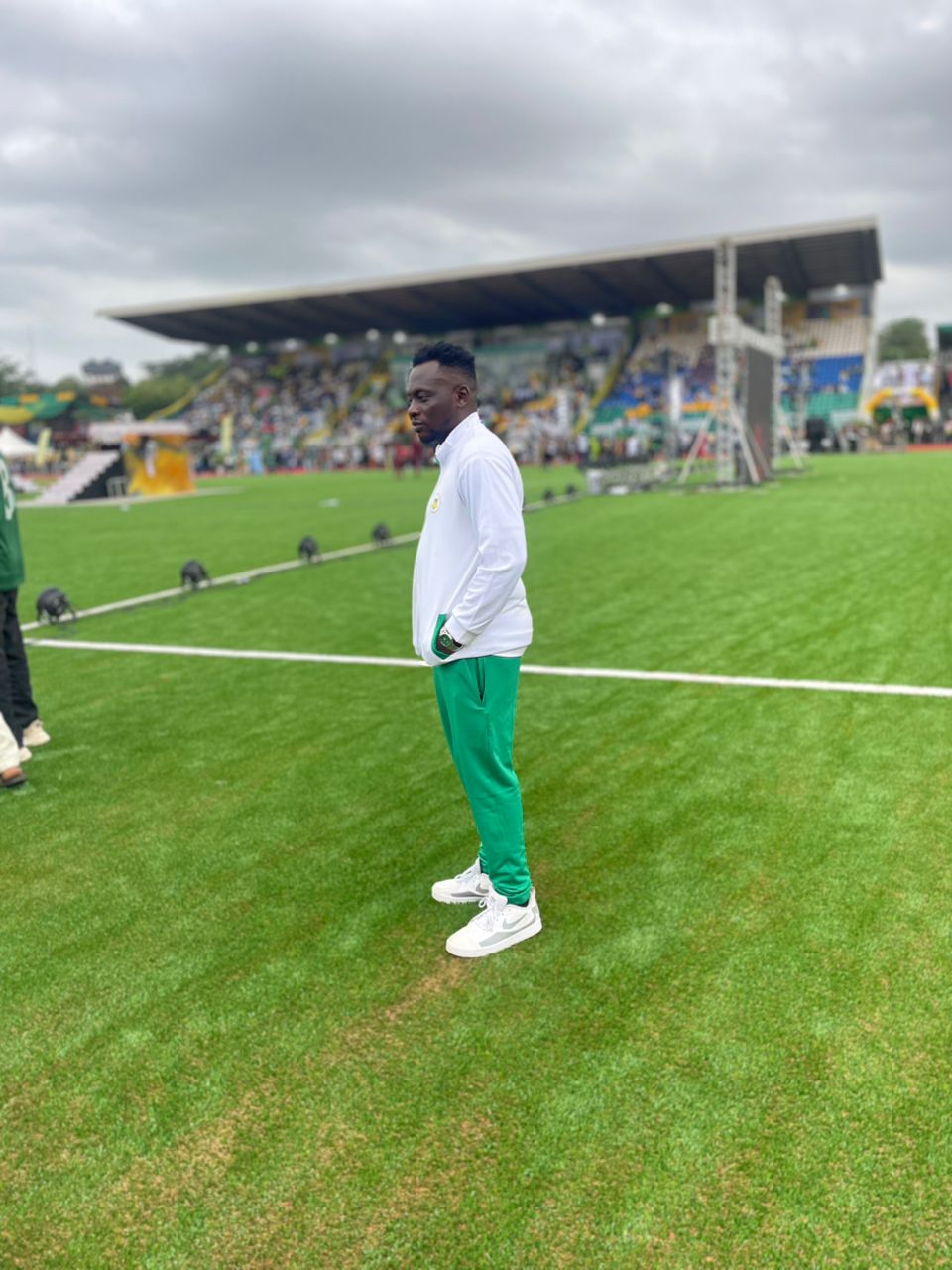

Ojelade Oluwatobiloba, Welfare and Social Director of the National Institute for Sports (Advanced Coaching Class of 2025), has described the Federal Government’s fulfillment of its housing pledge to the Super Eagles squad from the 2023 Africa Cup of Nations as a significant step toward rebuilding trust between Nigerian athletes and authorities.
Oluwatobiloba, who currently works as a tactical analyst with Prolific Stars FC in Lagos State and is the owner of Talent Spotter Management, a football talent scouting agency, shared his views in an interview with Sports247 as the Super Eagles prepare for the 2025 AFCON.
Reacting to the news of the housing rewards, he said the gesture sends a strong message to players that their sacrifices are genuinely recognised.
“Hearing that the Federal Government actually fulfilled its housing pledge is a big positive,” Oluwatobiloba stated. “In Nigeria, promises to athletes are often delayed or forgotten, so delivery builds trust.
It tells the players that their sacrifices are valued, not just praised with words. That kind of follow-through strengthens belief in the system and shows progress in how footballers are treated.”
He added that failure to honour the pledge would have had subtle but damaging consequences on team morale.
“If the benefits had fallen through, it would likely have hurt morale, maybe not openly, but internally,” he explained. “Players would still fight for the badge, but disappointment creates distraction and cynicism. It reinforces the idea of ‘play your heart out, but don’t expect appreciation,’ which can quietly affect motivation and unity.”
On the issue of incentives, the NIS welfare director supported the idea of performance-based bonuses but warned against relying on them exclusively. According to him, a balanced approach is more effective.
“Linking bonuses to milestones is fair, football is performance-driven,” Oluwatobiloba said. “However, it shouldn’t be only performance-based. A hybrid model works best: upfront guarantees like appearance fees, welfare, and insurance, combined with performance bonuses for progressing through rounds or winning medals. That way, players feel respected first, then rewarded for excellence.”
Looking beyond financial rewards, Oluwatobiloba outlined several areas where government intervention could have a more lasting impact on Nigerian football.
“Proper player welfare and insurance, continuous funding for youth academies, better domestic league infrastructure, transparent support for coaching development, and stronger sports science and medical support are critical,” he noted. “These impact football more sustainably than one-off rewards.”
He also stressed the importance of consistent government policy following Nigeria’s failure to qualify for the 2026 FIFA World Cup, urging stakeholders not to make decisions based on short-term emotions.
“Consistency is crucial, especially after missing the 2026 World Cup,” Oluwatobiloba said. “One tournament success or failure shouldn’t reset the entire plan. Long-term football growth depends on steady policies, not emotional reactions to results. Countries that succeed build systems, not moments, Morocco is a clear example of this approach.”
As Nigeria looks ahead to AFCON 2025 and beyond, Oluwatobiloba believes sustained planning, accountability, and genuine investment in structures will be key to restoring the Super Eagles to consistent continental and global relevance.






)