
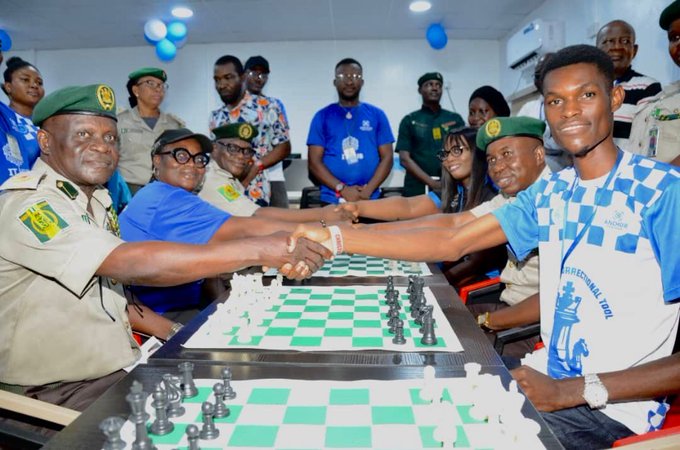
A new rehabilitation initiative, “Chess as a Correctional Tool,” has been launched at the Kirikiri Medium Custodial Centre, introducing chess as a means of mental, emotional, and personal transformation for inmates.
READ ALSO: Esther Joseph Storms to Historic 400m Indoor Win, Ranks Fifth All-Time in Africa
The project is a collaboration between Chess to School and Anchor Heritage Initiative, and marks the unveiling of the first ICT Hub of its kind within the facility. Formerly known as the AHI ICT Hub Extension, the centre has now been officially renamed the Bidemi Oladipupo ICT Hub.
The launch ceremony was led by the Controller of the Lagos State Command of Corrections, CC George Daramola, alongside Mrs. Ololade Oladipupo, CEO of Anchor Heritage Initiative.
The event also featured a live chess demonstration conducted by Chess to School founder Emmanuel Adekunle and lead instructor Mr. Truth.
The newly established Chess Corner will run as a seven-to-eight-week programme with weekly sessions.
During this period, inmates will be taught how to play chess, while also learning deeper life skills such as patience, emotional control, discipline, and strategic thinking.
The organisers stressed that incarceration does not end a person’s ability to dream or to rebuild their future.
Addressing participants, Adekunle described chess as more than a game, explaining that each move teaches responsibility and consequence.
He shared an experience from an earlier project carried out by Anchor Heritage Initiative at a custodial facility in Abeokuta, where a young inmate struggling with anger and broken family relationships found clarity through chess lessons.
According to Adekunle, a lesson on the king piece, explained as the most important piece that must always be protected because it represents family, loved ones, and self, had a lasting impact on the boy. That understanding led him to reconnect with his father, rebuild trust, and eventually reunite with his family.
Organisers noted that life in custodial centres is often mentally and emotionally demanding, and that correctional facilities should be spaces for reflection, growth, and renewal.
The initiative challenges the belief that incarceration defines a person permanently or removes their chance at redemption.
In addition to personal development, inmates involved in the programme are being prepared to take part in Chess for Freedom, an international competition that brings together incarcerated players from different countries.
The opportunity could see Nigerian inmates represent the country on a global stage, using chess as a symbol of reform, hope, and second chances.
The “Chess as a Correctional Tool” project is expected to continue expanding, with stakeholders hopeful that the game will become a lasting instrument for rehabilitation within Nigeria’s correctional system.