
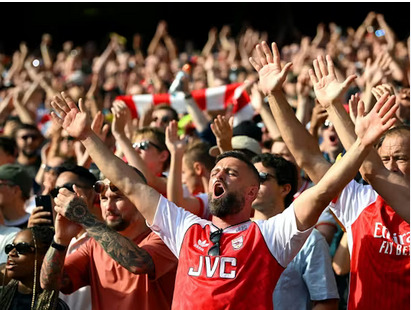

Supporting a football club is not just a hobby or a pastime, but a true passion that unites people around the world. One of the most striking examples is the fan base of Arsenal Football Club.
Not only has this club inspired thousands of fans to celebrate victories and achievements over the years, but it has also created deep emotional bonds between players, coaches and fans. In the UK and beyond, Arsenal evokes emotions that are difficult to put into words. For many fans, supporting the club is not just a hobby, but a way of life.
In this article, we explore how Arsenal FC fans turn their support into a real passion. We also look at how their love for the club affects their lives and how they interact with each other and with the team.
It is also important to note that among the fans of this club, you can find people with a variety of interests, including those who actively participate in gambling. For example, they may visit online casinos such as top-rated casino without GamStop, which is due to the fact that a passion for football often spills over into other forms of leisure where emotions and passion play an important role. Just as fans put their heart and soul into supporting their club, gamblers also seek the excitement and thrills that can be experienced during a game, creating something similar to the passion that exists among football fans.
The desire to win: how fans support their team
For Arsenal fans, supporting the club is not just about watching matches. It is a whole culture in which not only victory is important, but also the process, the atmosphere, and participation in the life of the team. Their support is expressed not only by attending stadiums or watching matches, but also by actively interacting with other fans, in fan communities and on social networks.
Emotional attachment
Fans’ emotional attachment to the club and its players often becomes a deep part of their lives. The emotions they experience during each match can range from extreme joy to disappointment. Supporting Arsenal has become an integral part of many people’s lives, and they are proud of it. It is not just a club, it is a symbol of identity and beliefs. For Arsenal fans, every match is not just a game, but an event that unites them with other fans and allows them to feel part of something bigger.
Love for the club often spills over into other aspects of fans’ lives, from participating in club events to supporting the team on social media or organising meetings and campaigns. This emotional attachment becomes an integral part of the personal identity of many fans.
Social connections
Football is primarily a team game, but supporting a club often becomes a unifying factor for people. Arsenal fans form strong friendships and social connections that often last a lifetime. For example, fan clubs and groups become an important part of their members’ lives, where people share their impressions and emotions and organise meetings. Over the years, the club’s fans become a kind of family, whose members can rely on each other in both good times and bad.
These social connections extend beyond the stadium. Arsenal fans are active in online communities, exchanging information and supporting each other during matches. This unity around the club helps fans feel part of a wider community, and it is these connections that make supporting the club so special.
The impact of the club’s successes on fans
The team’s successes play an important role in the emotional perception of fans. For many, Arsenal’s victories are not just sporting achievements, but the result of their many years of hard work, loyalty and support. These successes become a collective achievement that unites fans, makes them proud and gives them a sense of belonging to something great.
The role of victories in the lives of fans
When the club achieves success, for example, by winning an important title, fans feel that they are also part of this achievement. The joy of the team’s victory can be even more tangible for fans than for the players themselves, as fans root for their team not only during matches, but also in moments of victory and defeat. This is the result of their loyalty and commitment to the club.
Supporting Arsenal becomes an integral part of the fans’ lives. For example, during successful seasons, fans actively participate in celebrations organised by the club and support the team on social media. At such moments, there is a shared sense of joy and pride that unites people around the world.
The impact of failures on fans
But it is not only successes that shape fan culture. It is important to note that the team’s failures also become an important part of the fans’ lives. Losses, defeats or unsuccessful seasons can cause disappointment and even protest, but it is at such moments that Arsenal fans demonstrate their loyalty to the club. They support their team even in the most difficult times, which makes their commitment special.
The process of experiencing setbacks alongside the team can be just as powerful as the joy of victory. It gives fans a unique opportunity to demonstrate their fortitude and commitment, as well as to realise that their support is important to the club, regardless of the results on the pitch.
The influence of fans on the club and players
Fans play a key role in supporting and motivating the team. In British football, there is a whole culture in which fans actively influence the atmosphere in the stadium and at training camps. Arsenal fans are not just spectators, they are the ones who give the team extra strength and can inspire the players to win.
Player motivation
Arsenal players often mention the importance of fan support, which gives them extra strength and motivation. When the team plays at home and the fans fill the stadium, they feel that they are not alone. Every moment of the game at the stadium is an opportunity for the players to feel that their support is not limited to the match, but continues beyond the pitch. This helps to create an atmosphere of trust and respect between the team and its fans.
In addition, at such moments, fans become active participants in the matches, supporting the team not only in difficult moments, but also in moments of victory. Their energy and support have real meaning and can influence the outcome of the game.
Impact on the atmosphere in the stadium
In the stadium, the atmosphere created by Arsenal fans creates a unique environment that serves as an important element in maintaining team spirit. When fans actively support the team, chanting its name or singing songs, it gives the players extra confidence. In such an atmosphere, the result may not only be a consequence of the players’ skill, but also the result of the powerful energy transmitted by the fans.
Fan culture in the UK: how it affects society
The UK is famous for its football culture, and the role of fans in this process cannot be overestimated. Support for football teams goes far beyond regular matches: fans become an integral part of public life, and their activity extends to various aspects of society. They influence not only the development of sport, but also the social structure, forming new connections, supporting active groups and strengthening mutual understanding between people.
Football in the UK is not just a game, it is a social phenomenon that brings people together, creating spaces for communication and unity. This culture has a strong influence on young people, involving them in active interaction with community initiatives, which manifests itself not only in stadiums, but also in the creation of active groups, volunteer movements and charitable campaigns.
The influence of football clubs on social processes
Football clubs in the UK, such as Arsenal, occupy a central place in the lives of fans and have become important social institutions. Unlike many other sports, support for football teams forms a sustainable culture and connection between people, and the clubs themselves play a role not only in the development of sport, but also in strengthening the social and cultural structure. They become points of attraction for people of various professions and social status.
Football, especially a club like Arsenal, helps to forge a shared identity among fans. This applies not only to sporting success, but also to the club’s ability to become a symbol that unites people with different political views, religions and social statuses. The club gives its fans a unique opportunity to express their commitment and become part of something bigger. For Arsenal fans, the club is more than just a sports organisation; it is a whole philosophy, a cult and the basis of social life.
How does football influence young people and community development?
Young people who are strongly influenced by sports culture, especially in countries such as the United Kingdom, perceive football as an important element in the formation of their social identity. Fans teach young people to work in a team, participate in club life and feel that they belong to a large community. Participation in fan culture becomes not only a way to express support for a favourite team, but also an important part of personal growth and socialisation.
In addition, clubs actively run social programmes and events, involving young people and providing opportunities for volunteering and personal development. There are projects aimed at developing personal qualities, team spirit and leadership skills, which have a positive impact on the younger generation. As part of these programmes, young people not only learn sports discipline, but also acquire important life skills.
It should also be remembered that sports clubs such as Arsenal often initiate charitable projects that engage young people in important social issues such as combating poverty, supporting those in need and environmental initiatives. This helps to create an awareness among young people of the importance of collective effort and social responsibility.
Fan groups and their impact on society
The active fan base of football clubs such as Arsenal creates powerful and multifaceted fan groups. These groups become not only gatherings of fans, but also active participants in socially significant processes. Club fans organise both sporting and cultural events that can have a significant impact on public life, such as charity matches, sports festivals and other events.
Many fan associations also become an important part of city life, participating in local initiative groups and supporting the development of local infrastructure. In some cases, club fans initiate cultural projects that support traditions and local initiatives, such as art, music, and other forms of self-expression.
Special attention should be paid to fans who actively use communication platforms, such as fan communities on social networks. These resources become real platforms for exchanging opinions, organising rallies, flash mobs and other activities that support the team and aim to improve the social climate. For fans such as Arsenal, their passion for the club becomes more than just supporting the team; it is participation in a social process where their voice matters.
Sport as a catalyst for urban change
Football has an impact on the infrastructure of cities, especially those with famous clubs such as Arsenal. Stadiums and training grounds become an important part of the urban infrastructure, creating new jobs, developing transport networks and supporting the local economy.
An entire network of small businesses, such as cafes, shops and cultural centres, often develops in the area around stadiums, benefiting local communities.
In addition, major sports clubs such as Arsenal actively invest in their cities, creating projects aimed at improving the urban environment, developing sports facilities and improving the area. Sports infrastructure is becoming an important part of life, bringing together not only fans but all city residents.
The role of clubs in strengthening national identity
Football plays an important role in shaping and supporting national identity. The United Kingdom, as one of the footballing powers, shapes a significant part of its culture through its clubs, and Arsenal is a symbol not only of London but of English football as a whole. The club has become an integral part of the public consciousness, representing not just a sporting organisation but an important element of the nation.
Loyalty to clubs such as Arsenal creates a bond between generations, passing on the traditions and culture of fan life from one generation to the next. This helps to strengthen national unity and continue an important cultural tradition that is deeply rooted in British history.
Conclusion: the love that unites
Support for Arsenal FC has become a real passion for millions of fans around the world. For them, it is not just a team, but an integral part of their lives, capable of influencing their mood, daily activities and interactions with those around them. Belief in the team, support in difficult moments and the joy of victory unite people into one large community, making fan culture unique and profound.